

Starter guide specifications
Supply, breaker and plate details recorded in a starter guide, with the first-start record and operator page.
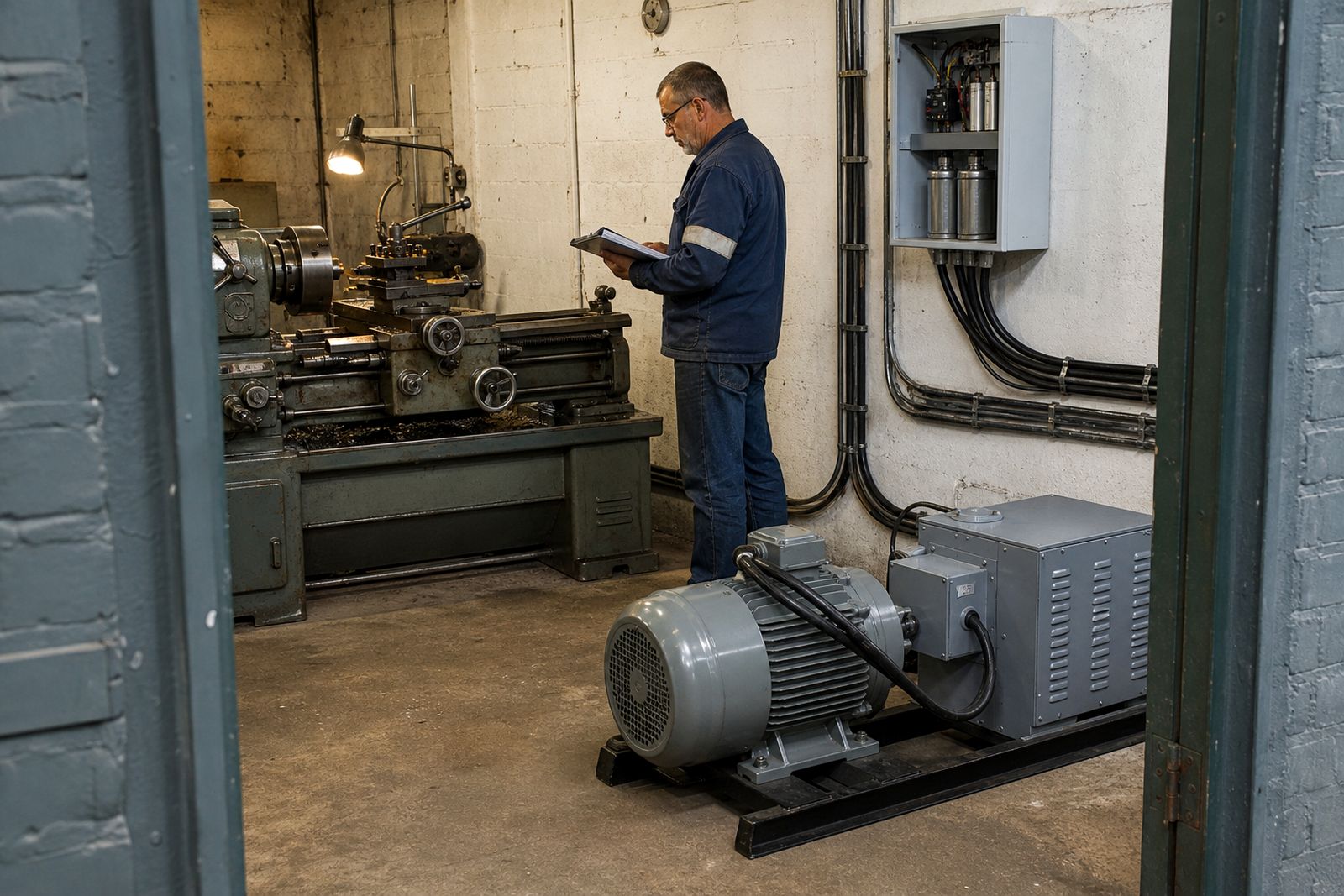
Guide details
Earth continuity between the converter and each machine is confirmed and recorded before the guide is finalised.
Isolator and distribution board details sit beside the cable route between converter and machine, since both affect safety and voltage drop. Star-delta starters, missing overloads or bypassed contactors found in the starter panel are noted on the sheet, as they change how the machine starts and how it is protected.
First start record
The installing electrician runs the first start. The accepted load and the protection settings are then written on the inside of the panel door as well as in the guide.
The operator page carries three entries:
- Full start and stop sequence for the machine
- Position of each emergency stop and how it resets
- Brief description of the machine layout and controls
Routine changes to note
School workshops, fabrication sites and farm repair sheds each put different demands on a converter. The guide states what must be switched off before power returns after an outage, and which machines should not restart under full load.
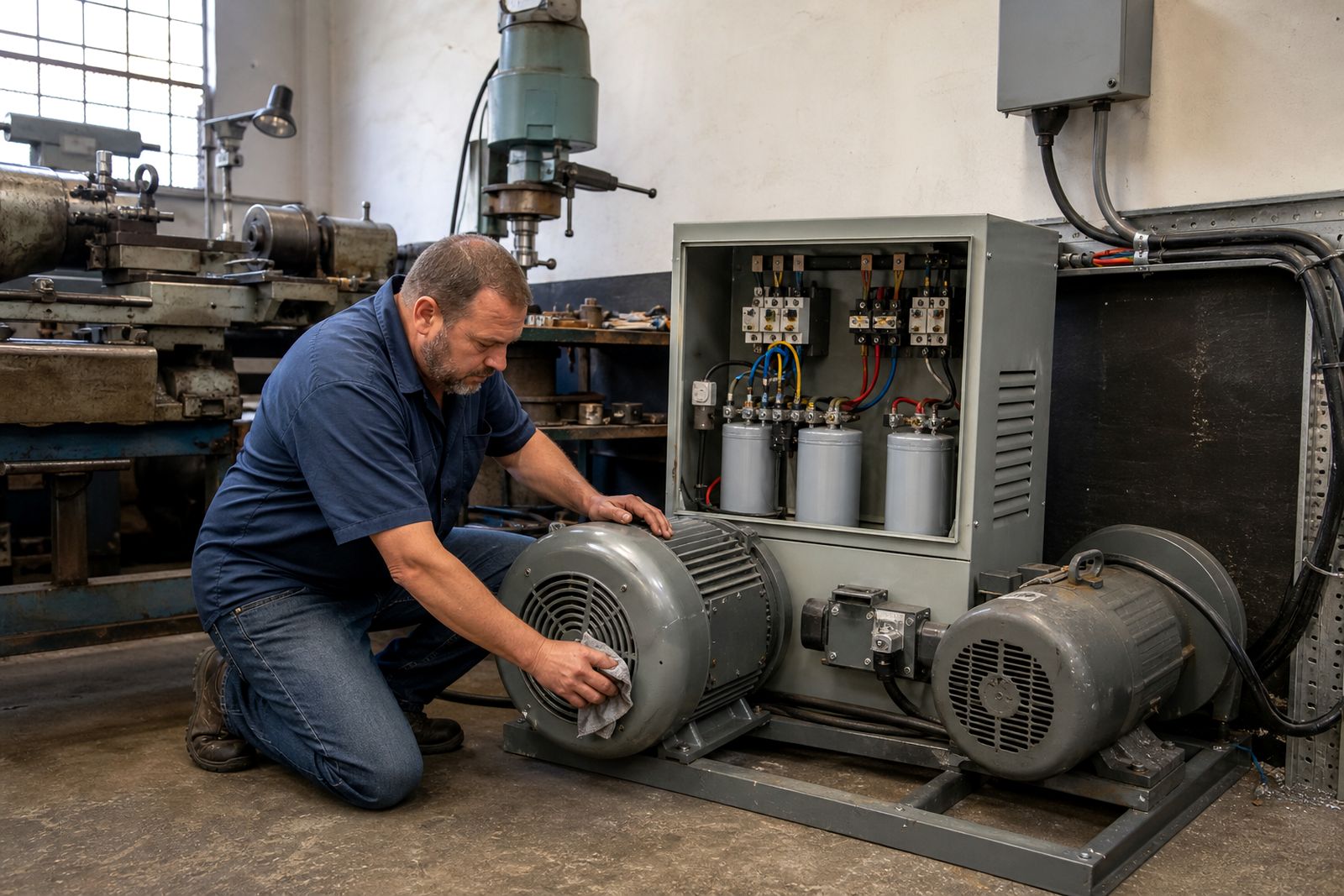
Vents, contactors and cooling fans where dust collects get a cleaning interval set by the workshop. Where the converter stands far from the machine, cable size and voltage drop are checked so the motor does not struggle on start-up.
Guide record contents
The starter guide specs record the details that make a converter safe to fit and sensible to run on a South African site. It is useful for workshops, farms and small plants that need three-phase machines on a single-phase supply, especially where a lathe, milling machine, CNC router, compressor, saw, drill press or pump must start and stop reliably.
Before a unit is chosen, check the machine nameplate for motor kW and voltage, the starting load, the available supply, the cable run and the enclosure space around the installation. Those details help match the converter type to the job, whether that is a rotary unit, static kit, idler pack, panel mount, soft start, enclosure, cable set or spare part.
How installation is done
The customer’s own registered electrician installs the converter and connects it to the machine, isolator, distribution board and cable route. The guide keeps the key supply, breaker and plate details together with the first-start record and the operator notes, so the electrician can follow the written commissioning guidance and keep the installation tidy and traceable.
- Confirm the machine plate details before fitting.
- Check the supply and breaker arrangement against the intended load.
- Set out the enclosure and cable route before final connection.
- Record the first start and the operator instructions after commissioning.
Converter care and upkeep
After fitting, the guide helps the owner and electrician keep the system in order. Earth continuity, protection settings and any starter panel changes are recorded, and the machine’s start and stop sequence is written for the operator. Where dust or coastal humidity is a concern, the enclosure, vents, contactors and cooling fans should be kept clean and dry, with remote checks and warranty help available if questions come up.
View converter options or send site photos for advice via the contact form if you want help matching a converter to your machine and supply.
What our Phase Converter customers say
Verified Google reviews
Also worth a look
Tell us about your machine
Send a note through our contact form with the machine type, the motor plate kW and voltage, your supply (single-phase breaker size), the cable run and your area, and we will come back with practical converter options and a quote.
Open the contact form