

Retail fitment install
Retail fitment installs keep converter cabling tidy, clear of customers and easy to service in busy shopfront spaces.
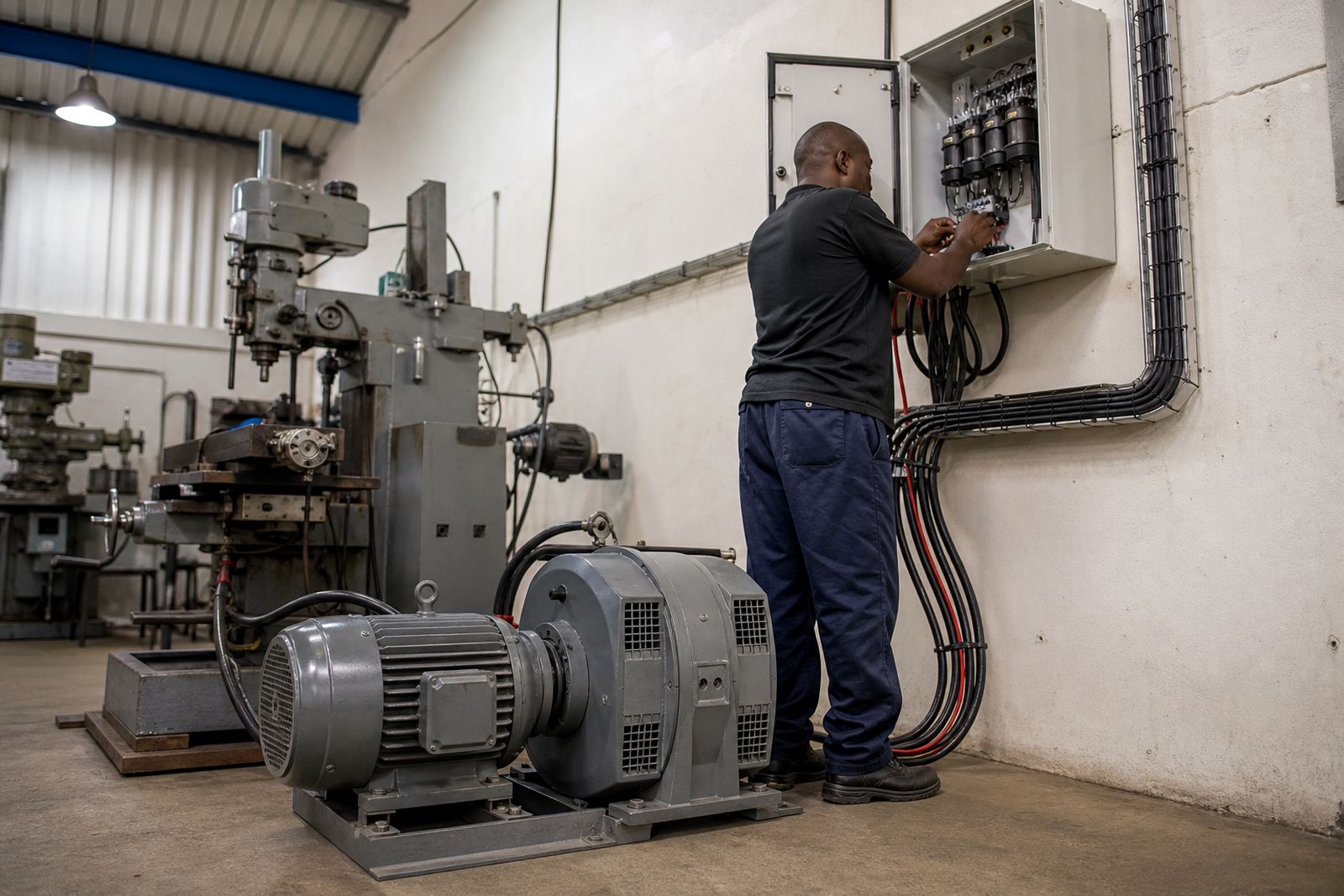
Retail fitment placement
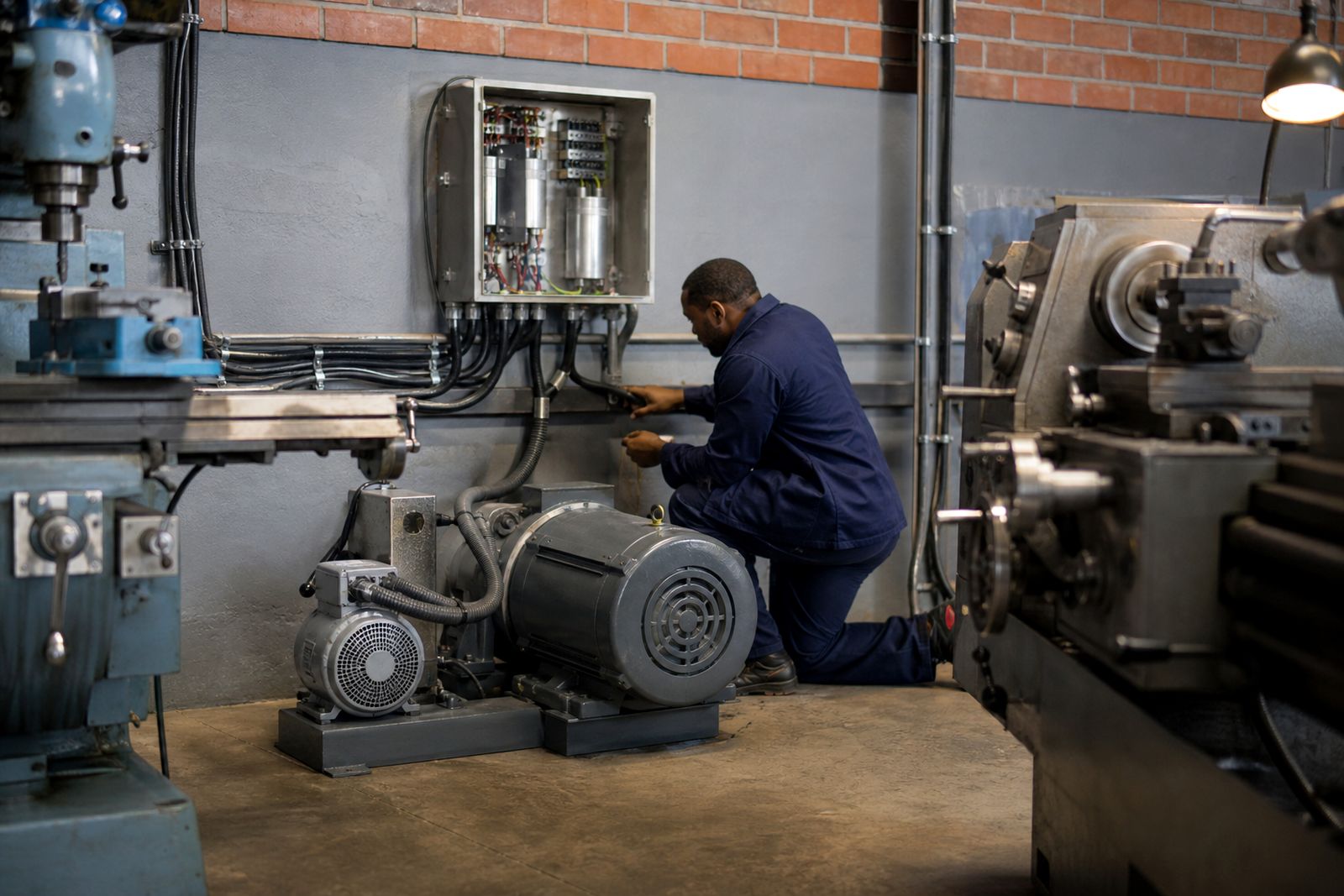
These installations need to be tidy, with space, cable runs and access around the work area planned.
Customer visibility and keeping equipment safely out of the way both matter in busy work areas. Brake dust and tyre debris can build up near vents, so equipment placement must allow for proper airflow and easy cleaning. Machine rating, single-phase feed and the cable route back to the DB all need checking before positioning a converter.
Entrance layout, machine position, DB board location and planned cable route all need to be logged for the job file. Accurate notes here make it easier to keep the converter clear of busy walkways and away from areas where vehicles or people pass through. Layout checks for shutter-door clearance, available wall space and isolator access should be included, as these all affect safe and convenient installation.
Retail site outcomes
One workable layout for the selected machine ensures the converter has a proper position, the cable run enters the work area safely, and all checks are completed before trading begins. In fitment centres, neat cable routing and safe access to the isolator are just as important as correct converter sizing.
Two measurements decide the cable set: the distance to the machine position and the planned wall route, so both are needed before dispatch. Converter size for the site follows from the motor rating on the machine plate and the single-phase supply at your board.
Retail sites bring their own routing rules:
- Do the cable work before customers arrive.
- Run cables along walls or overhead trays to keep walkways clear.
Retail site conditions in South Africa
Older boards located at the back of some units can mean a long run to the visible work area, which may affect cable selection and mounting position. Delivery timing and access through service passages can also affect how a converter kit reaches the work area.
Trips, burn marks and supply limits
Plate data from the machine, details of the available supply, and any history of trips, overloads or burn marks all help match the right converter and cable set to the site. Placement of the machine, whether in a corner, against a wall, near a shutter or in the open, influences access, enclosure placement and cable protection.
What our Phase Converter customers say
Verified Google reviews
Also worth a look
Tell us about your machine
Send a note through our contact form with the machine type, the motor plate kW and voltage, your supply (single-phase breaker size), the cable run and your area, and we will come back with practical converter options and a quote.
Open the contact form