

Motor plate reading
How to read a three-phase motor rating plate and copy kW, voltage pair, amps, duty and speed correctly into a converter enquiry.
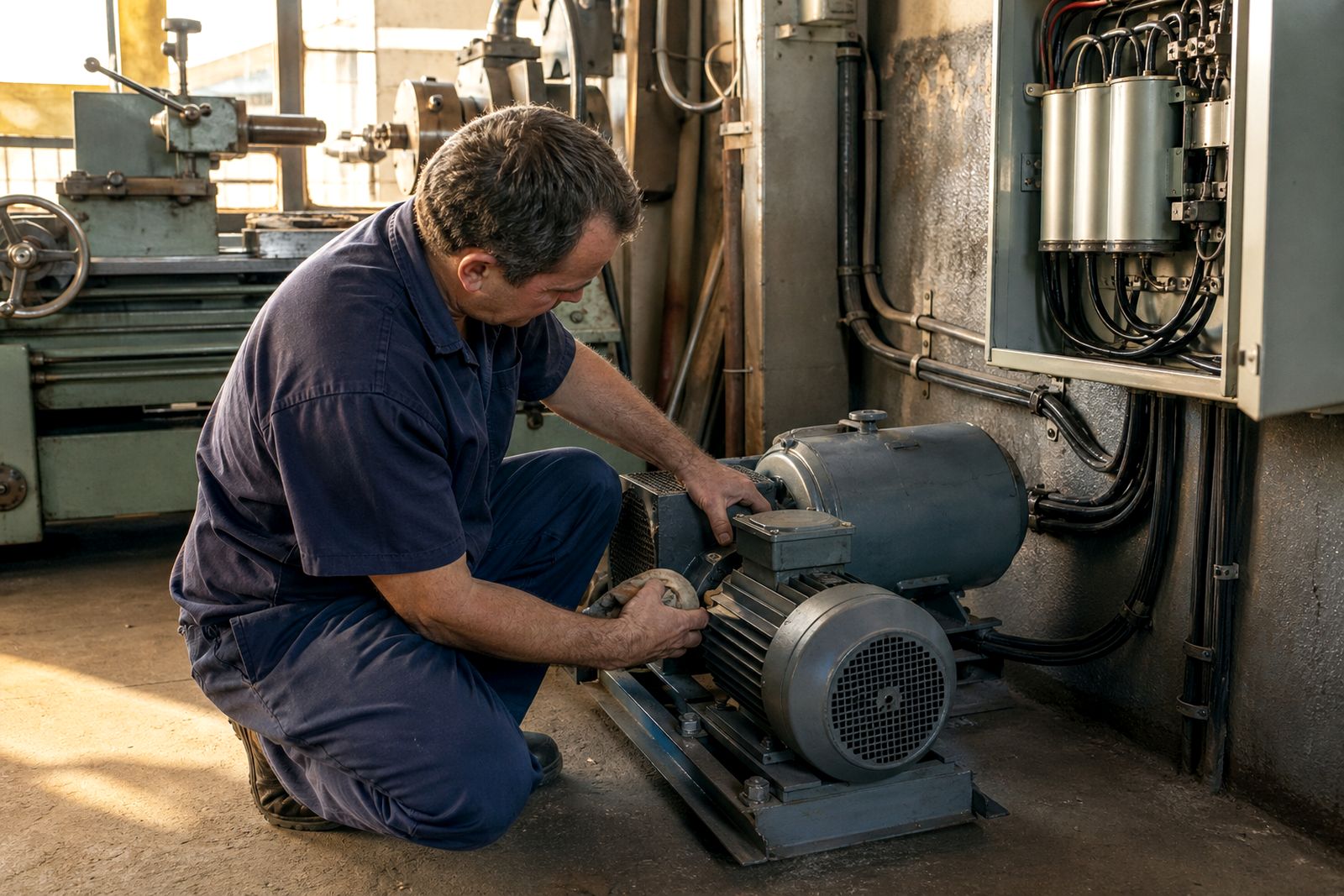
Motor plate figures to copy
A motor rating plate carries every figure needed to size a converter, as long as it is read and copied correctly.
Plates follow a common layout even when the maker differs. Power, voltage, current, speed and frequency are standard plate fields, and duty and insulation class are listed where the maker includes them. Trouble starts when a figure is copied from the wrong line or the wrong voltage column.
Some older imported motors show horsepower only, while newer ones give kW. Copy whichever the plate shows, with its unit, rather than converting it yourself.
Copy these figures from the plate:
- Power in kW or hp, with the unit as printed.
- Both voltages of the pair, such as 220/380 V or 400/690 V, with the star (Y) or delta (Δ) mark beside each.
- Full-load amps for each voltage, plus rpm and frequency.
Amps follow the voltage. The higher current belongs to the lower voltage, and mixing them up makes a motor look twice as large or half as small as it is.
Star, delta and voltage values
A plate reading 220Δ/380Y V means the windings run in delta at 220 V and in star at 380 V. Which connection suits a converter depends on its output, so the plate pair and the link arrangement in the terminal box both matter.
If the terminal box has been opened before, say whether the links sit in a star or delta pattern. That one detail settles which column of the plate applies.
A plate with a single voltage and a single symbol has no alternative connection, which narrows the converter choice straight away.
Duty, insulation and protection
S1 on a plate means the motor is rated for continuous running; S2, S3 and similar marks limit how long it may run or how often it may start. A saw rated S1 and a hoist rated S3 load a converter quite differently.
Insulation class (B, F or H) and the IP rating are worth copying when legible. They do not change the converter size, but they matter when the motor works in heat or dust.
Secondary figures worth copying:
- Service factor, if shown, as a figure such as 1.15.
- The maker's serial or model number, exactly as stamped.
- Any second plate on a coolant pump, feed motor or extractor on the same machine.
Worn, painted or missing plates
Paint and grime can hide stamped figures as badly as wear. Wiping the plate gently and reading it by torchlight at a low angle can bring the numbers back.
Where part of a plate cannot be read, give what can be read and mark the gaps plainly, for example "amps unreadable". A partial plate with honest gaps is more useful than a guessed figure.
Rewinds and multi-motor machines
A rewound motor may no longer match its original plate, so a rewind tag or invoice is worth mentioning. Machines with more than one motor need each plate listed separately, labelled by what it drives.
What our Phase Converter customers say
Verified Google reviews
Also worth a look
Tell us about your machine
Send a note through our contact form with the machine type, the motor plate kW and voltage, your supply (single-phase breaker size), the cable run and your area, and we will come back with practical converter options and a quote.
Open the contact form