

Trial run planning
Planning your own test run once your electrician has installed the converter.
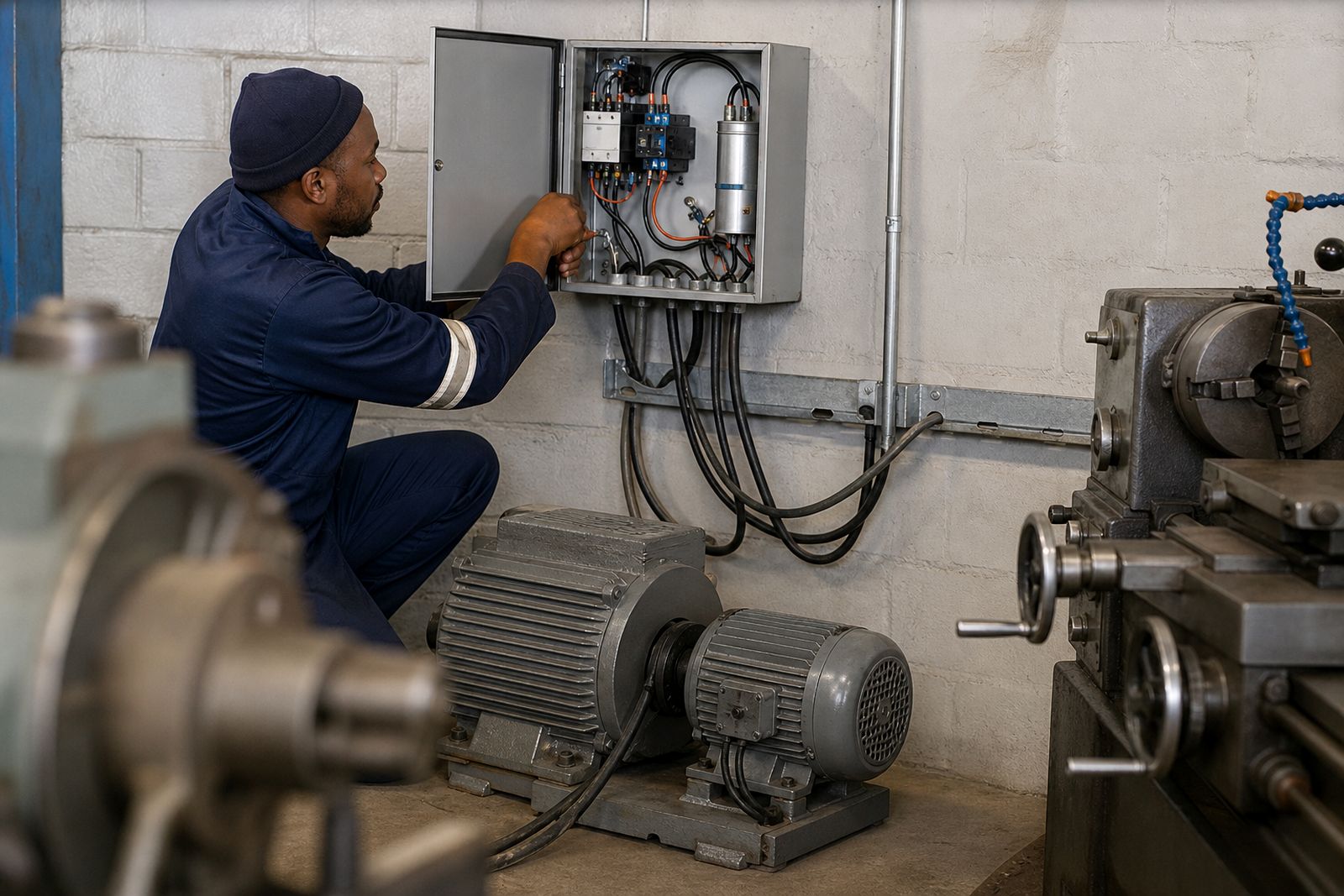
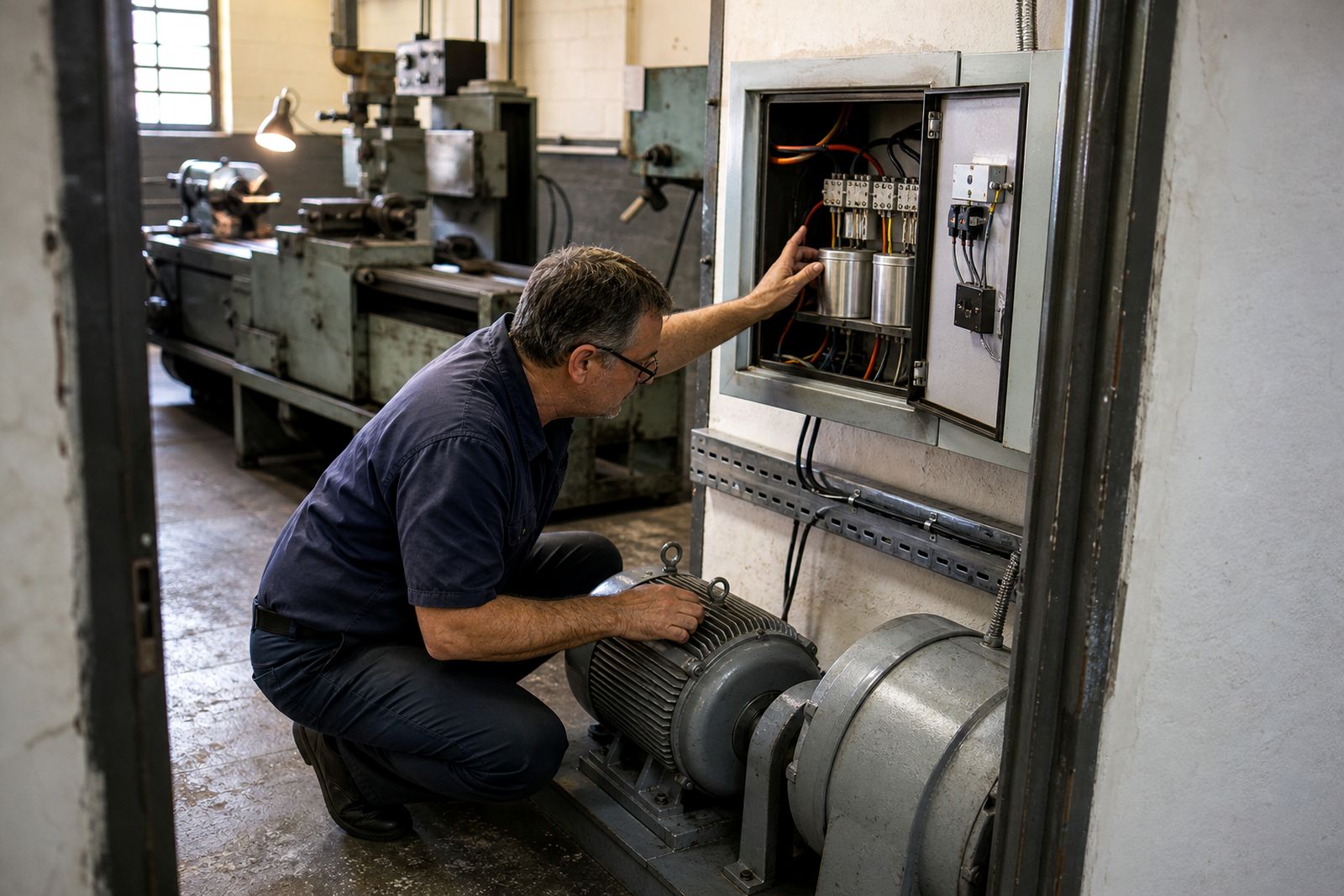
First-run checks at the machine
Your own test run, once your electrician has installed the converter, shows how the machine behaves.
Seeing a converter run a real machine answers questions quickly: start-up behaviour, motor balance, and whether the tool is suited to the available single-phase supply.
Power cables, plugs and isolators should be checked for secure connections and any signs of wear before running the first test with the converter installed.
To prepare a trial run:
- Size the converter for the machine being tested.
- Prove the direction of rotation before any cutting or pumping.
- Leave the supply point and machine markings in view all day.
First test run at your workshop
Trial runs on each machine highlight whether safety interlocks, guards and emergency stops respond correctly under real operating conditions.
Your test run may take place in less than ideal conditions. Extended cable distances and the quality of the single-phase supply both become apparent once the motor starts up and work begins.
Vibration or movement during the first loaded run points to mounting issues that need attention before regular use.
What trial run planning reveals quickly
Written observations from a short run supervised by your own team provide real feedback, not guesses, about whether the machine and converter fit the available single-phase supply.
Machine name, motor kW, and the type of test load, such as lathe, compressor or pump, help make sense of trial run results.
Afterwards, two things complete the record:
- A test of the emergency stop and safety cut-out
- The trial run notes, filed with the machine
Site layout and operating limits
Busy workshops with existing machines, older DBs and tight space around the isolator all shape how the trial run is set up. Working times and access to power influence the test plan. Where other equipment shares the supply, recording what else draws current at the same time helps.
Planning for future machine upgrades
When adding another three-phase machine to the same single-phase supply, check the previous trial run results to see how the converter and supply handled the load and starting conditions.
What our Phase Converter customers say
Verified Google reviews
Also worth a look
Tell us about your machine
Send a note through our contact form with the machine type, the motor plate kW and voltage, your supply (single-phase breaker size), the cable run and your area, and we will come back with practical converter options and a quote.
Open the contact form