

Control wiring
Terminals, controls and protection for connecting a phase converter to workshop machines, with the checks before first start.
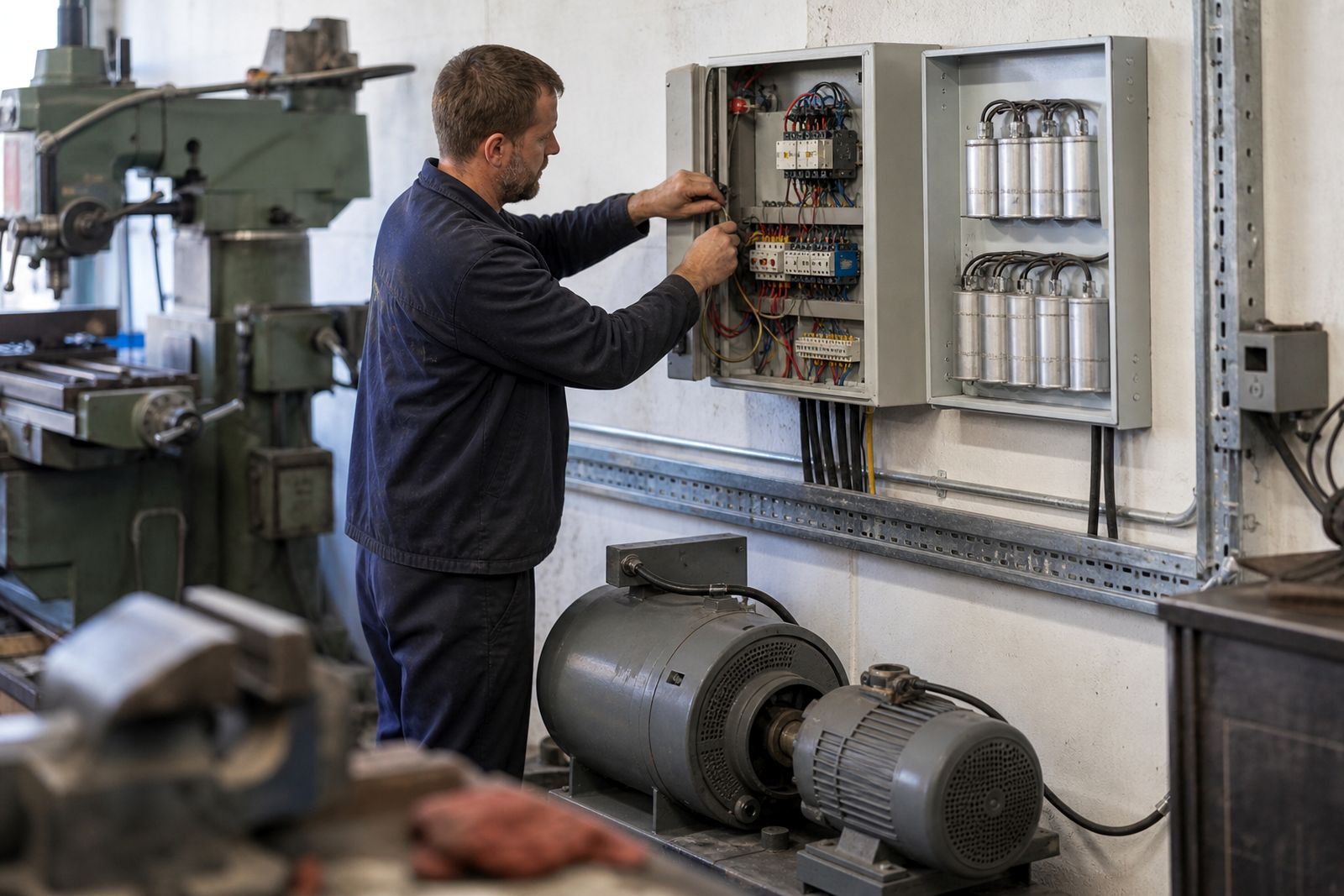
Machine control circuits
Electricians connecting three-phase equipment to a single-phase supply need the motor plate, the supply breaker and the control circuit in front of them before any links are moved. The DB board, converter position and machine terminals are recorded at the start.
Marked wiring layouts, with notes on isolator placement, control wiring and pre-switch-on checks, make later fault tracing, motor lead changes and maintenance quicker for whoever opens the panel next.
First start checks
Once your electrician completes the installation, they identify each connection point, follow the start and stop sequence and run the expected fault checks. Overload position, control wire identification and the steps for isolating the machine are written down where the next electrician will find them.
Terminal markings, incoming voltage and motor data are compared with the cable information before any converter, contactor set or replacement part is ordered, which avoids wiring errors on arrival.
A finished control installation leaves three things in place:
- A label on every terminal point
- Test results for start and trip, in the job file
- A sleeve or marker on each control wire
Existing wiring and protection
Attention goes to what is already installed, what protection is fitted and which machine has to stay available during the working day. For wiring support, an enquiry should give the isolator layout, converter setup, terminal box arrangement, supply protection and any recent tripping.
Control wiring section overview
Control wiring is the part of the installation that lets a phase converter talk to the machine controls in a safe, orderly way. It suits South African workshops, farms and small plants running three-phase equipment from a single-phase supply, including lathes, milling machines, CNC routers, compressors, saws, drill presses and pumps.
It is used with rotary units, static kits, idler packs, panel mounts, soft starts, enclosures, cable sets and spares where the terminals, protection and start sequence all need to match the motor and the supply. For the right setup, compare the motor plate kW and voltage, the starting load, the incoming supply, the cable run and whether the enclosure has room for neat terminations.
What to check before choosing
- Motor nameplate details, including kW, voltage and lead arrangement
- Breaker and distribution board arrangement at the supply end
- Starting load and how often the machine starts during a shift
- Distance between converter and machine, including cable route and termination points
- Space for the enclosure, controls and any protection devices
If the machine has a control circuit, overloads or an isolator, those parts need to be identified before any links are moved. Written notes help the next electrician understand which terminal belongs where, how the stop and start sequence works, and what to check if a trip happens later.
Electrician fit and maintenance
The customer’s own registered electrician installs the converter, fits the control wiring and checks the machine before first start. Phase Converters supplies written commissioning guidance, remote checks and warranty help, so the installer can confirm the wiring layout, identify each connection point and complete the final checks against the motor data and protection already on site.
After installation, good care is simple: keep the terminal box clean, check labels and wire markers, and note any change to the supply, enclosure or machine wiring. For help choosing a wiring set or panel arrangement, send site photos and a brief note through the contact form. If you want to compare wiring options, see the control wiring specs.
Related pages
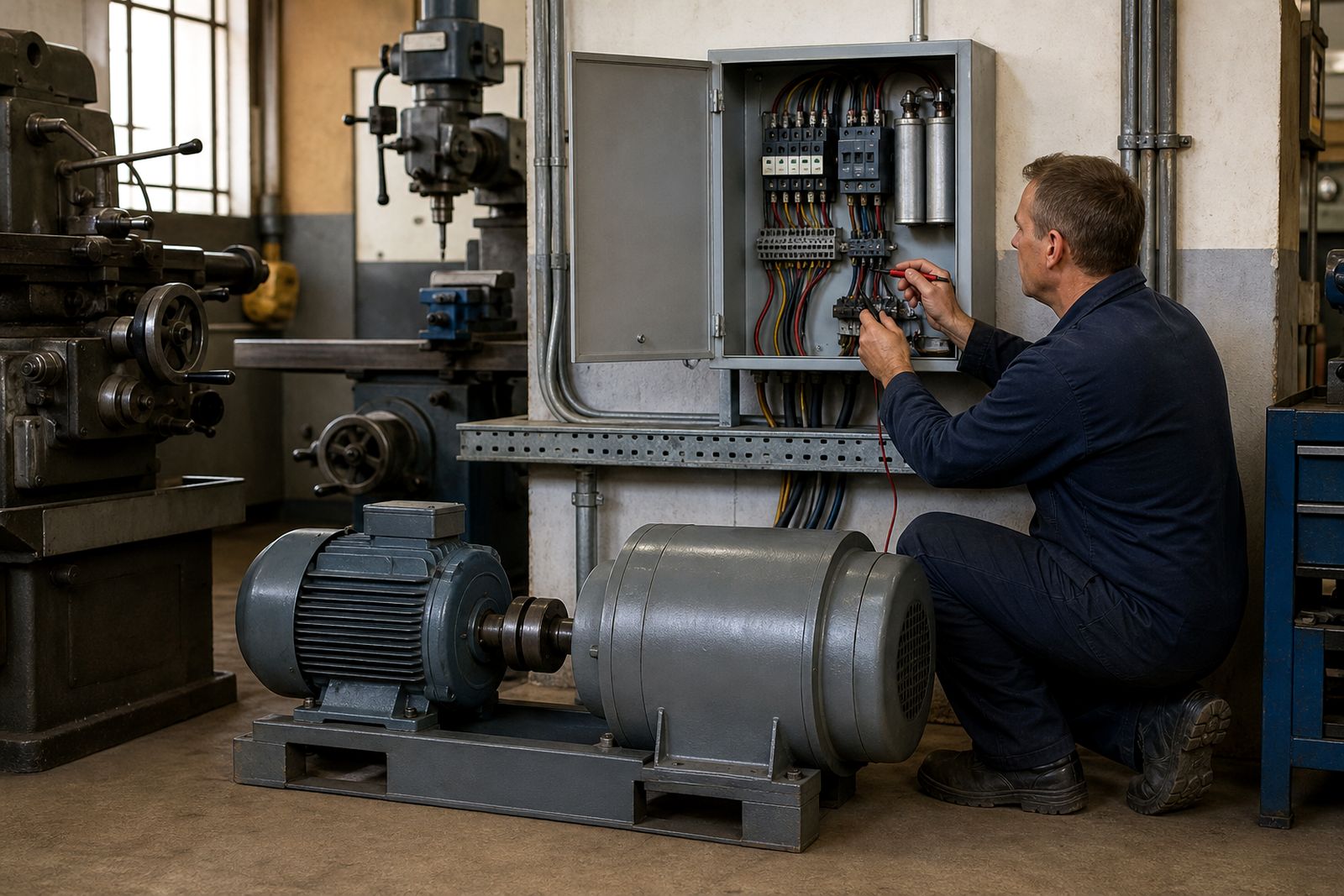
Control wiring specifications
Control voltage, terminal numbers, conductor size and overload settings checked when wiring a phase converter.
Read more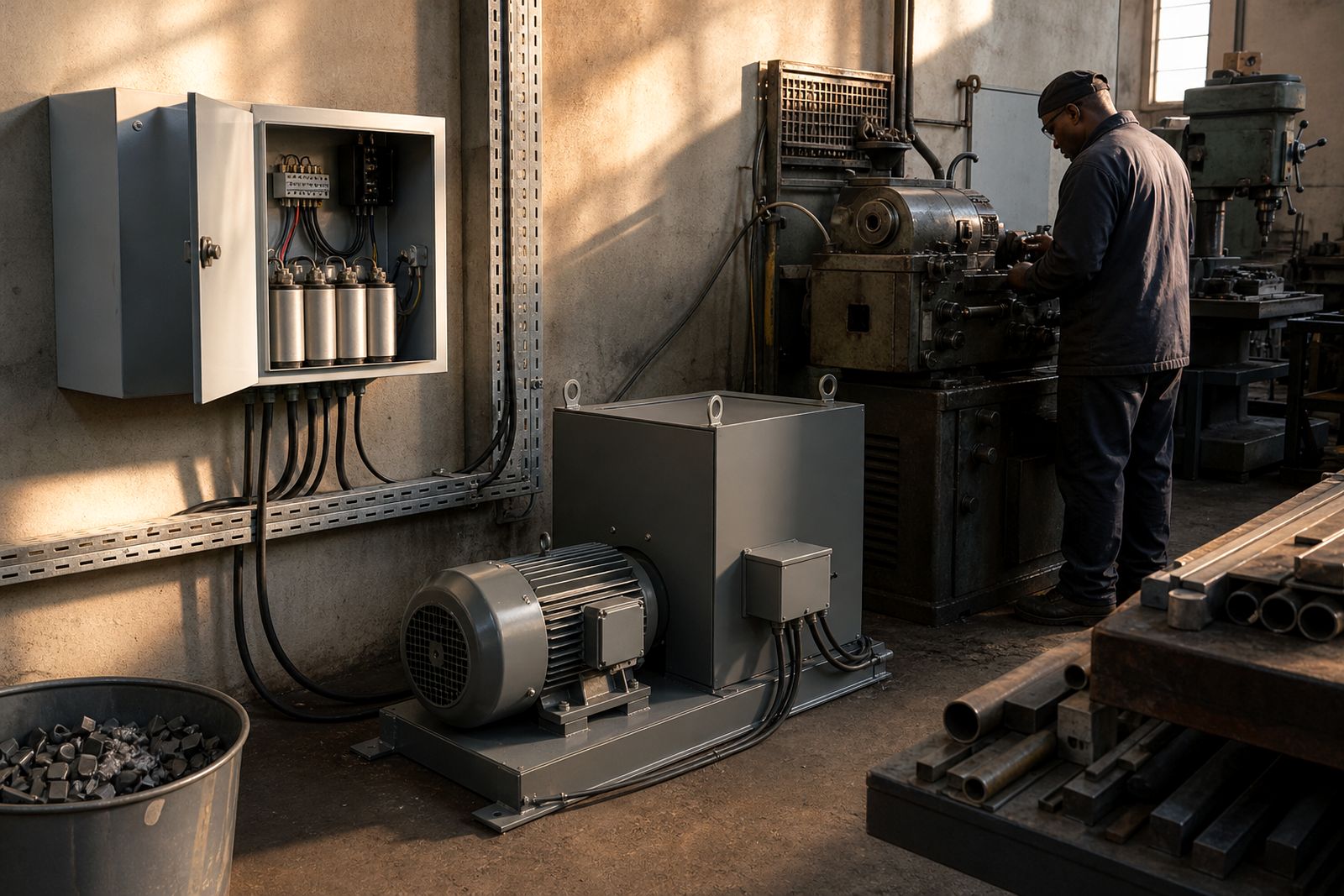
Workshop enclosure
Steel converter enclosures for workshops with grinding dust, forklift traffic and loose offcuts, with mounting and gland entries planned first.
Read more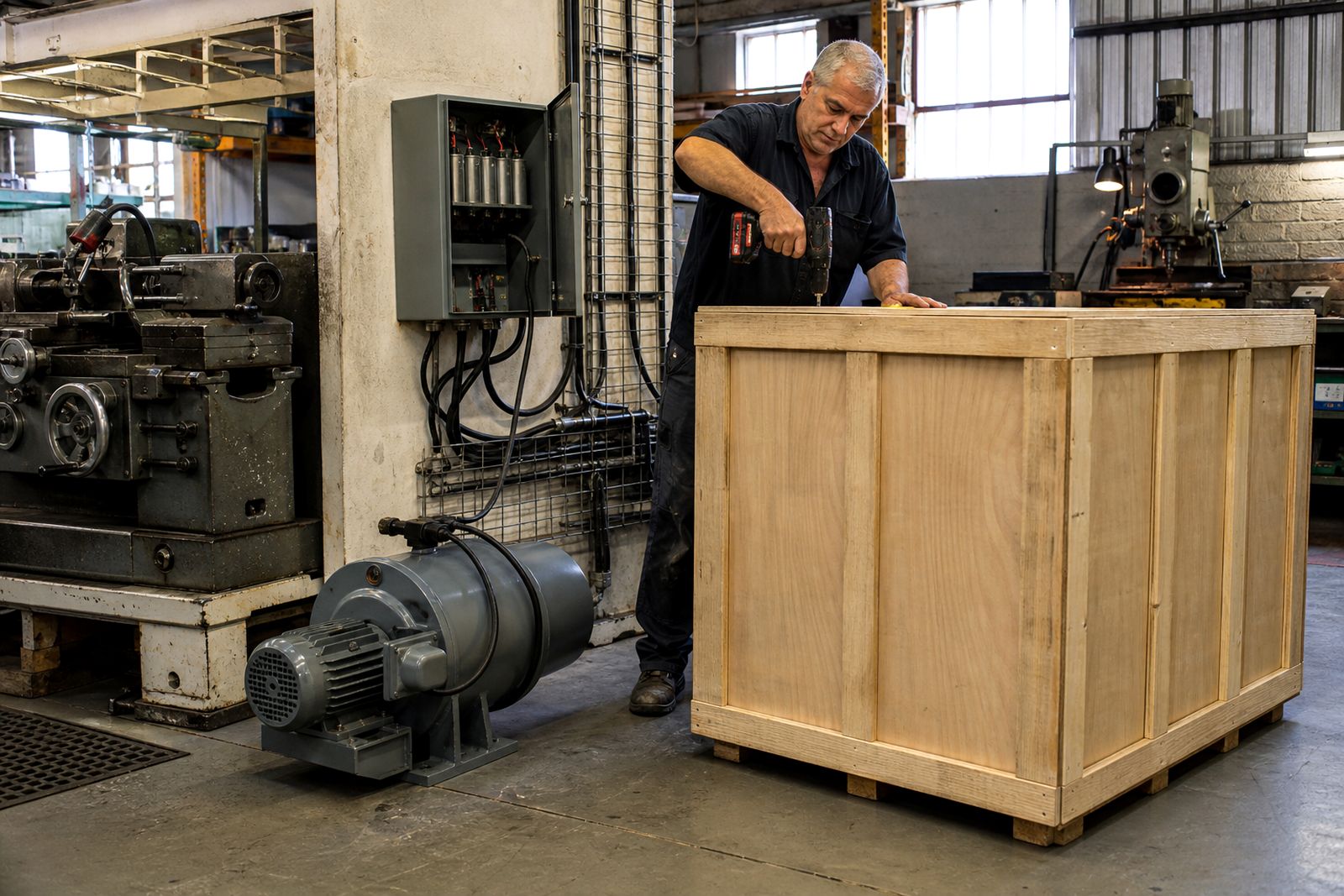
Export crating
Units leaving South Africa need crating, paperwork support and the right machine power requirements.
Read moreWhat our Phase Converter customers say
Verified Google reviews
Tell us about your machine
Send a note through our contact form with the machine type, the motor plate kW and voltage, your supply (single-phase breaker size), the cable run and your area, and we will come back with practical converter options and a quote.
Open the contact form