

Control wiring specifications
Control voltage, terminal numbers, conductor size and overload settings checked when wiring a phase converter.
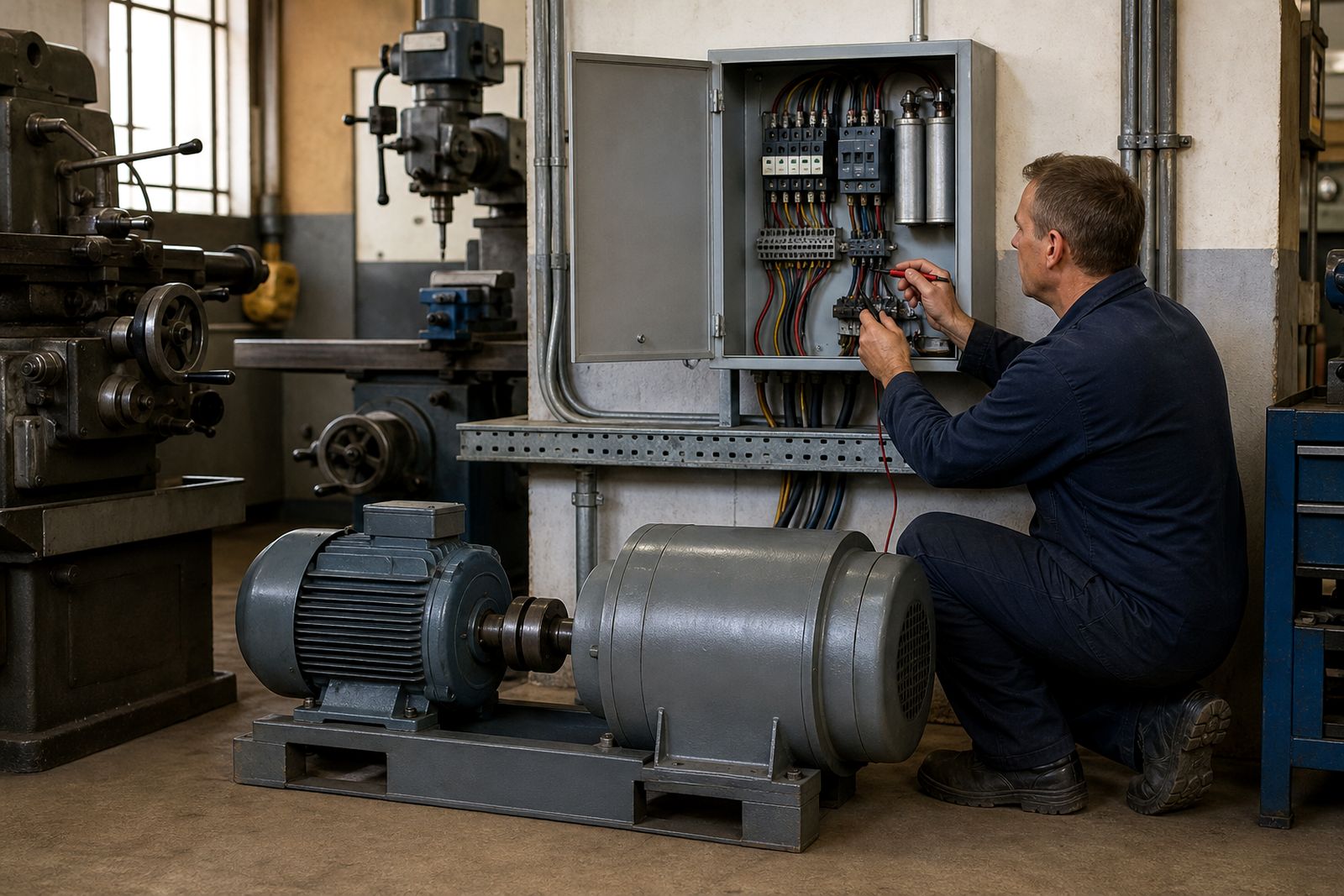
First connection details
Control wiring needs the single-phase supply to match the machine requirements. Supply dips, breaker size, dust and cable length all affect how the control wiring is installed, so those details are settled before switching on.
Entry points for control conductors, their protection, and terminals that must stay separate from the main power side are identified early. That prevents crossed controls, nuisance trips and wasted time during testing.
Machine wiring details
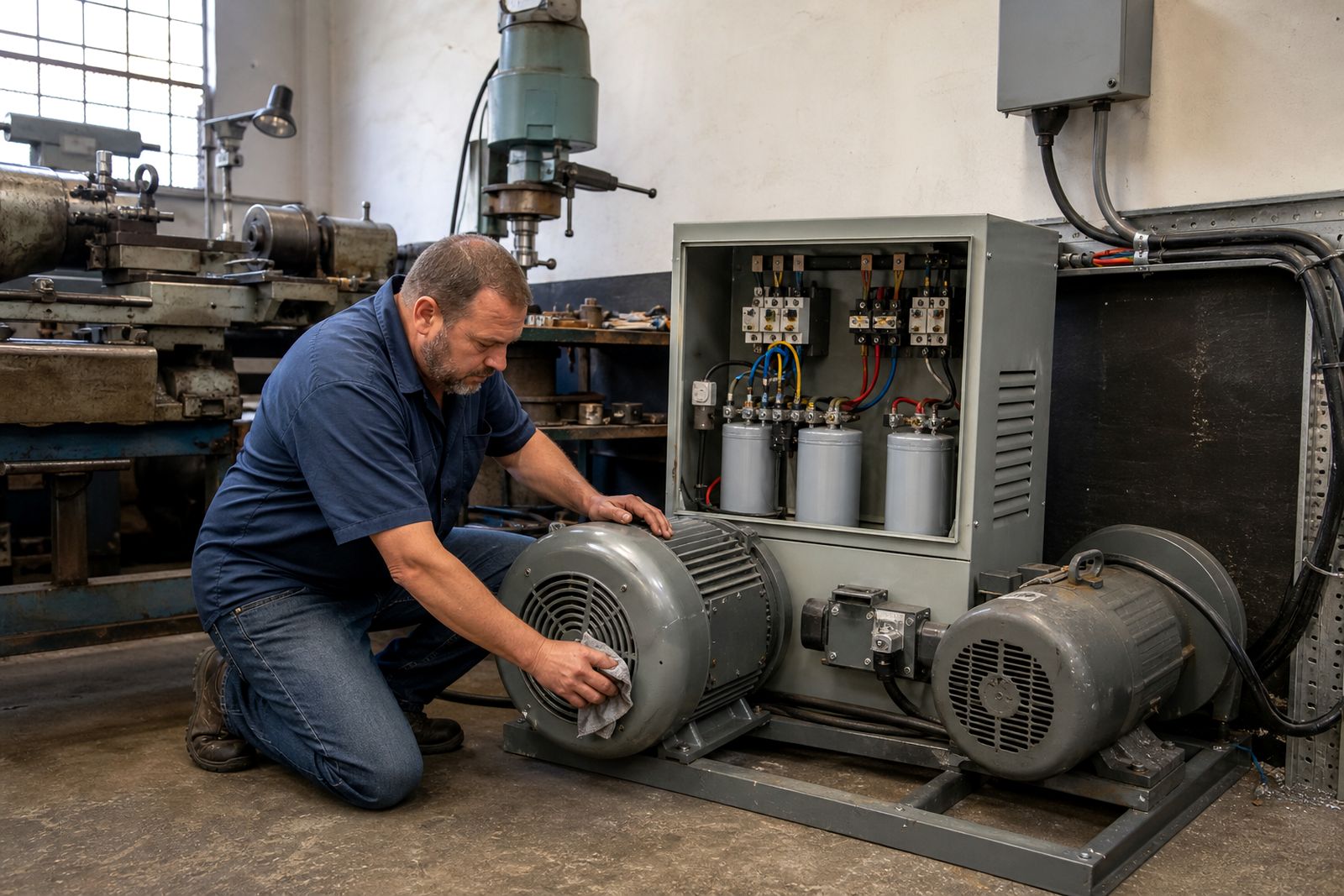
Terminal numbers, control voltage, conductor size and the stop-start arrangement are confirmed on the machine itself. Earthing points, overload settings and any interposing contactor supplied with the converter kit are checked directly on the equipment.
Neat control wiring follows three rules:
- Run control wiring away from high-current power cables.
- Inspect the DB board and isolator before any wiring starts.
- Tighten every termination to the correct torque.
Supply interruptions and vibration
Generator changeovers and supply interruptions affect how contactors and timers restart. Vibration loosens small control terminals over time, so relays and terminals near vents are worth checking at every service.
Wiring information needed
Machine model, motor kW, full-load amps and supply voltage should be available before work starts, along with any history of tripping, reversed rotation or a failed push-button station. Wire schedules listing terminal numbers, control voltages and protection settings let an electrician reconnect the controls correctly after any later repair.
Control wiring section overview
The control wiring spec covers the low-voltage side that tells a converter, starter, timer or contactor when to act. It suits South African workshops, farms and small plants that run three-phase machines from a single-phase supply, including lathes, milling machines, CNC routers, compressors, saws, drill presses and pumps.
Use it when you are choosing a rotary unit, static kit, idler pack, panel mount, soft start, enclosure, cable set or spare part for a machine that needs careful control wiring and orderly terminations. The aim is to keep the control side clear, serviceable and matched to the machine nameplate and starting method.
What to check before choosing
Before fitting or ordering any converter kit, confirm the motor plate kW and voltage, the starting load, the supply available at the site, the cable run and whether the controls need a suitable enclosure. Long runs, dusty sheds, coastal humidity and exposed farm buildings all affect how neatly the wiring is protected and routed.
- Check the motor nameplate, breaker arrangement and distribution board layout.
- Confirm whether the machine starts under load or with a light start.
- Note the route from supply point to machine, including cable length and protection.
- Allow for a panel, enclosure or cable set if the controls need better protection.
Installation and aftercare details
The customer’s own registered electrician installs the converter and wires the controls on site. Phase Converters supplies written commissioning guidance, remote checks and warranty help, so the electrician can confirm terminal numbers, conductor size, overload settings and stop-start arrangement before switching on.
For support, sample viewing by appointment and general product guidance, you can visit the head office at 2 Makro Place, Sunnyrock, Germiston, or one of the showrooms at Clearwater, Cresta, Pavilion, Tyger Valley, Gqeberha, Mimosa or Riverside. For a quote or to send site photos, use the contact form.
What our Phase Converter customers say
Verified Google reviews
Also worth a look
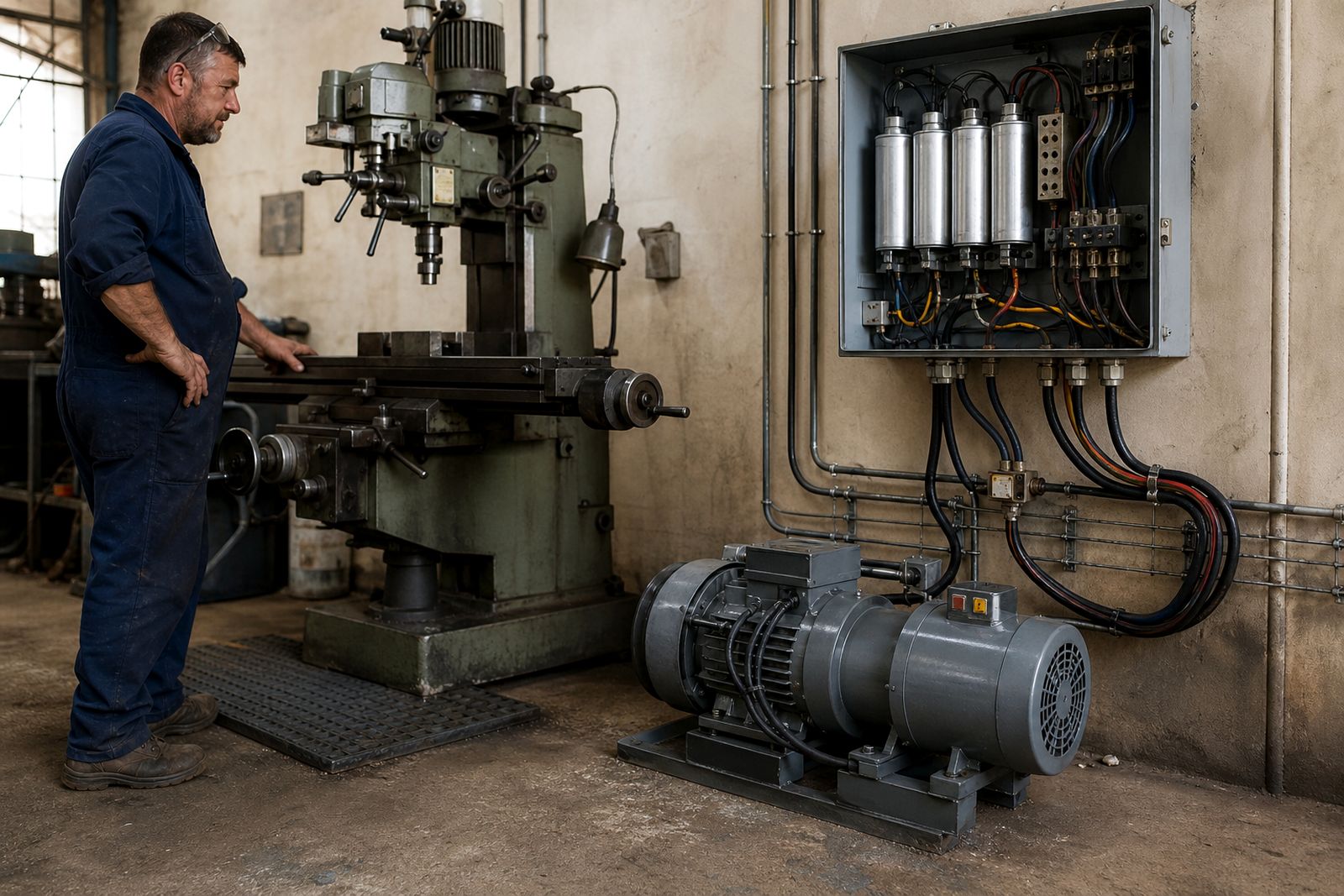
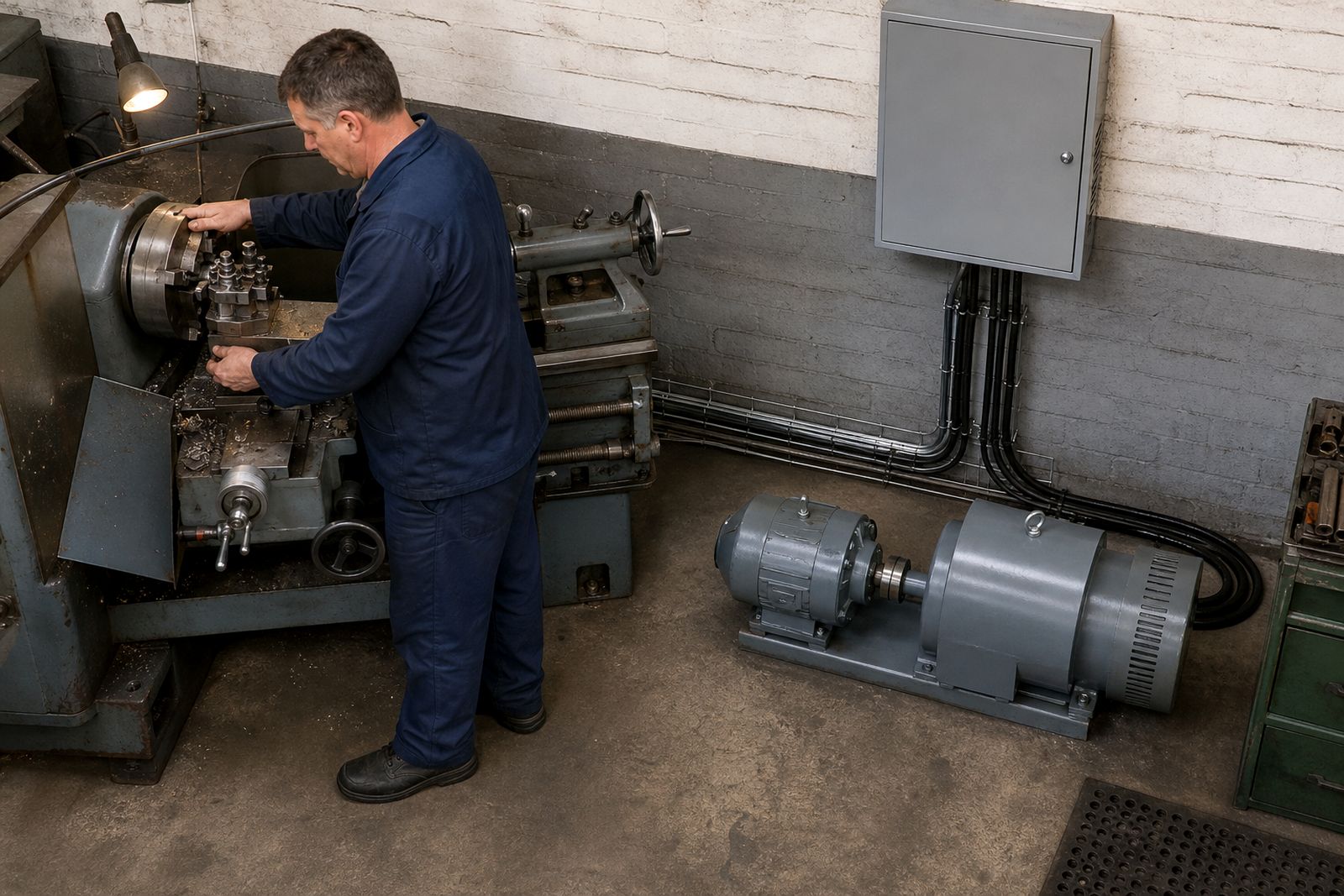
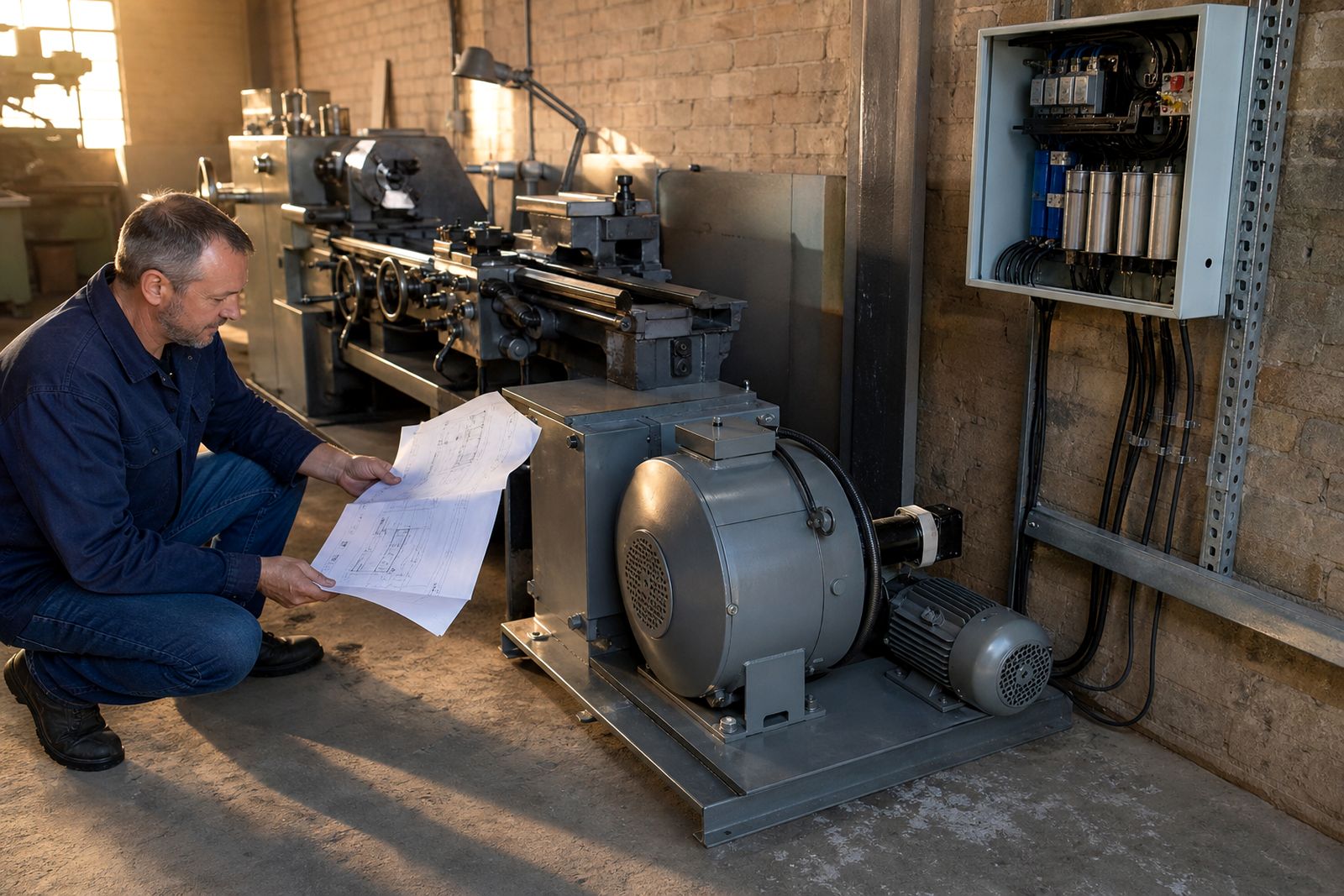
Tell us about your machine
Send a note through our contact form with the machine type, the motor plate kW and voltage, your supply (single-phase breaker size), the cable run and your area, and we will come back with practical converter options and a quote.
Open the contact form