

Rotary unit specifications
Layout, load and installation requirements for the rotary converter arrangement in the rotary unit.
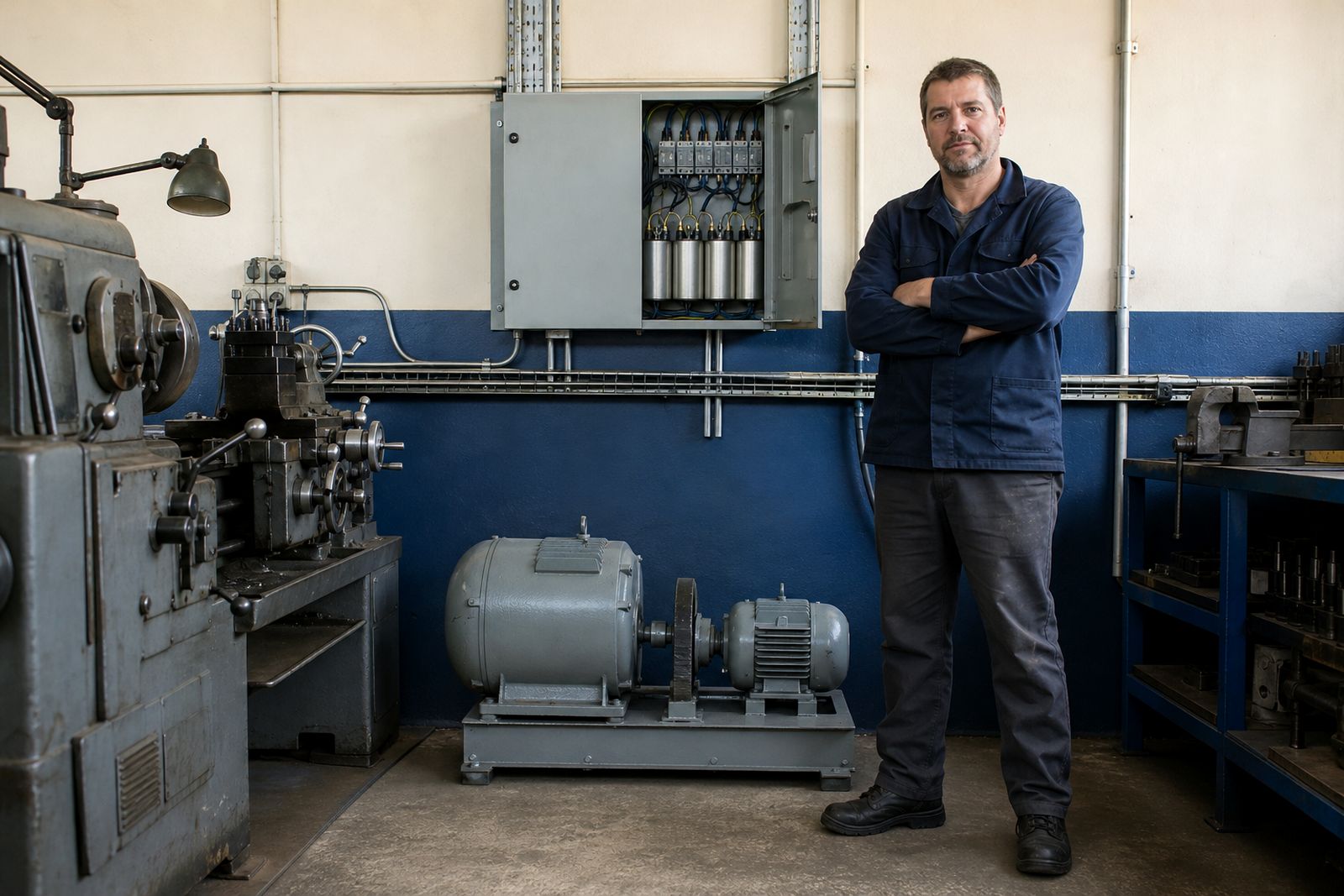
Rotary unit rating points
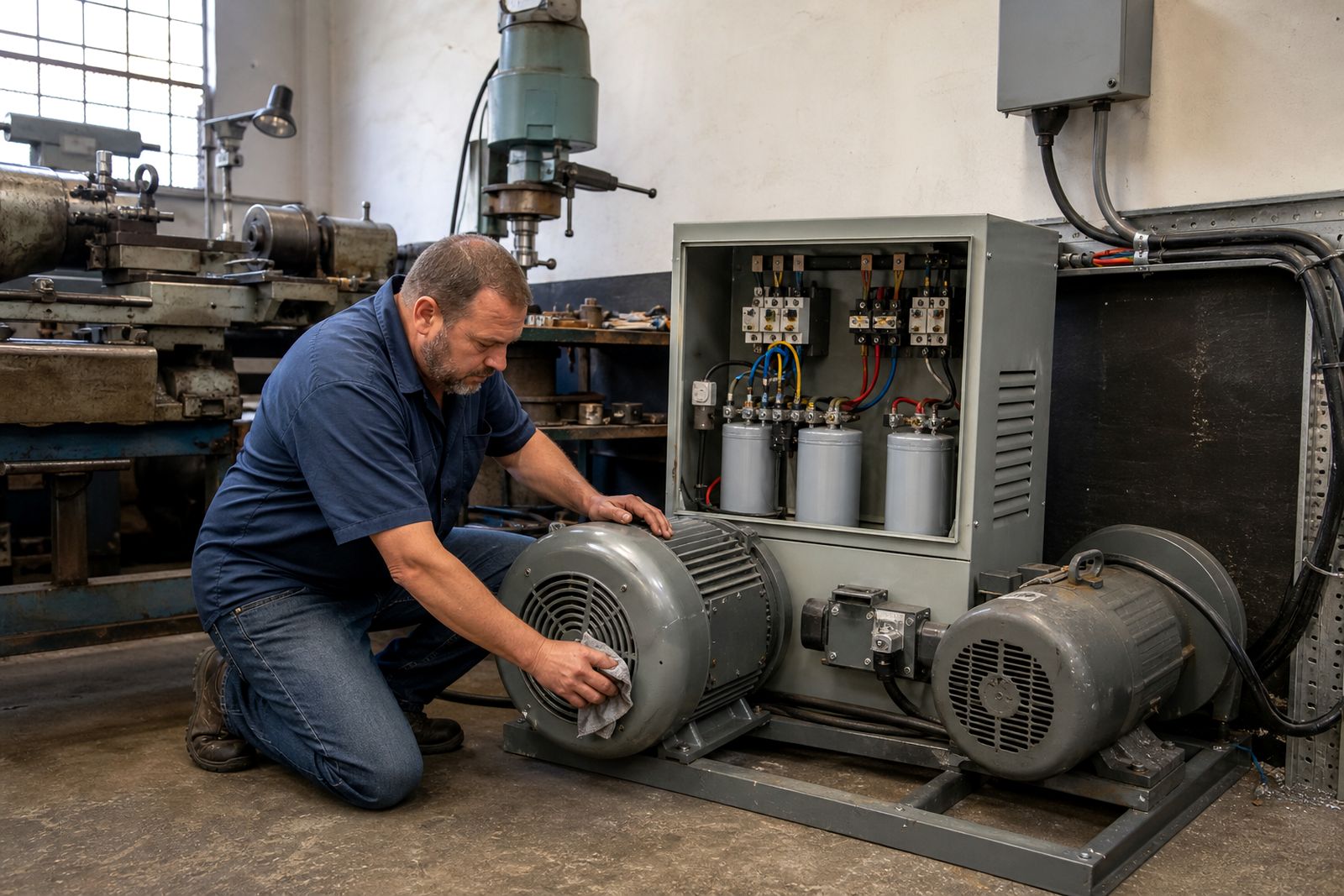
Noise levels from the rotary converter may be noticeable in smaller workshops, especially during startup and under heavy load.
Input voltage, output balance, starting demand and the cable run length from the DB to the converter all play a key role in performance. Knowing only the type of machine leaves out factors that matter for a reliable setup.
Layout details should be compared directly with the available wall space in your workshop to avoid awkward rerouting later. Room for airflow, belt inspection and safe access to terminals during commissioning must be allowed for at the actual mounting position.
Output and load fit
Lathes, mills, saws and other three-phase machines can run from a single-phase supply when the full-load current, motor size and starting pattern of your equipment fit the converter's capabilities. Adjust overload protection or breaker settings to match the converter output.
Accurate motor plate and DB rating details are needed before ordering cable or enclosure hardware. Missing information can lead to delays or incorrect sizing.
Ahead of the order, compare:
- Each machine's plate details against the converter rating
- The mounting height against knocks, splashes and stored items
- DB capacity against the total load
Site factors affecting reliability
Dust near vents and long feeder runs in older setups can affect reliability. Installation should always suit the actual site.
Frequent power interruptions make restart behaviour worth checking on any rotary converter arrangement. Check contactor condition, overload settings and the machine sequence after supply returns. On smaller workshop sites, earthing and breaker coordination should also be confirmed before energising the machine.
Load type and nameplate figures
Supply size, motor kW, and whether the load starts under tension or free-running all influence the choice of converter. Accurate nameplate and DB figures are needed to match the right converter and ensure correct cable and protection sizing.
What our Phase Converter customers say
Verified Google reviews
Also worth a look
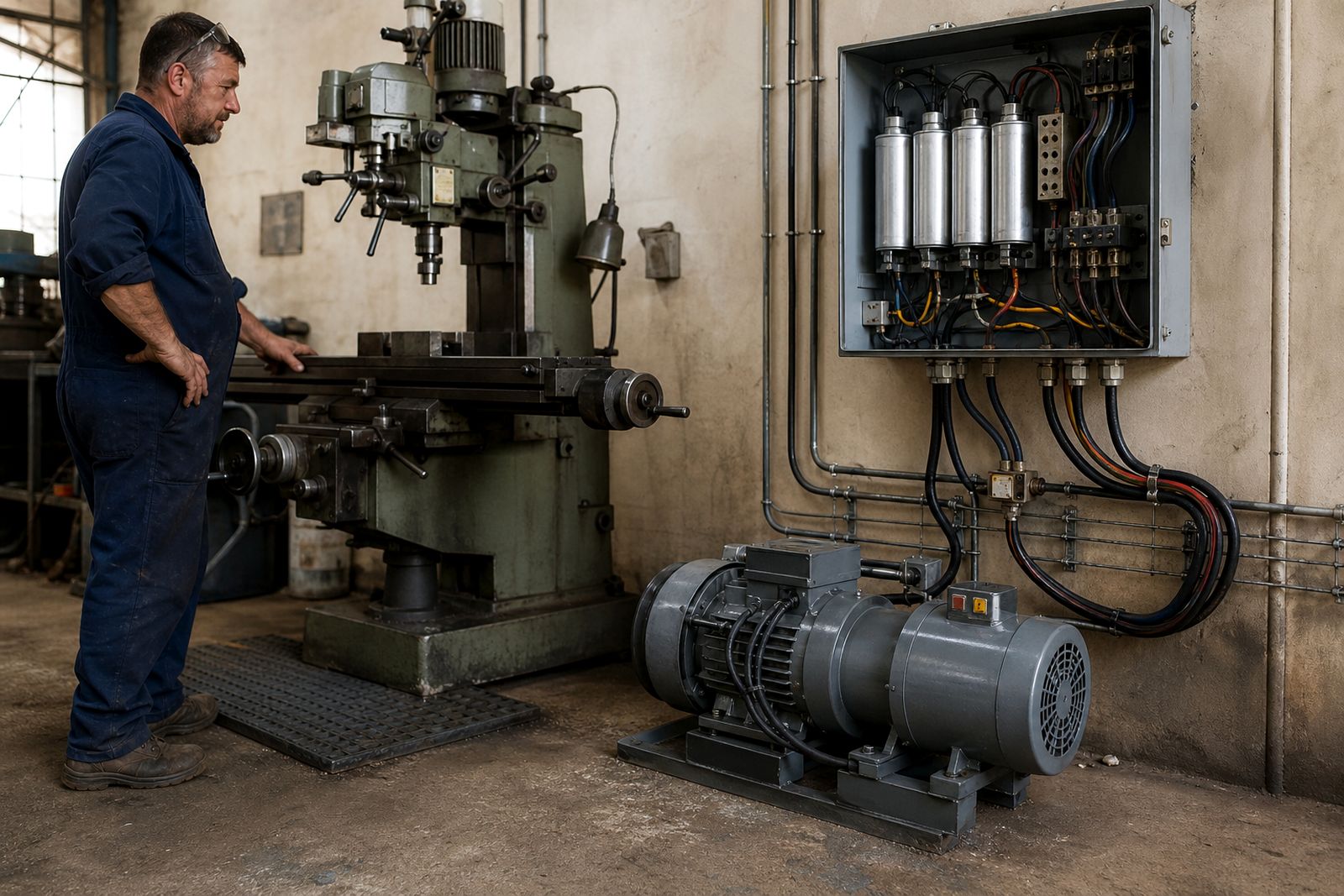
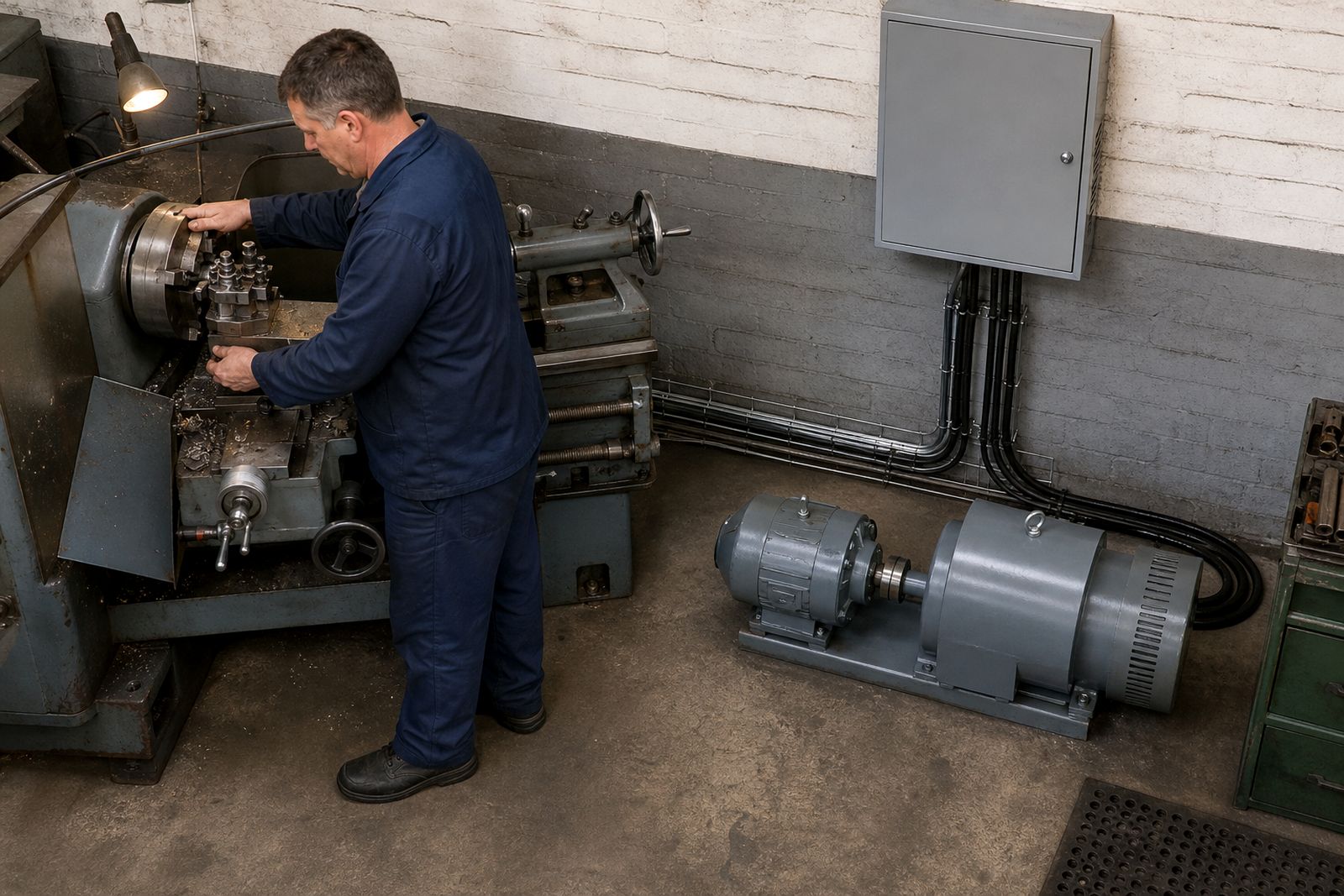
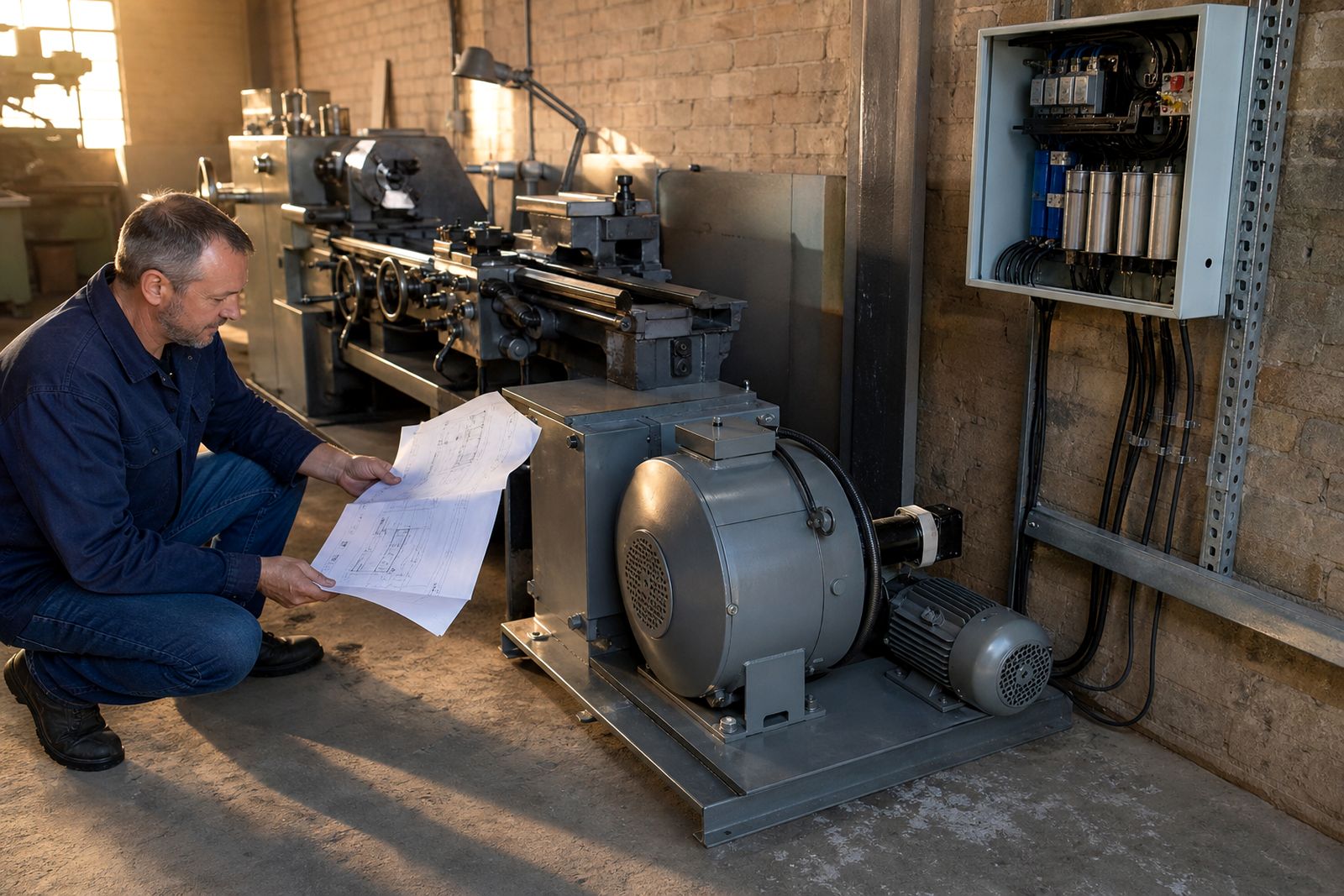
Tell us about your machine
Send a note through our contact form with the machine type, the motor plate kW and voltage, your supply (single-phase breaker size), the cable run and your area, and we will come back with practical converter options and a quote.
Open the contact form