

Cape Town machine rooms
Cape Town machine rooms running heavier workshop loads on single-phase supply through phase conversion.
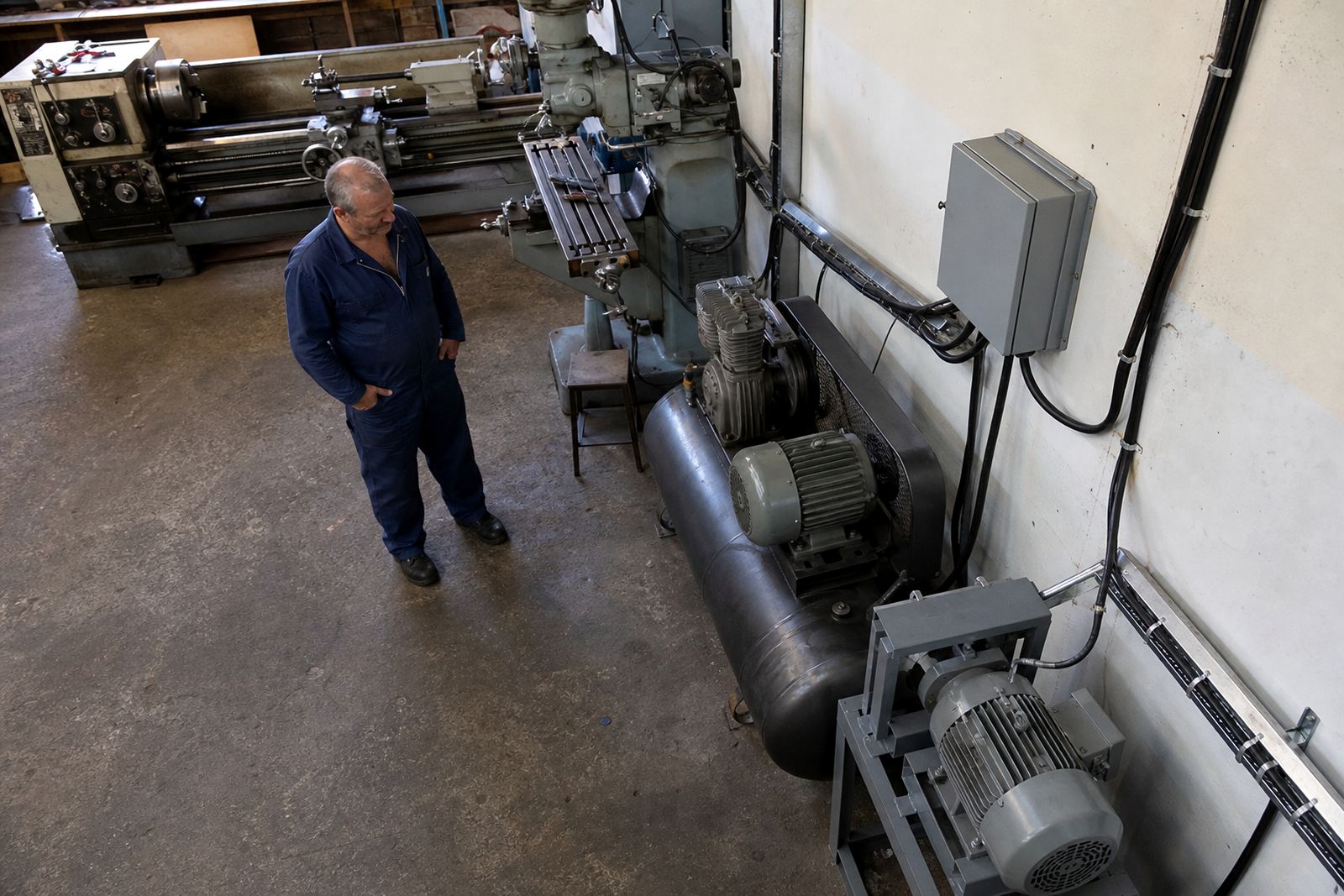
Power planning in tight rooms
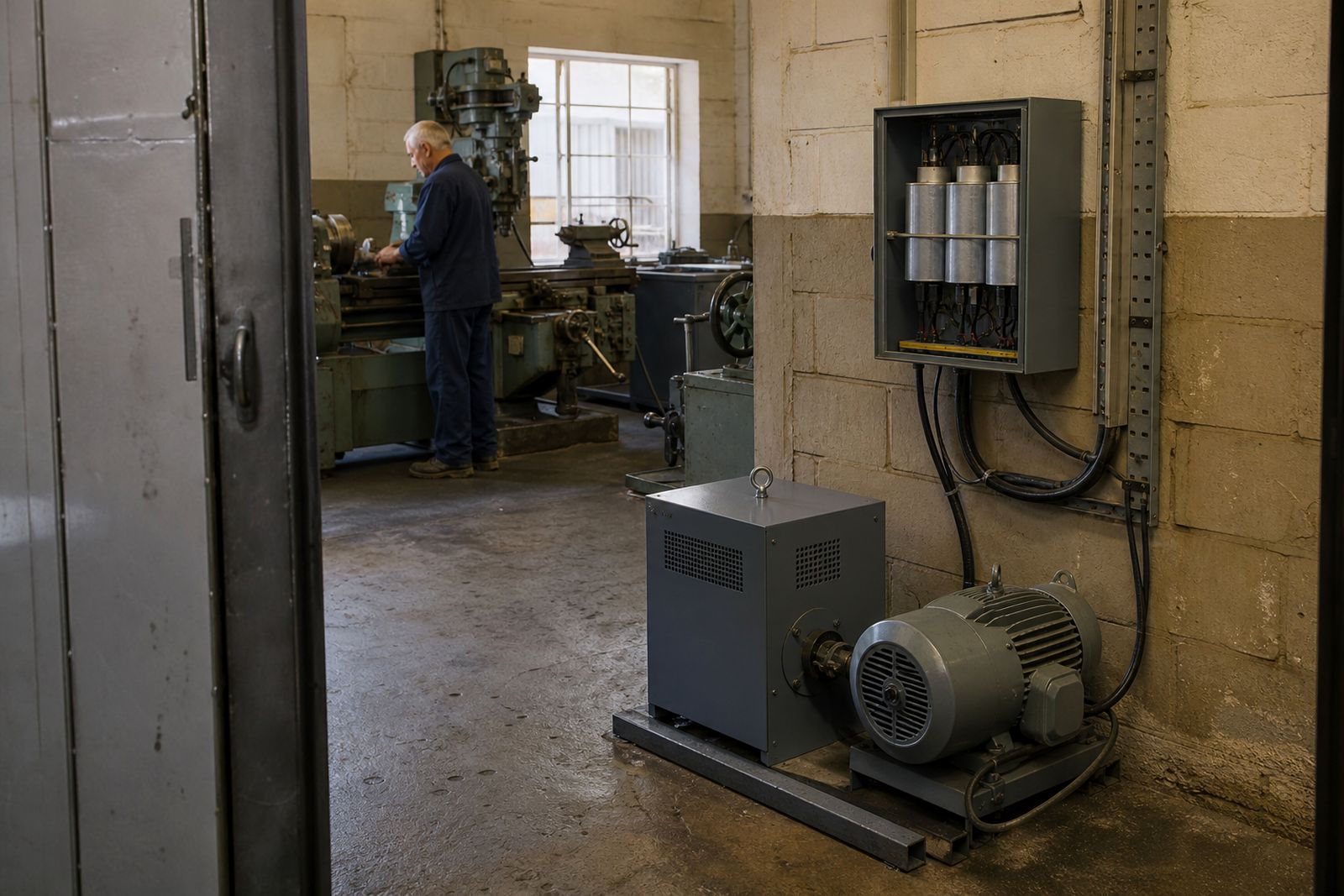
Space in a Cape Town machine room may be tight, but heavier workshop loads still need the same power to run correctly. The right board and cable information has to be ready before installation is planned.
Single-phase feed size, distance between the DB and each machine, and the motor data all decide whether three-phase operation will be reliable in a compact room. Narrow service passages and shared commercial properties may affect the choice of enclosure and how cables are routed.
Early layout information on the board, isolator and machine connection point simplifies cable planning and shows up any tight corners or obstacles in the room. Undersized cables, nuisance tripping and equipment moved after installation are all easier to avoid this way.
Install reference notes
Converter choice depends on the actual machine load and the supply available on site. Board checks, cable sizes and startup points need to be written down so the electrician has a usable reference. For heavier workshop equipment, one correctly matched setup matters more than a wide list of possible combinations.
Positioning the converter close to both the supply board and the main machine can simplify wiring and can reduce installation costs in smaller rooms.
Compact rooms add two checks:
- Access for moving heavy equipment or enclosures into the room
- Supply size and the maximum load it allows
Cape Town machine room supply conditions
Mixed-use buildings, small industrial units and converted warehouse sections may have only a single-phase supply. Existing machines that hum, stall, or trip on start indicate possible supply issues. Record what is currently wired, which breaker feeds it, and what other loads are running from the same board.
Heat build-up around converters and limited ventilation in compact workshops can be as important as the size of the motor. Always consider how the system restarts and whether overload settings are correct after power returns.
Before a converter is specified
Current transformer ratings, any installed surge protection, and space for additional circuit breakers in the board all help with planning the right converter setup.
Existing panel labelling, available breaker slots and shared supply circuits between machines all help in specifying the right converter.
What our Phase Converter customers say
Verified Google reviews
Also worth a look
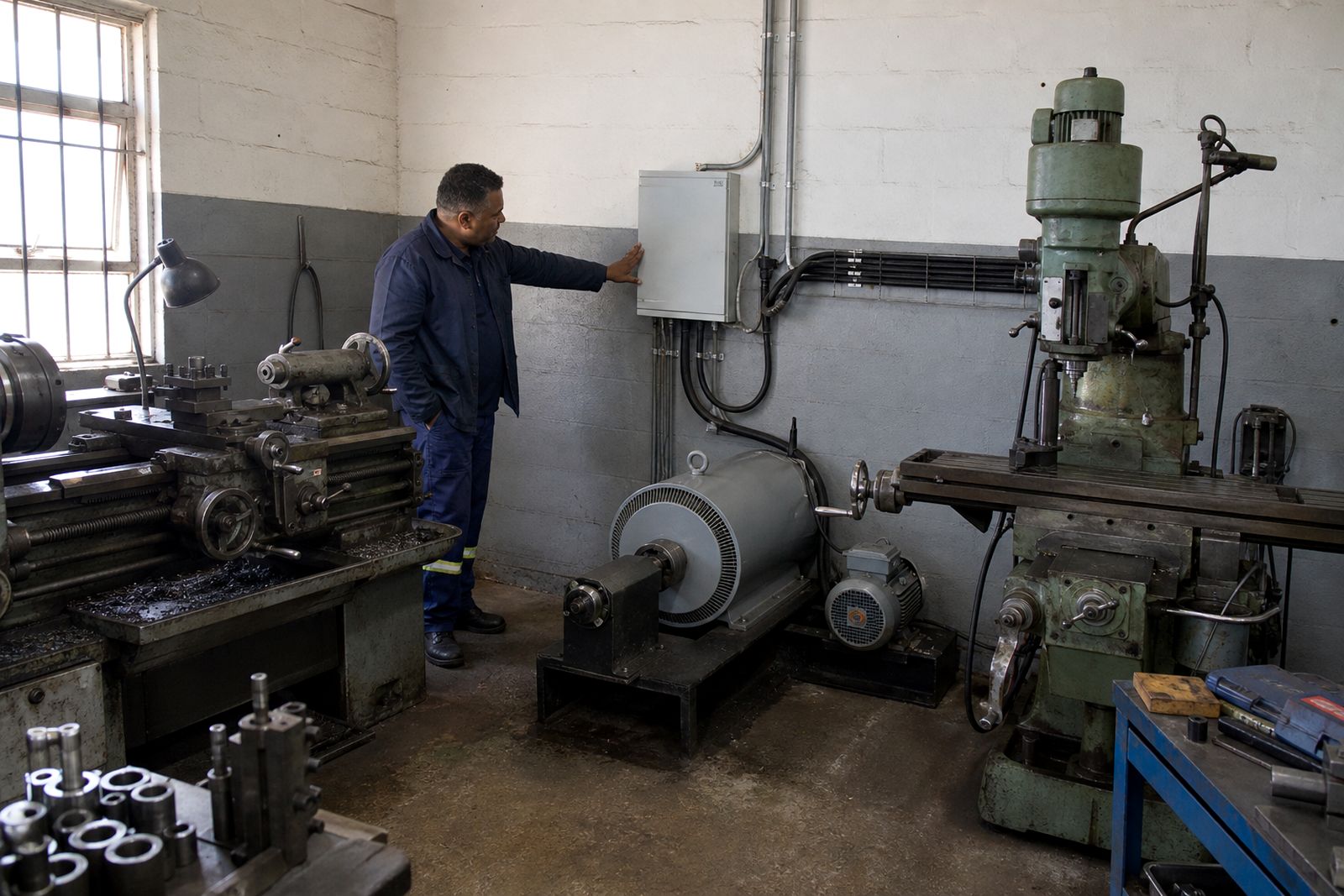
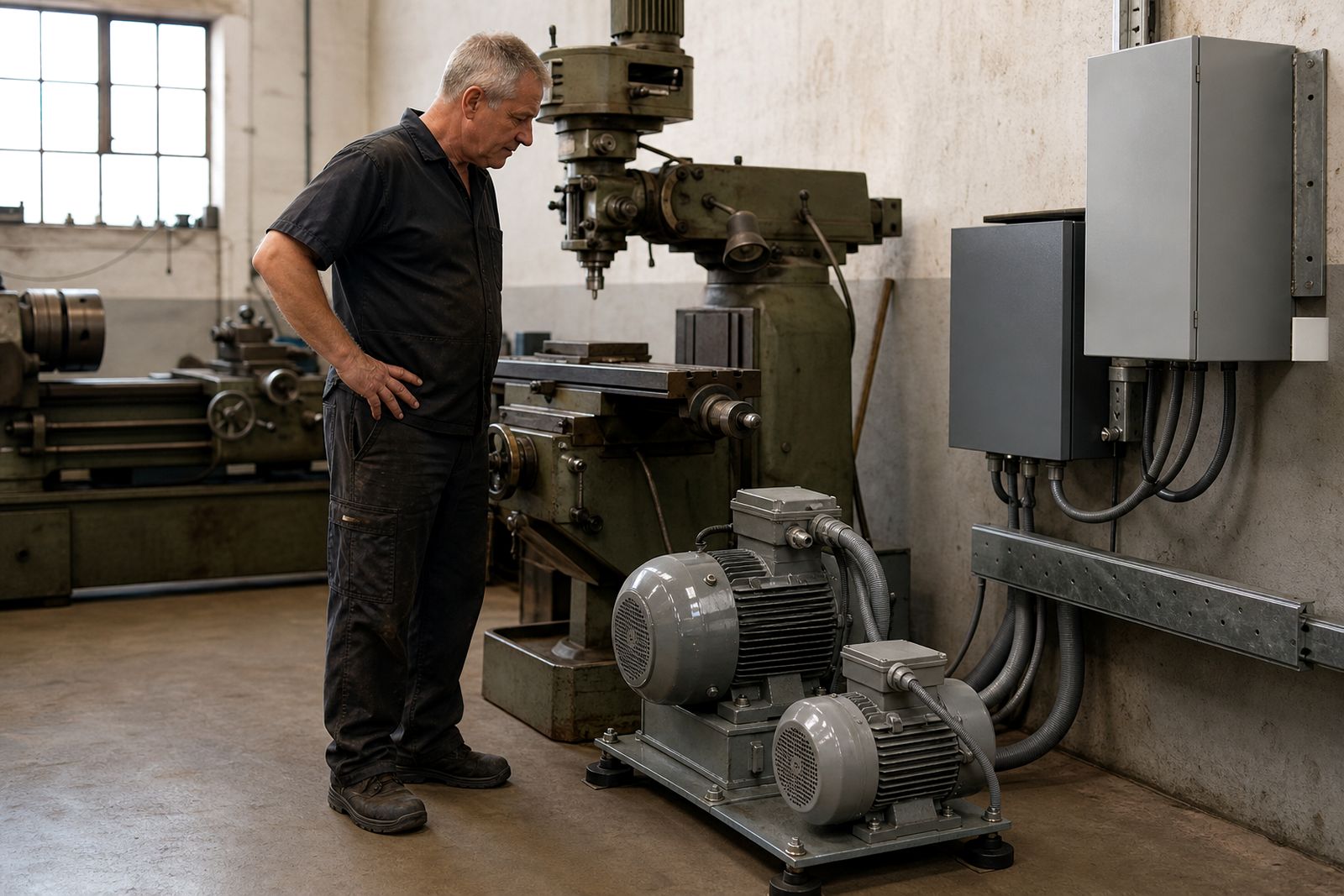
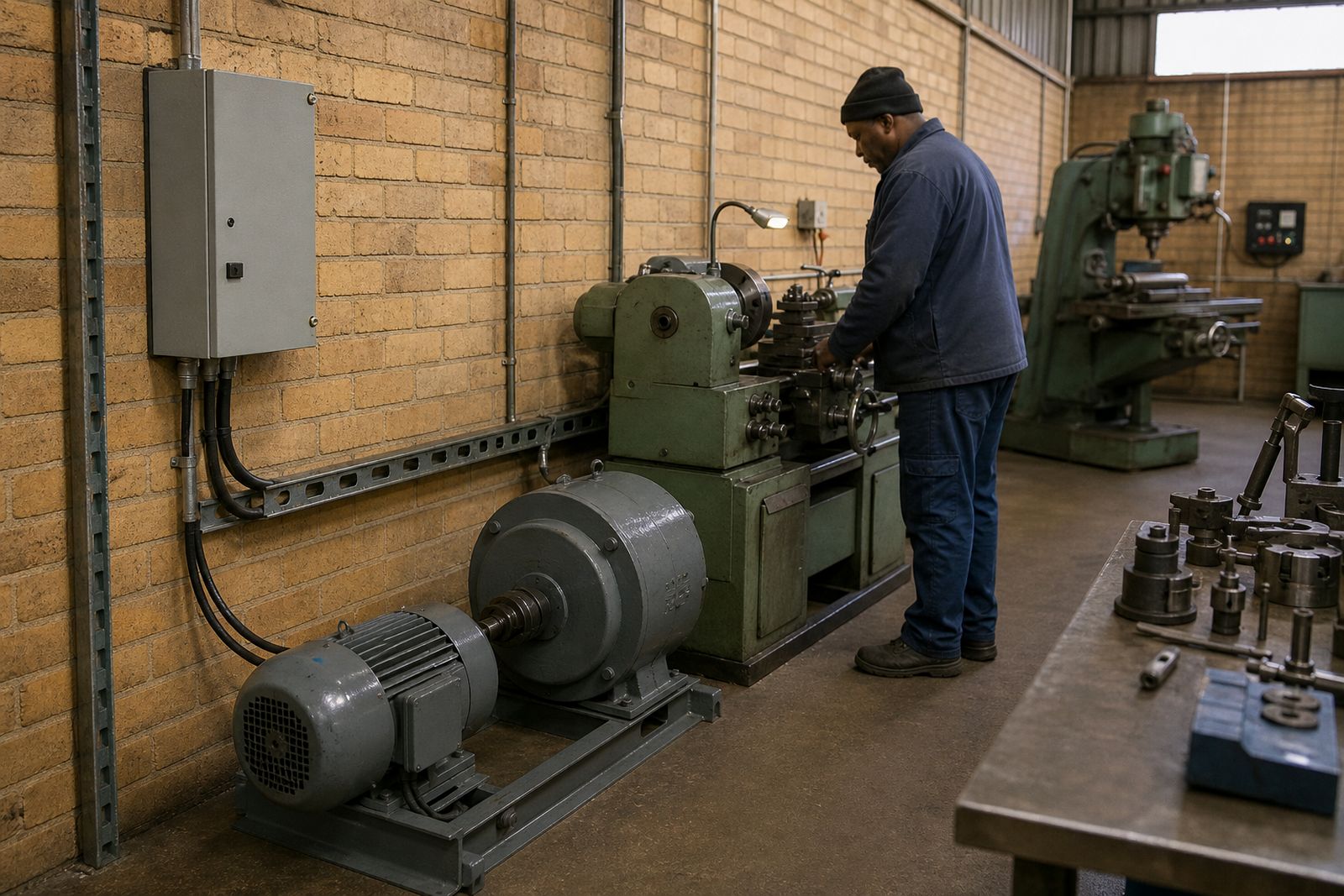
Tell us about your machine
Send a note through our contact form with the machine type, the motor plate kW and voltage, your supply (single-phase breaker size), the cable run and your area, and we will come back with practical converter options and a quote.
Open the contact form