

Replacement parts support
Replacement contactors, capacitors and control parts for converters, matched from the labels on the failed part.
Ordering replacement parts
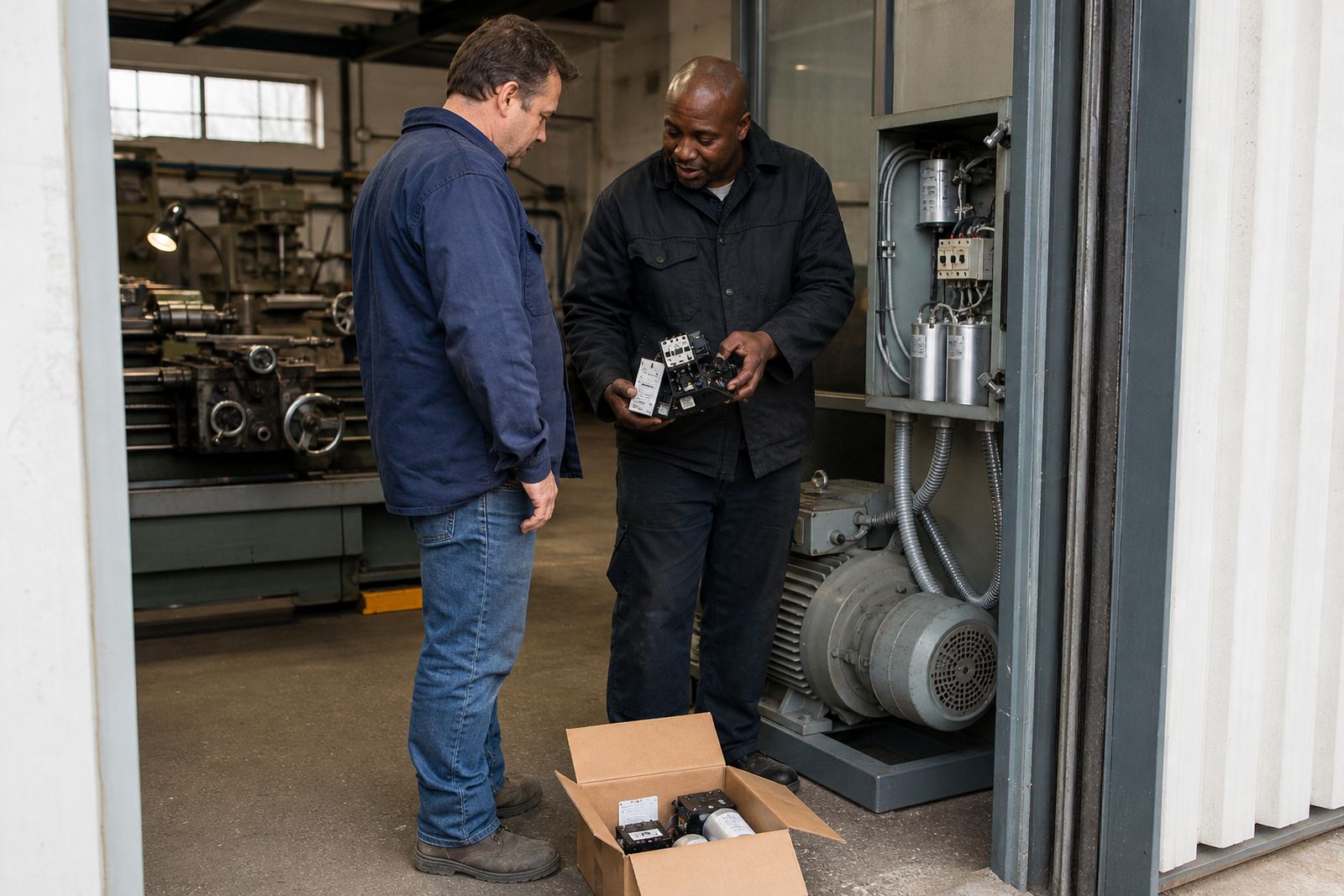
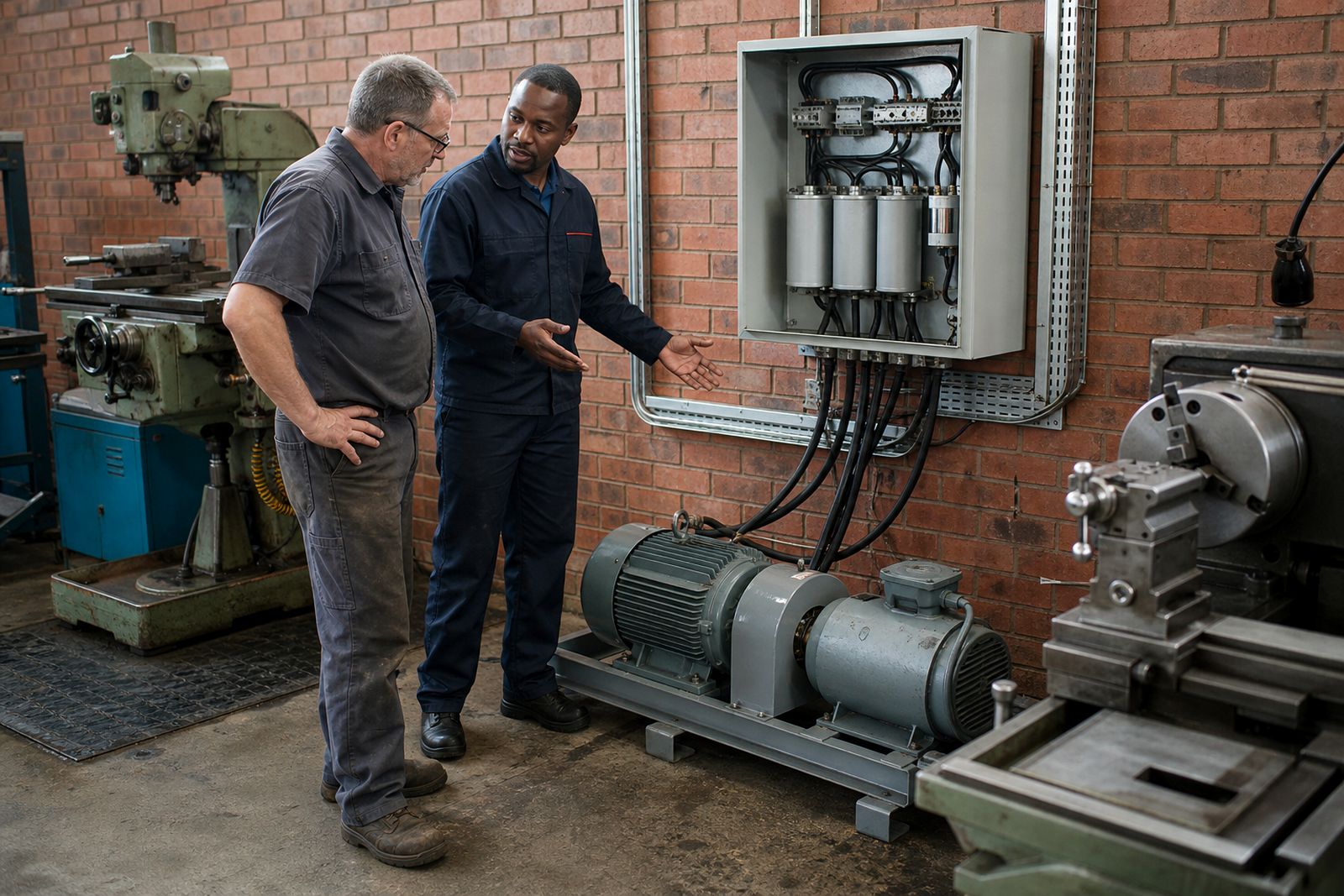
Correctly identifying the part is essential when supplying replacement items for phase converters, panels or control gear already in use. Comparing the unit on the workshop floor to the part being replaced ensures the right fit.
Labels on the contactor, capacitor, relay or switchgear provide key details for matching coil voltage, terminal layout and enclosure fit. Examining the failed part itself, rather than relying solely on the converter model, leads to a more accurate replacement.
Nameplate information from both the machine and the converter gives a clear picture, as these may not always match even when equipment looks similar. Panel layout, visible differences, and all markings or specifications on the faulty item itself should be detailed. Troubleshooting is easier when symptoms, like humming motors, chattering contactors, or converters not starting, are included.
Panel and part details
A written note on the panel should cover what sits inside the enclosure as well as on the door. Any modifications, added controls or wiring changes need to be recorded, as these can affect part compatibility during maintenance or upgrades.
If markings or colour codes on parts are hard to read, describe any faded or worn labels and note any colour codes you can identify.
Panel parts are identified by:
- The coil voltage printed on the contactor label
- The capacitor values, written down before removal
- Terminal positions and wiring layout, noted before any change
Common workshop part checks
Failed component markings, supply arrangement and the converter model all influence which replacement parts will fit and function correctly in South African workshops.
Ordering a new part goes smoother when the size of the DIN rail slot, door cut-out, or capacitor bracket in place is mentioned. Burnt insulation, swollen capacitors, or pitted contacts signal underlying faults that can affect which replacement part will work.
Identifying the failed part
Tagging each failed part with the machine it came from, for example 'compressor contactor', keeps spares and records straight in the workshop.
What our Phase Converter customers say
Verified Google reviews
Also worth a look
Tell us about your machine
Send a note through our contact form with the machine type, the motor plate kW and voltage, your supply (single-phase breaker size), the cable run and your area, and we will come back with practical converter options and a quote.
Open the contact form