

Warranty claims
Reporting a fault on a supplied phase converter to head office, with the serial number, a supply reading and a written description of the installation.
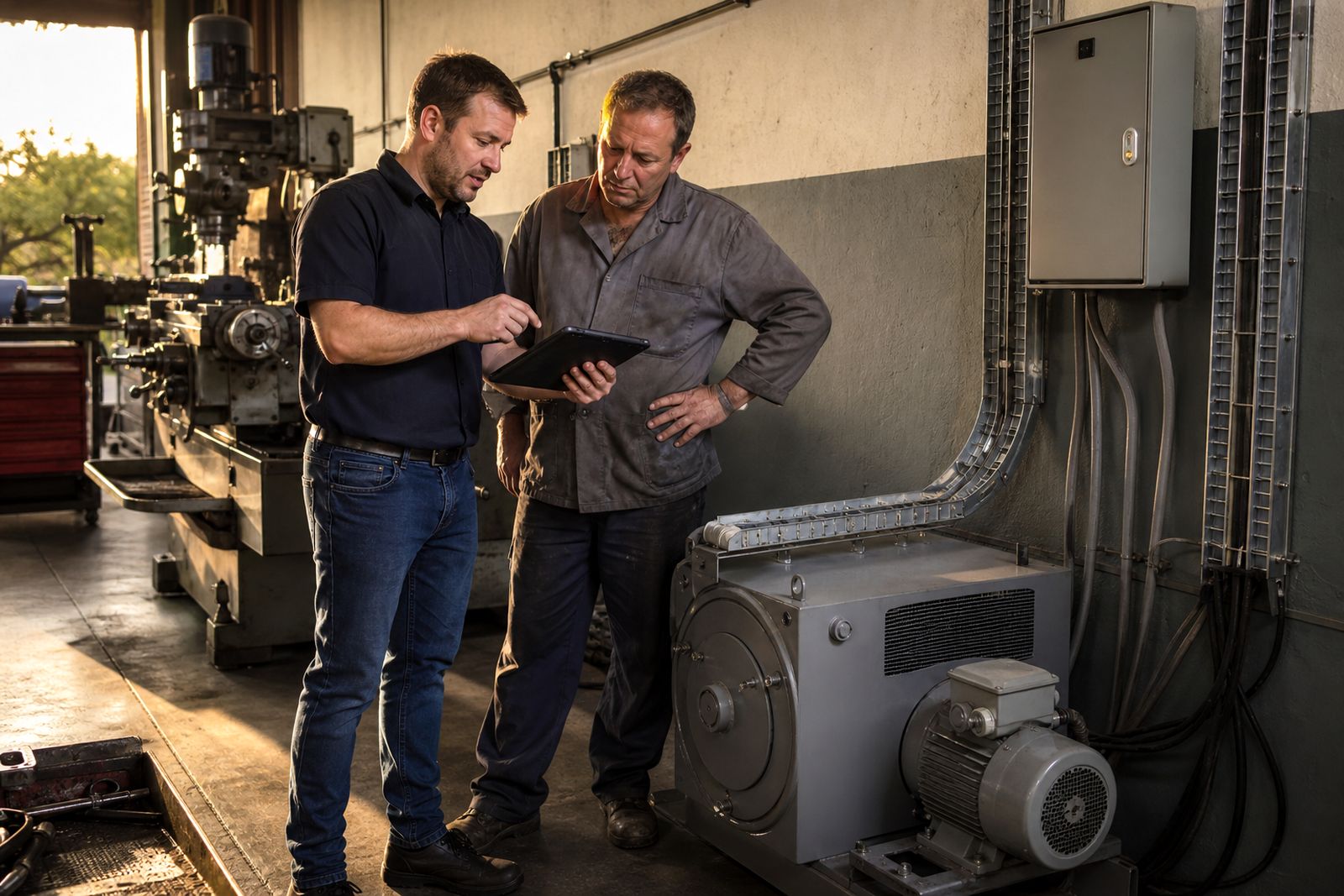
Reporting a converter fault
Fault reports go to head office with the converter serial number, the machine make and a single-phase supply reading taken at the workshop. The arrangement and condition of the installation should be written down before any covers or parts are removed.
A question about warranty cover can go in the same report. The site does not publish warranty terms, so cover is confirmed for your specific order in the reply.
Symptoms to describe
Humming without starting the machine, tripping the breaker after a few seconds, and running while the motor gets hot all point to different causes. Describe what you see and hear, and when it started.
Warranty reports list:
- Tripped breaker or fault lamp, with a description of what is showing on the panel
- Converter serial number and machine make
- Voltage reading from the supply measured where the converter is connected
- Date the converter was fitted and how the fault shows
Before removing any covers
Isolate the supply before opening the converter or the machine terminal box, and leave internal checks to a qualified electrician. Record how the wiring was connected and arranged before anything is disturbed, as this can matter more than what is found afterwards.
What to send with a fault report
When a converter is not behaving as expected, send a clear fault report through the contact form so support can start with the right details. Please include the converter serial number, the machine make, and a single-phase supply reading taken where the converter is connected.
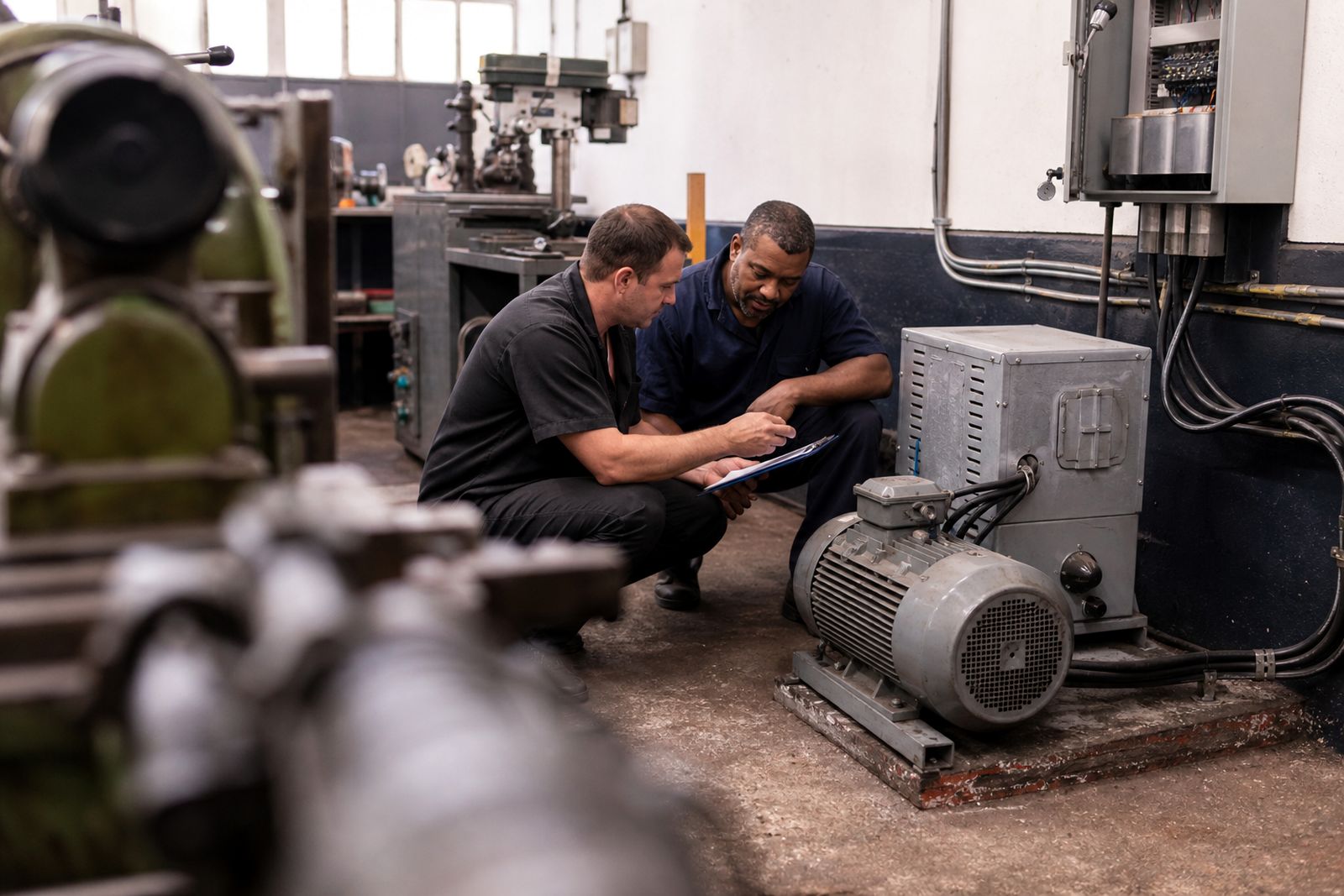
Write down what the installation looks like before anything is opened or changed. Note how the wiring is arranged, where the converter is mounted, and what the panel shows if there is a tripped breaker or fault lamp. If the machine hums, starts and then trips, or runs while the motor gets hot, say exactly which of those you see.
What support needs to know
A short written description often helps more than a long guess. If you can, mention when the converter was fitted, when the fault first appeared, and whether the problem is constant or only happens at start-up. For workshops, farms and small plants, it also helps to say what type of machine is connected, such as a lathe, milling machine, CNC router, compressor, saw, drill press or pump.
- converter serial number
- machine make and type
- single-phase supply reading at the connection point
- date fitted, if known
- what the panel shows, including any fault lamp
- what the machine does, and when it started
Safety and next steps
Please isolate the supply before opening the converter or the machine terminal box. Internal checks should be left to a qualified electrician, and the customer's own registered electrician installs the converter. If you need help before or after a fault report, use the contact form and ask for support, warranty help or commissioning guidance.
Phase Converters supplies rotary and static phase converters, including idler packs, static kits, panel mounts, soft starts, enclosures, cable sets and spares. If you are not sure what to include, send site photos and a written note of what happened, then wait for the reply from head office.
What our Phase Converter customers say
Verified Google reviews
Also worth a look
Tell us about your machine
Send a note through our contact form with the machine type, the motor plate kW and voltage, your supply (single-phase breaker size), the cable run and your area, and we will come back with practical converter options and a quote.
Open the contact form