

Durban port
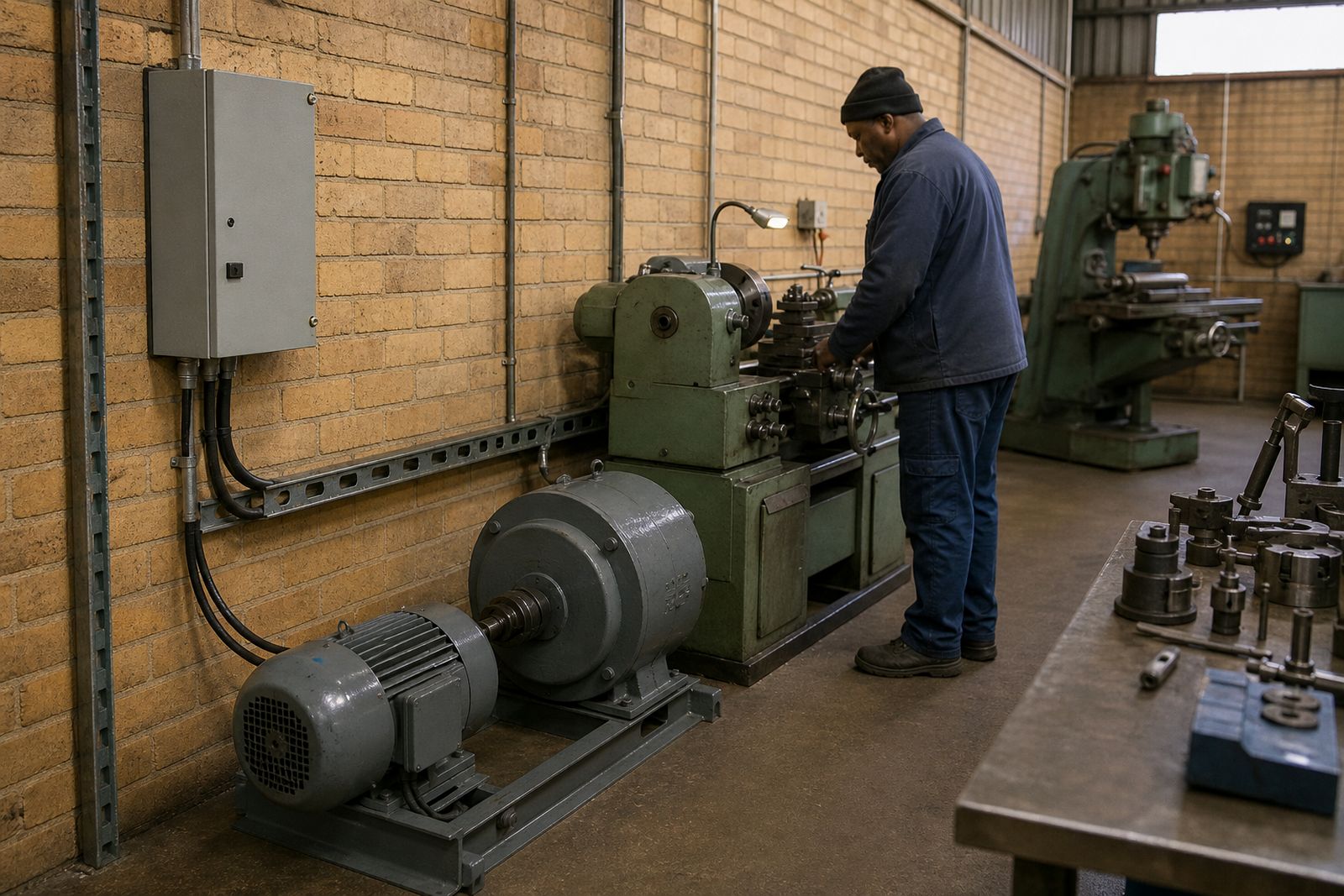
Fabrication sheds, pump rooms and repair areas at the Durban port, where salt air and forklifts shape the install.
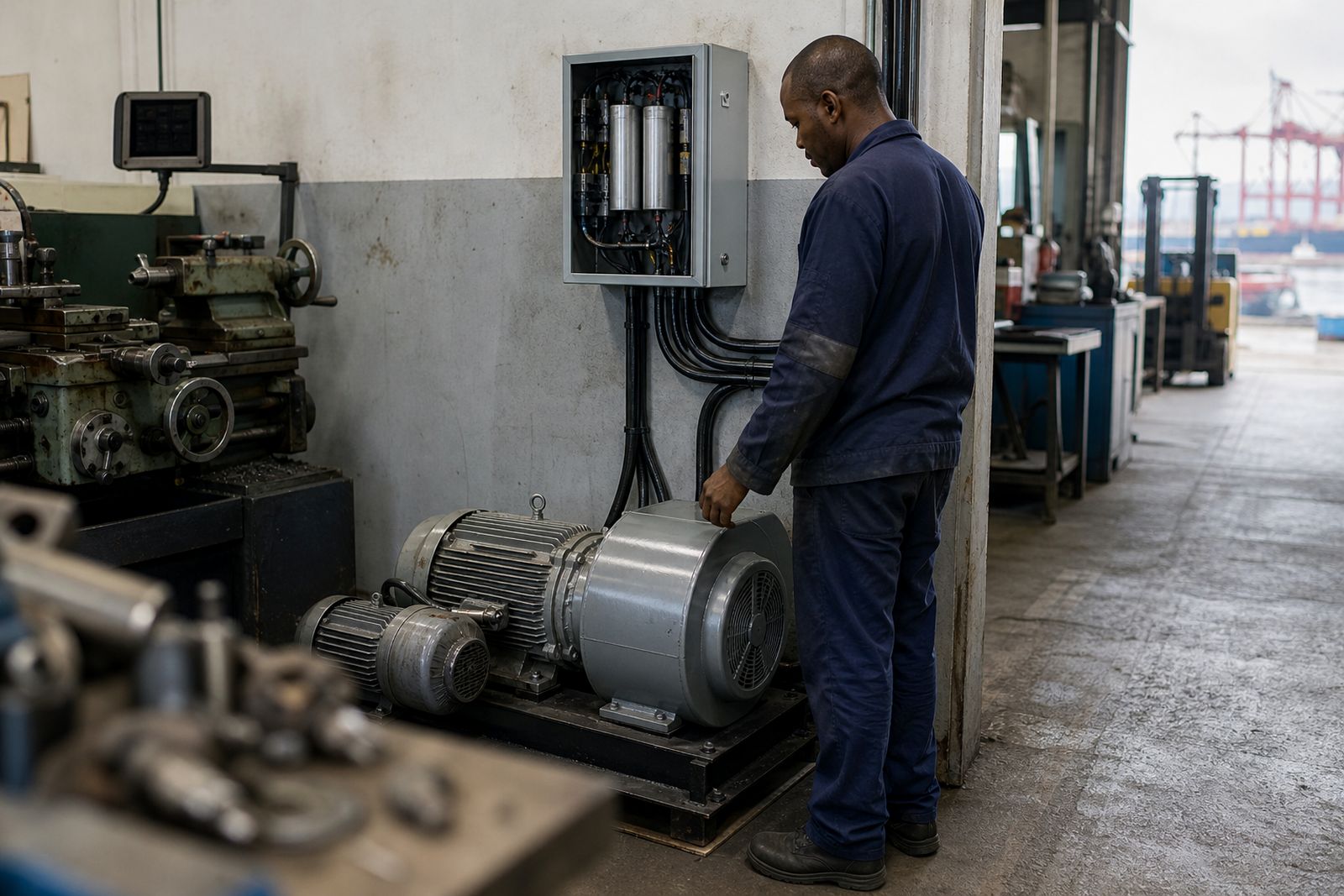
What a Durban port job starts from
These jobs cover three-phase equipment in buildings that only have a single-phase supply.
For Durban port work, begin with the machine plate, the breaker size, and the measured single-phase supply at the board. Salt-air exposure, cable length from the board and how often the machine starts can each change the converter selection.
Isolator types, machine connection points, and cable runs, especially those crossing busy working areas, should all be noted. Patch repairs, DB board readings, shared distribution boards, and equipment that gets shifted by forklifts or pallets increase the need for careful cable protection and regular maintenance planning.
Layout and labels
Setup notes specific to the machine, supply available, and real workshop conditions give the best chance of trouble-free running. Sizing notes, cable requirements and pre-start checks help avoid issues. One correct layout for a port repair area is more useful than a broad list that ignores corrosion, loading, and protection.
Equipment labels and circuit identification tags make future maintenance and troubleshooting at the port more straightforward.
Port jobs keep a record of:
- Machine serial numbers and control panel markings
- Overload relay settings and any lockout points
Port conditions that affect sizing
Port jobs cover fabrication sheds, pump rooms, container repair areas and maintenance spaces. List what is currently connected, what overloads, what does not start, and what else runs from that board.
Terminals, glands, switchgear, and poorly sealed enclosures near the port are exposed to corrosion from the environment. Moisture and grime build up differently from inland sites, affecting cleaning intervals and inspection points around contactors and vents.
Moves and rewiring at the port
Any machine moved or newly installed at the port needs updated connection details and a list of the safety interlocks tested.
A different electrician taking over or a relocated machine means wiring and supply details must be checked against the installed converter kit and connection points. Matching these details prevents errors and makes the job easier to follow.
What our Phase Converter customers say
Verified Google reviews
Also worth a look
Tell us about your machine
Send a note through our contact form with the machine type, the motor plate kW and voltage, your supply (single-phase breaker size), the cable run and your area, and we will come back with practical converter options and a quote.
Open the contact form