

Nelspruit run
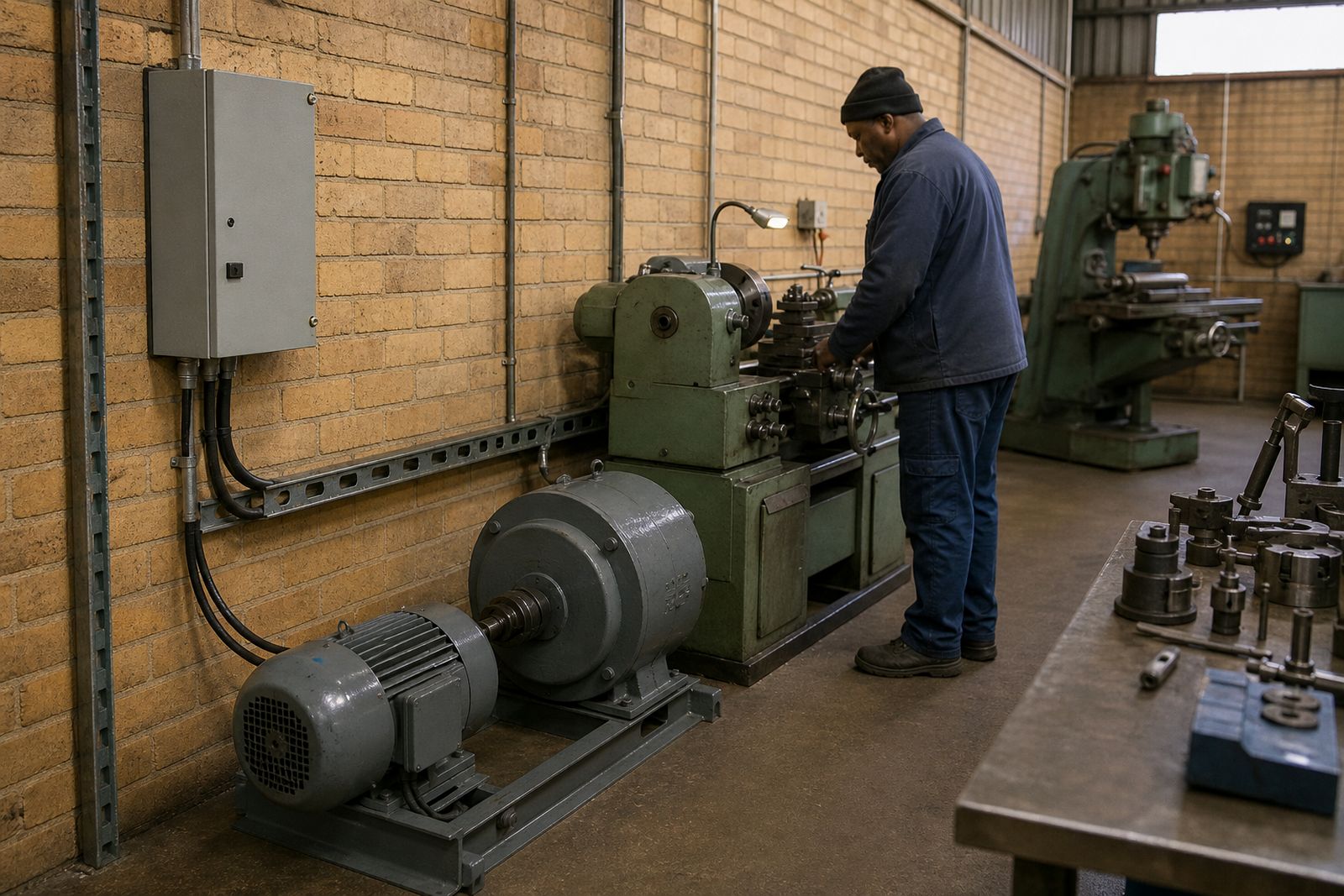
Mbombela workshops running machine tools and heavier loads on single-phase service.
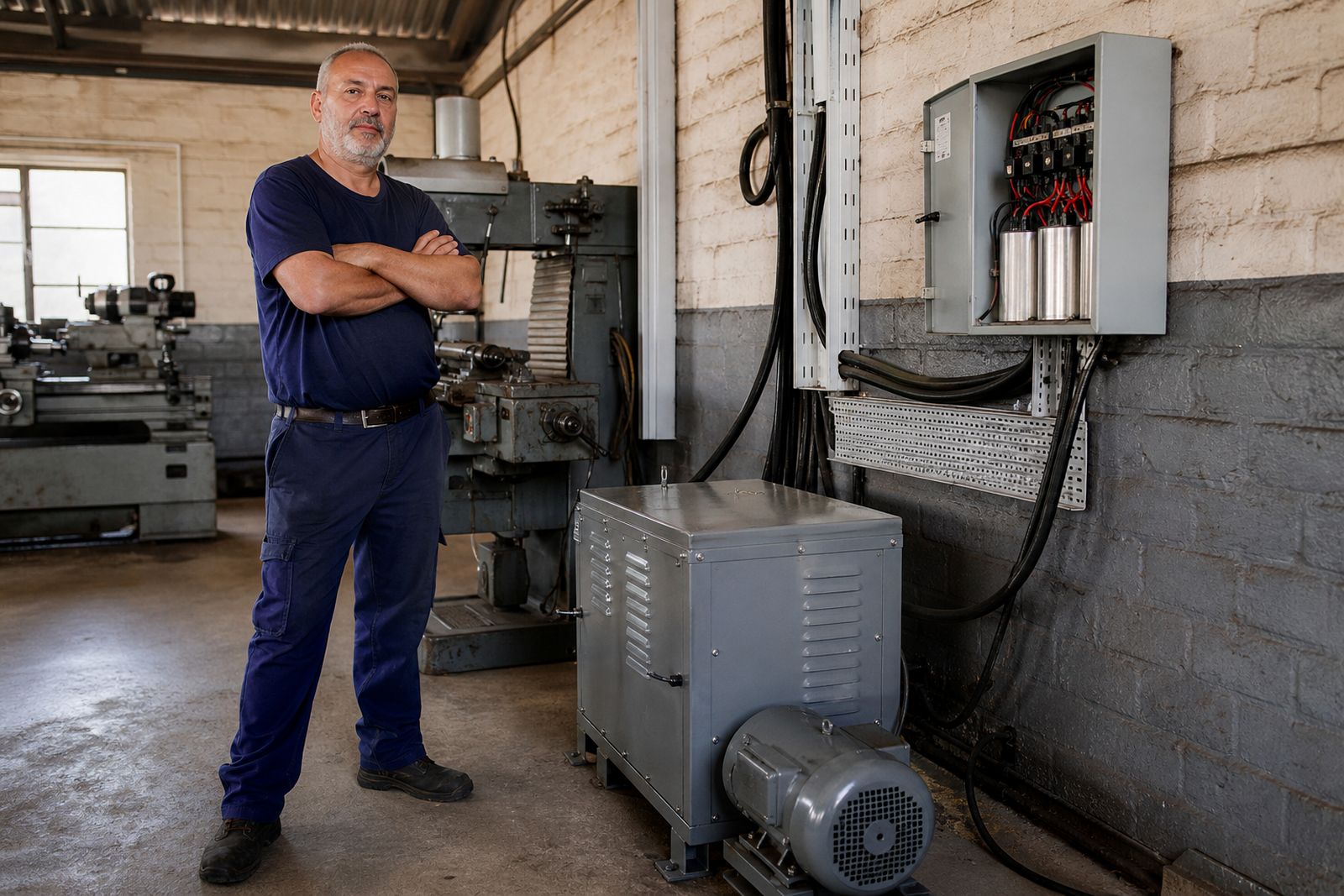
Heavier loads around Nelspruit
These jobs involve workshop equipment that needs stable three-phase power from an ordinary single-phase connection. Choosing a converter depends on the right information, especially for machine tools and other heavier workshop loads.
Cable thickness, breaker type, and start load all influence converter choice for Nelspruit Run, especially where older machine tools use newer protection gear in workshops around Mbombela. Details shown on each motor plate, the distance from the DB to every machine, and the measured supply voltage are all key factors. Heat, dust from open work areas, and long daily operating periods affect what works best for lathes, compressors, or saws.
Recent changes to the board setup or supply upgrades can affect phase converter performance. Listing new breakers, isolators, or extra machines added since the original wiring helps with matching the right converter to current loads.
Final setup and checks in Nelspruit
The conversion setup is chosen for the equipment actually on site, based on supply and protection checks and on the main machine's load at start-up.
Testing all protection devices after installation confirms the setup is ready for regular use. Any trips or alarms during this stage should be recorded for follow-up.
Nelspruit job files carry:
- Figures and labels from the DB board, isolator and machine plate
- Any earlier faults or issues with the machine
Power checks for the Mbombela area
Nelspruit Run jobs are for workshops on single-phase service that still need to run heavier three-phase equipment. Sites in and around Mbombela may have limited spare capacity at the board, older breakers, or long cable runs to detached work areas. Which machines must run at the same time, such as a machine tool and dust extraction, shapes the converter and protection setup.
Enclosure temperatures rise in corrugated-iron workshops with little shade, so leave ventilation space. Dust settling in contactors, cooling slots and terminal boxes is another reason to choose the converter's position carefully.
Matching details to each machine
Tagging each set of figures with the machine or workshop area it belongs to keeps records from getting mixed between machines.
What our Phase Converter customers say
Verified Google reviews
Also worth a look
Tell us about your machine
Send a note through our contact form with the machine type, the motor plate kW and voltage, your supply (single-phase breaker size), the cable run and your area, and we will come back with practical converter options and a quote.
Open the contact form