
Clearwater Mall showroom
Clearwater in Roodepoort: phase converter viewings by appointment only, arranged through the contact form.
Static or rotary for your machine
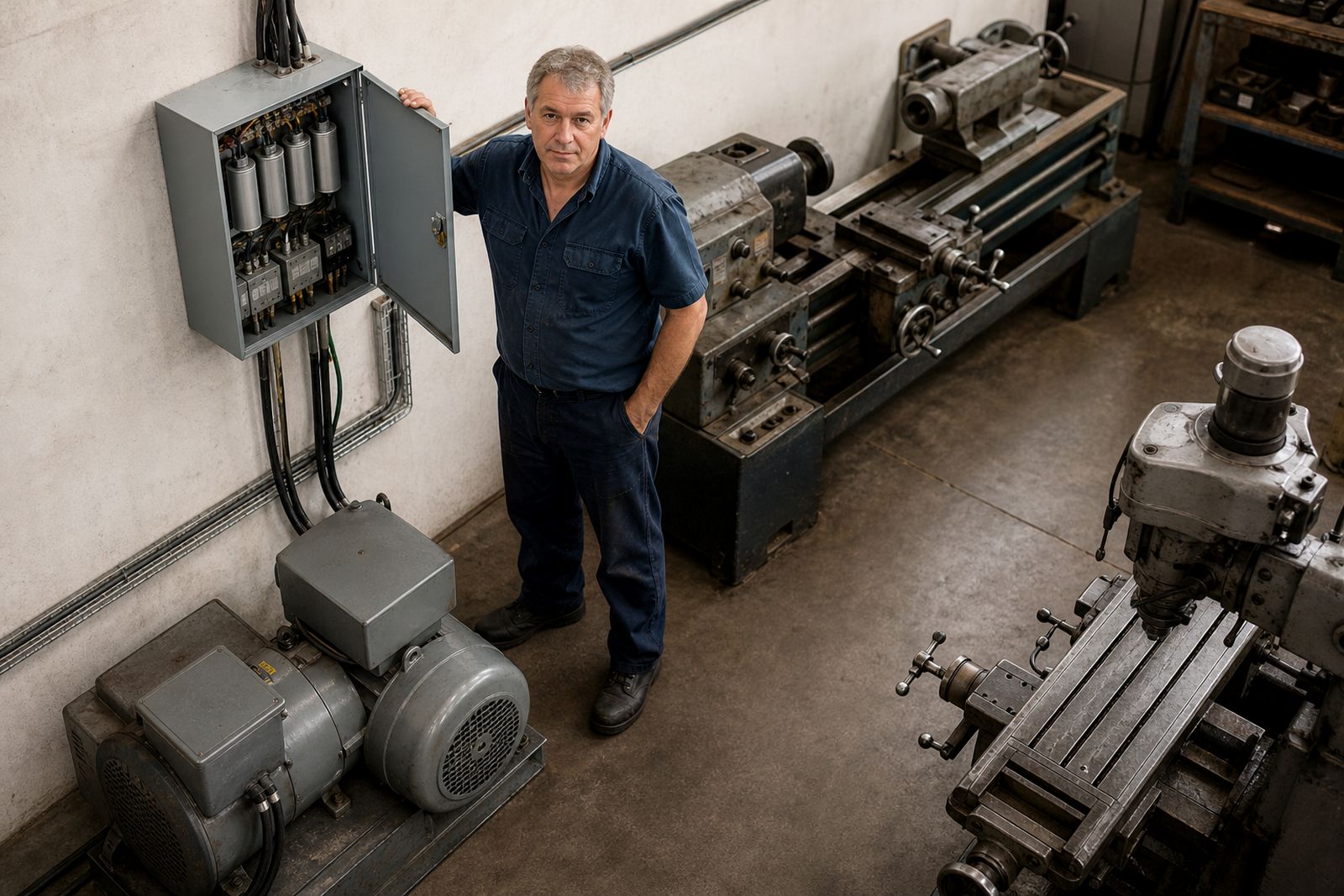
Static kits start a three-phase motor and then let it run on two phases with a capacitor holding up the third. They suit a drill press or a light saw that starts easily and runs below full load. Rotary converters generate a proper third leg and handle heavy starts, frequent stops and machines that run near their rating all day.
Seeing both types helps when a comparison lists one and a friend swears by the other. Explain what the machine cuts, how often it starts and whether it ever stalls, and the comparison quickly becomes clear.
Quick comparison for your machine
Handy to know before the viewing:
- Kilowatt or horsepower rating, read straight off the plate
- How many starts the machine makes in a typical shift
- Any history of tripping, humming or slow run-up
Signs a static kit is struggling
An overworked static kit shows it: the motor runs warm, slows noticeably under a heavy cut, or hums for a moment before it picks up. Any of those on an existing setup is worth mentioning, because it can point towards a rotary converter for the next machine.
Choosing after the viewing
Nothing has to be decided on the day. Your choice of converter type is confirmed once head office has the plate details and the supply figures in writing.
Book your visit
Use the contact form to arrange a viewing at Clearwater. Tell us which machine you want to run, whether it is a lathe, milling machine, CNC router, compressor, saw, drill press or pump, and mention the supply at the site.
That helps the team prepare a practical comparison and talk through whether a rotary converter, static kit or panel mount is the better fit for the machine, the workload and the way the workshop is wired.
What to bring along
Bring clear photos of the motor nameplate, plus any notes on the machine itself and the supply board. If you have breaker details, distribution board notes or a simple sketch of the set-up, that is useful too.
- Motor plate photo showing voltage, current and kilowatt or horsepower rating
- Machine details, including how it starts and how hard it works
- Supply information from the site, especially if the building is on single-phase supply
Written commissioning guidance is provided after the right converter is chosen, and warranty help can be handled remotely if needed.
Compare options side by side
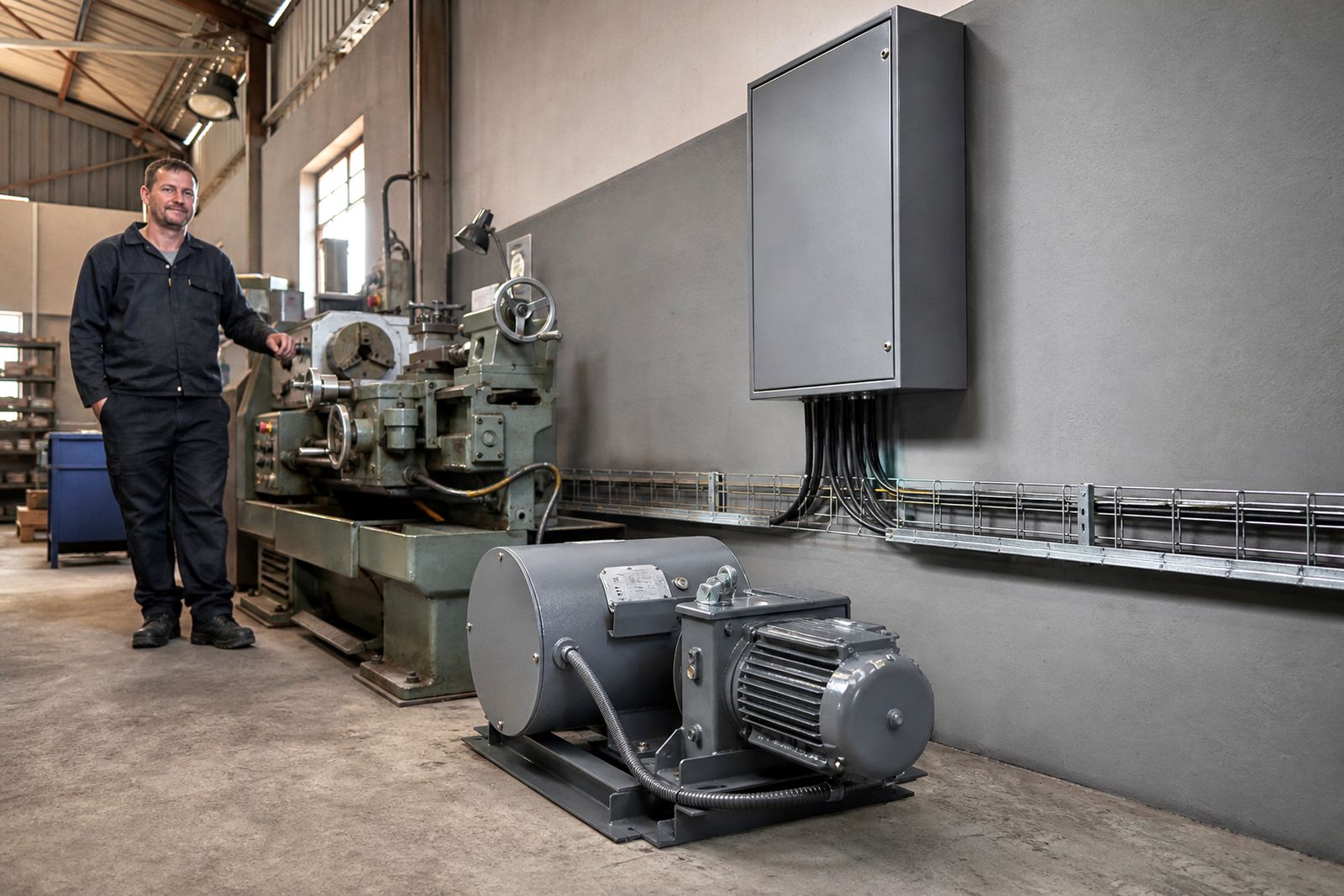
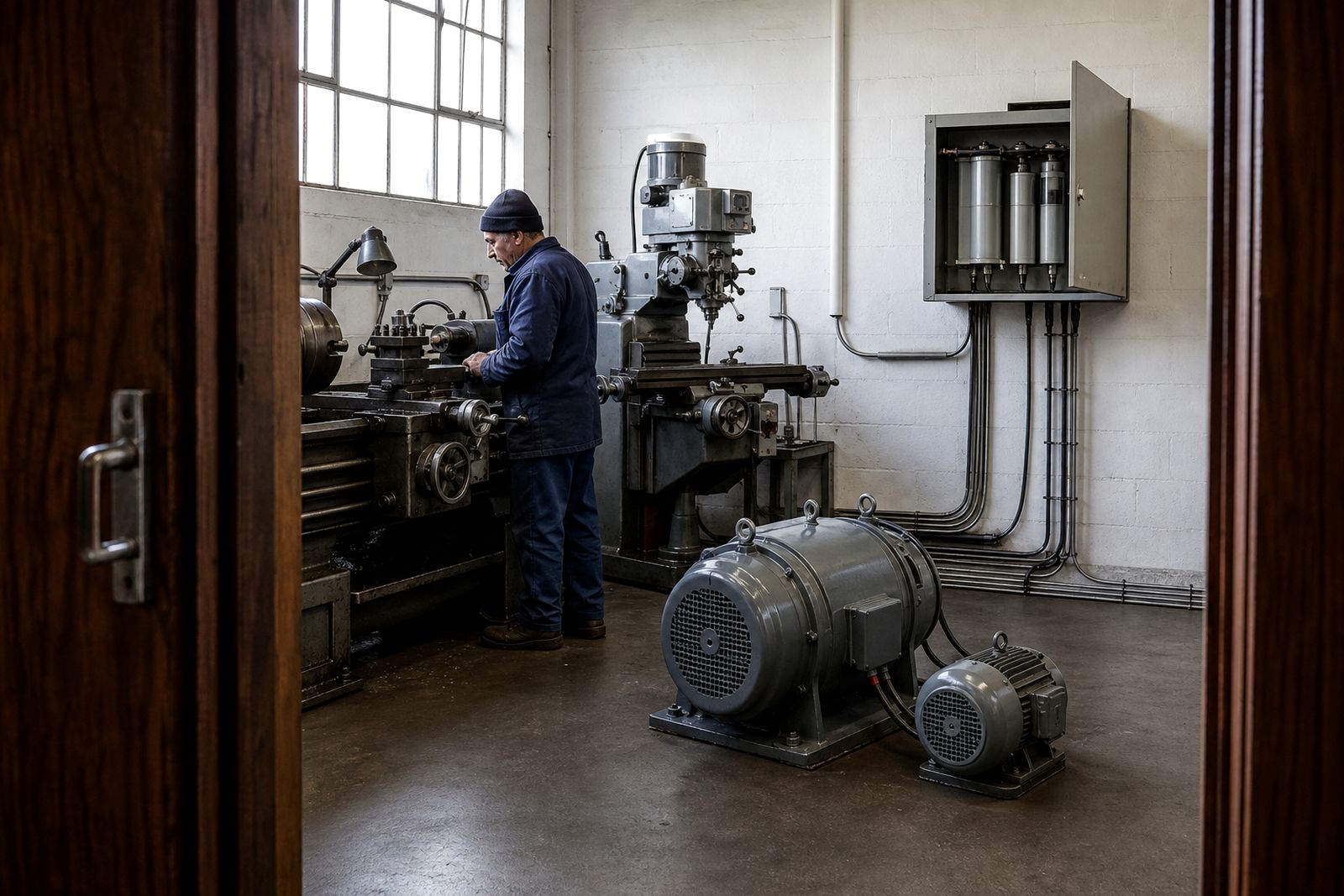
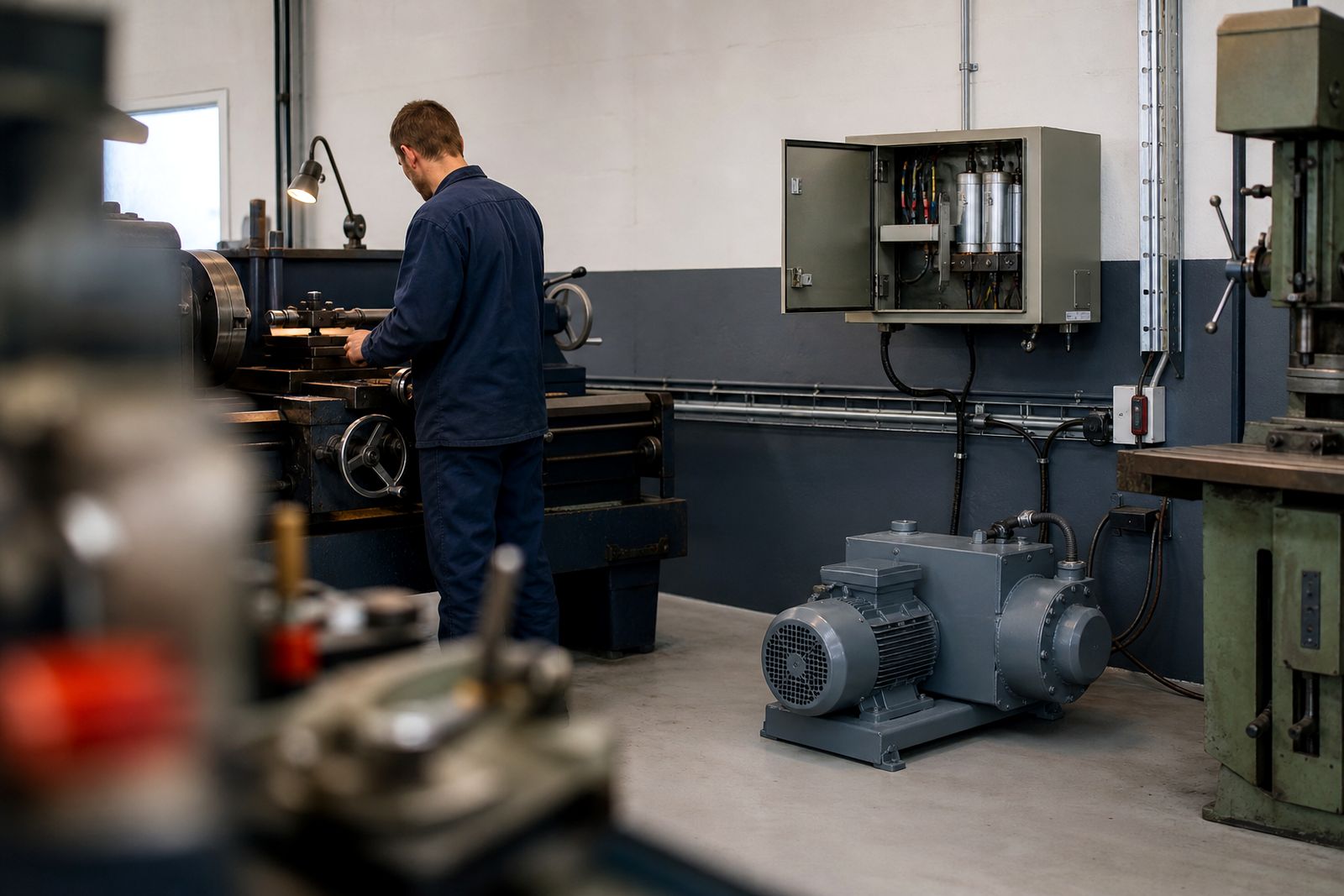
At the showroom you can see a rotary unit, a static kit and a panel mount together, then talk through the differences in a straight, workshop-focused way. That makes it easier to match the converter to the machine, the start-up load and the way the equipment is used day to day.
It is also a good time to ask about related parts such as idler packs, soft starts, enclosures, cable sets and spares. If your site is in a dusty inland area or a humid coastal one, that can be mentioned when discussing the enclosure and cabling arrangement.
What our Phase Converter customers say
Verified Google reviews
Also worth a look
Tell us about your machine
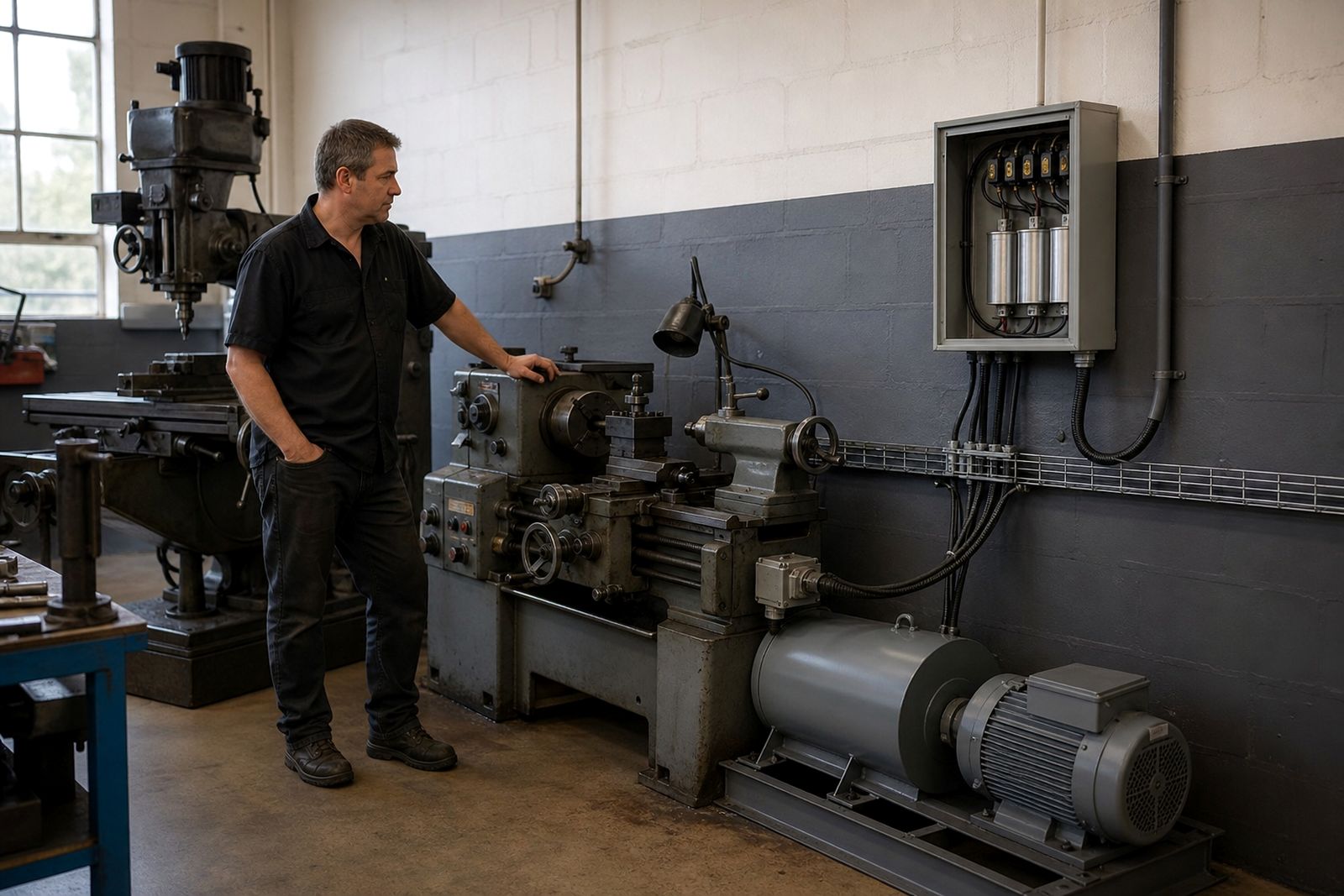
Send a note through our contact form with the machine type, the motor plate kW and voltage, your supply (single-phase breaker size), the cable run and your area, and we will come back with practical converter options.
Open the contact form