
Mimosa showroom
Bloemfontein: phase converter viewings by appointment only, arranged through the contact form.
Farm and outbuilding supplies
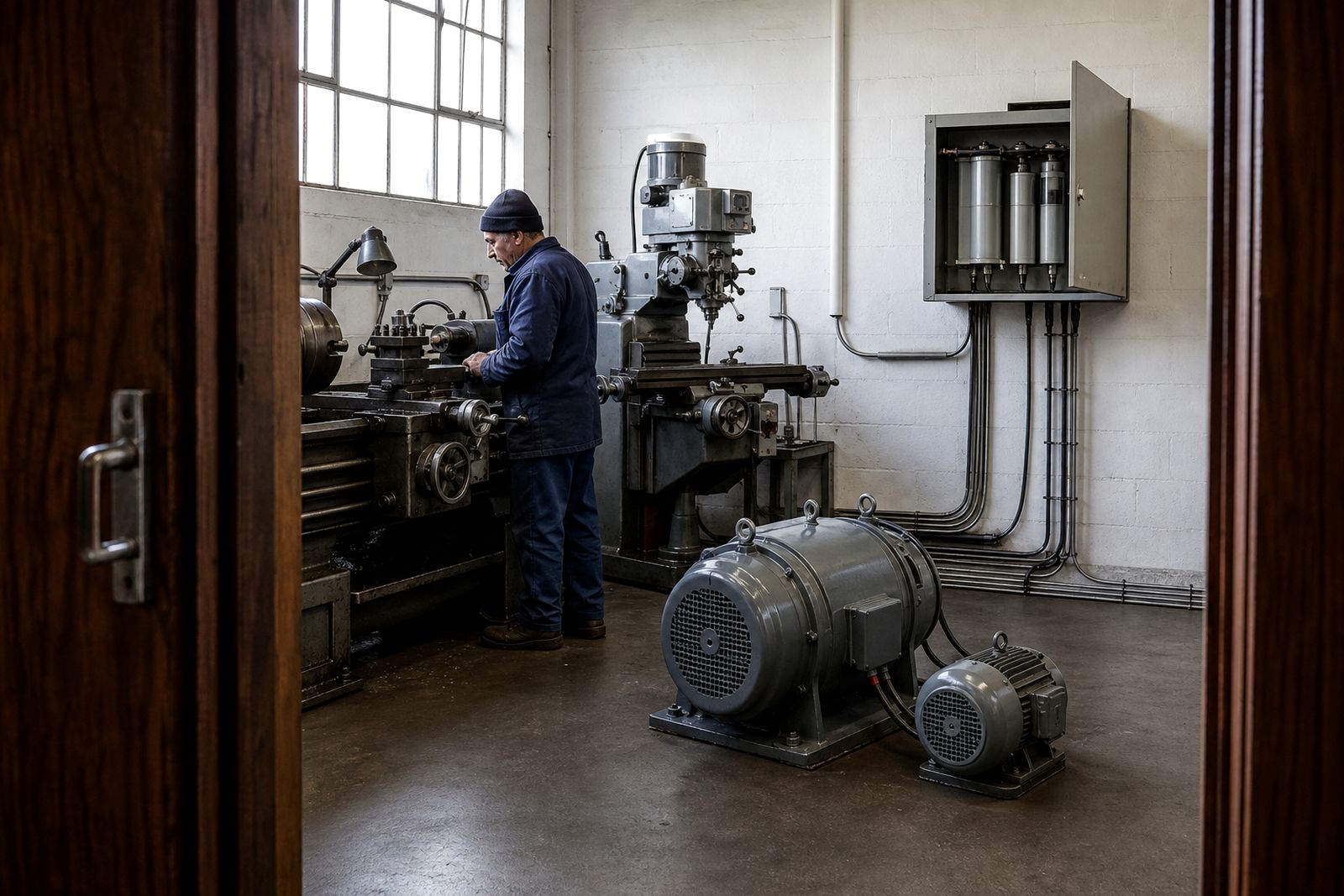
A welding area or grain-handling motor at the far end of a farmyard may be fed by a long single-phase run from the house or the main board. By the time the supply reaches the shed, the voltage can sag noticeably when a big motor starts, and a converter sized only on kW may struggle.
Raise this at the viewing. Head office can explain how start current, cable length and converter type interact, and why a soft start or a larger rotary unit can be the better choice for a remote shed.
Figures to bring along
Take with you:
- Measured voltage at the shed with nothing running, if you have a meter
- Length of the run from the main board to the outbuilding
- Plate details for the machine that is hardest to start
Choosing a soft starter or rotary unit
Soft starts limit the current a motor draws while it comes up to speed, which helps when the supply sags. A larger rotary converter instead carries the start comfortably. Which one suits a farm shed depends on the motor, the length of the feed and how often the machine is started.
Planning the installation
Your electrician will want the same figures, so keep them together with any notes from the viewing. Converter and cable choices are then confirmed in writing.
What to bring to a viewing
Book your visit through the contact form so the team can set aside time for your machine list and talk through the right setup for your workshop, farm shed or small plant. At Mimosa, you can compare converter options in person and ask practical questions before your registered electrician handles the installation.
Bring clear photos of the motor nameplates, along with details of the machines that need to run on your single-phase supply. That includes lathes, milling machines, CNC routers, compressors, saws, drill presses and pumps, plus any notes about cable length, supply condition, breakers or the distribution board.
- Motor plate photos or copies
- Machine names and what they are used for
- Supply details, including where the converter will sit
- Any notes about long cable runs, dust, humidity or a remote shed
Compare the main options side by side
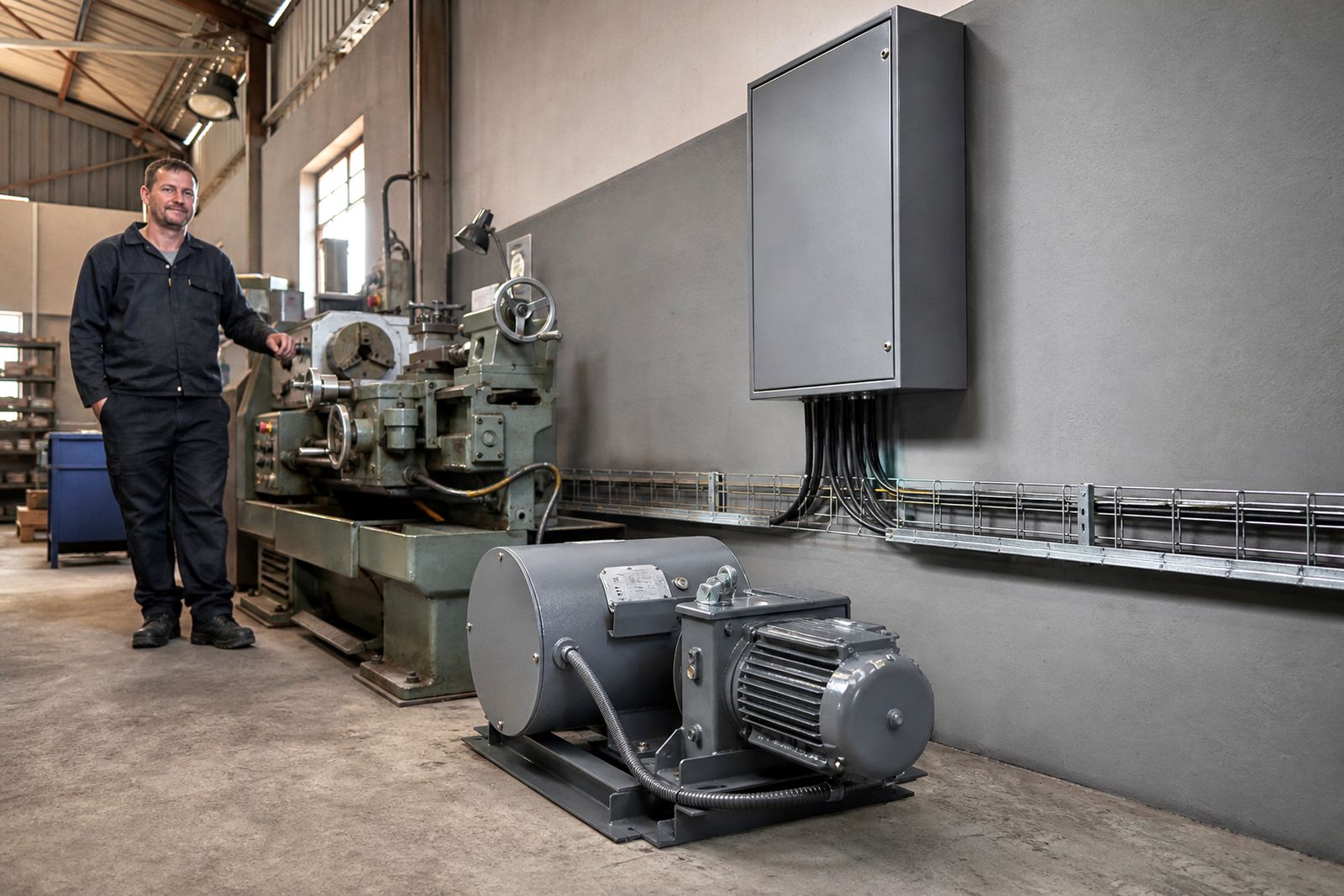
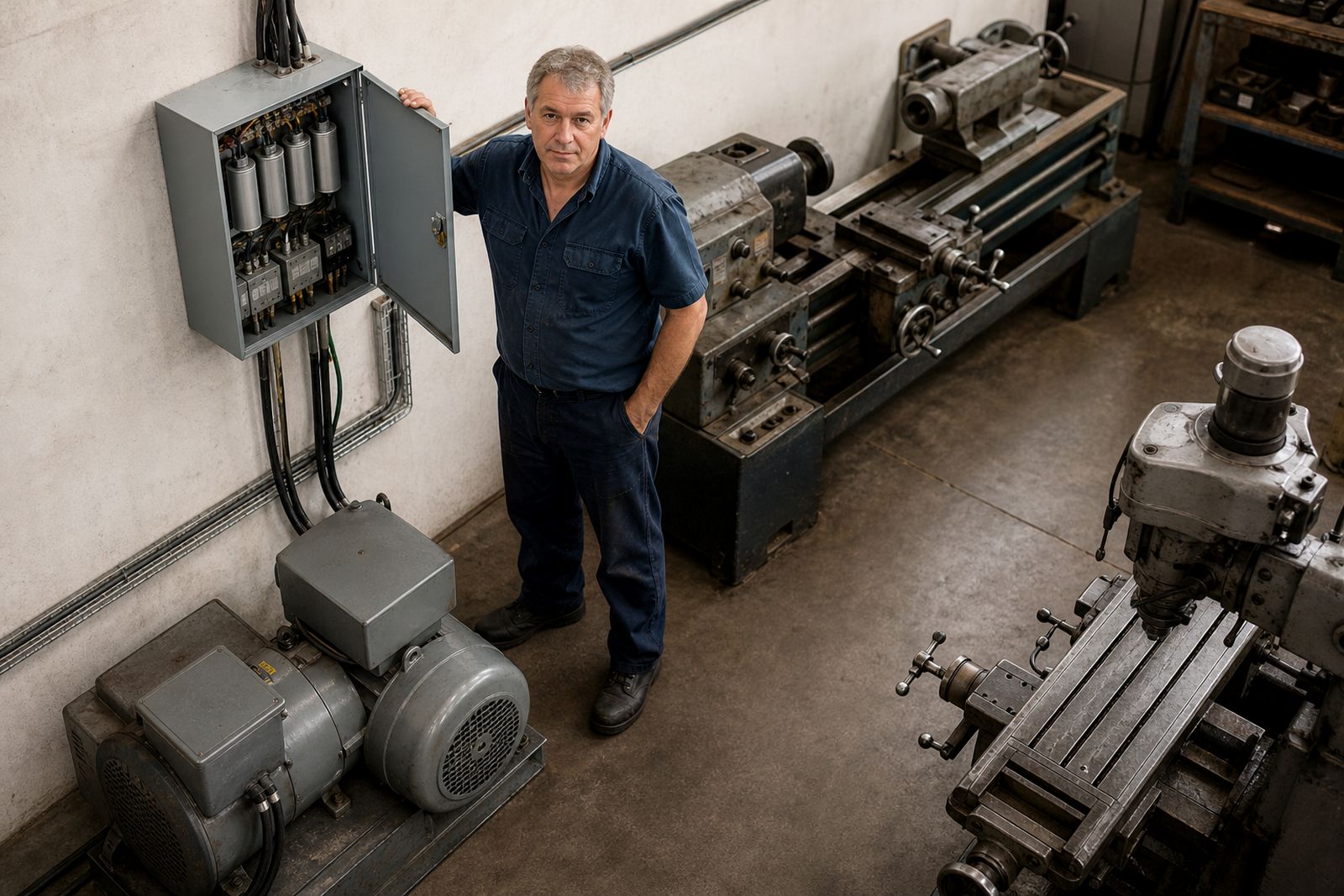
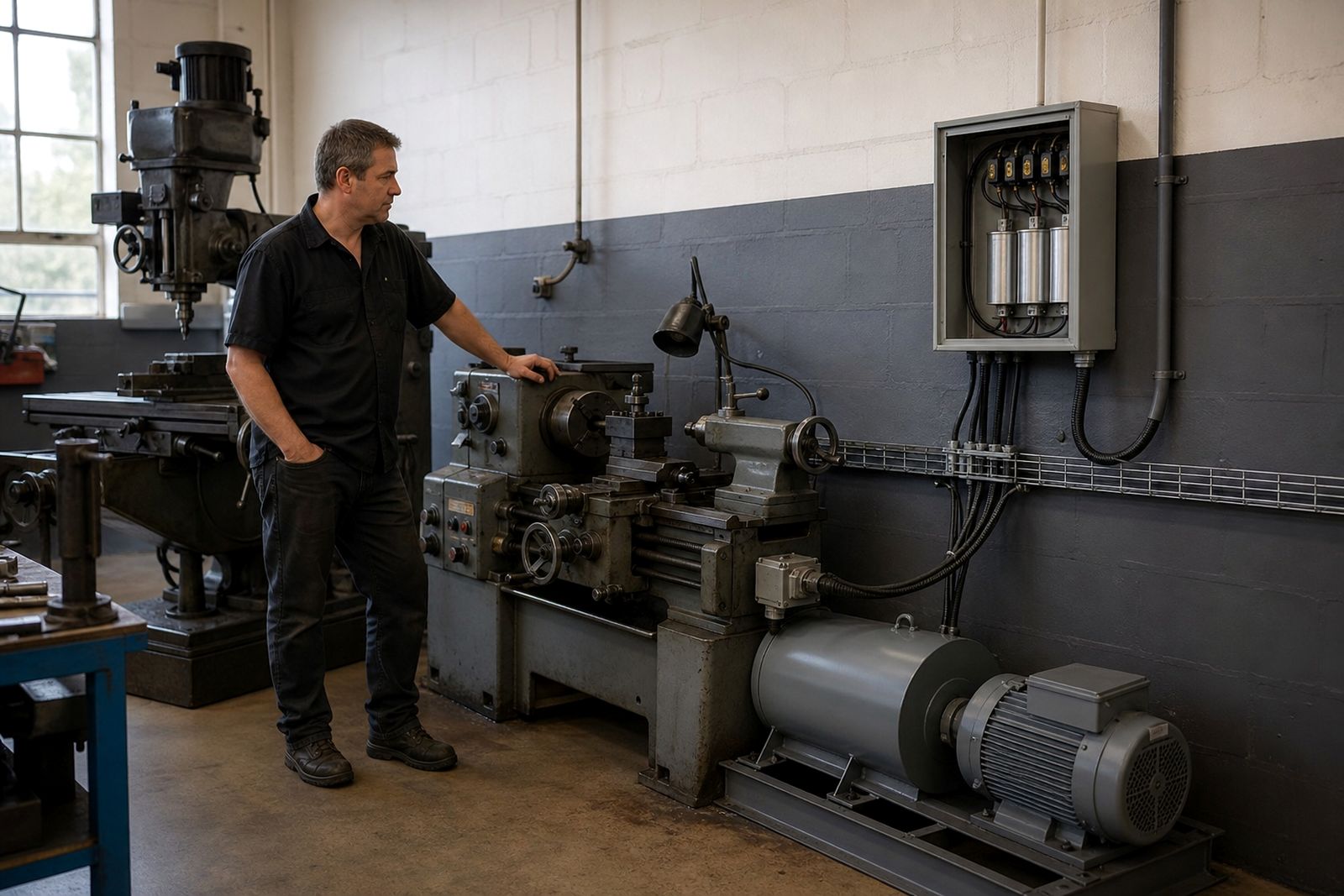
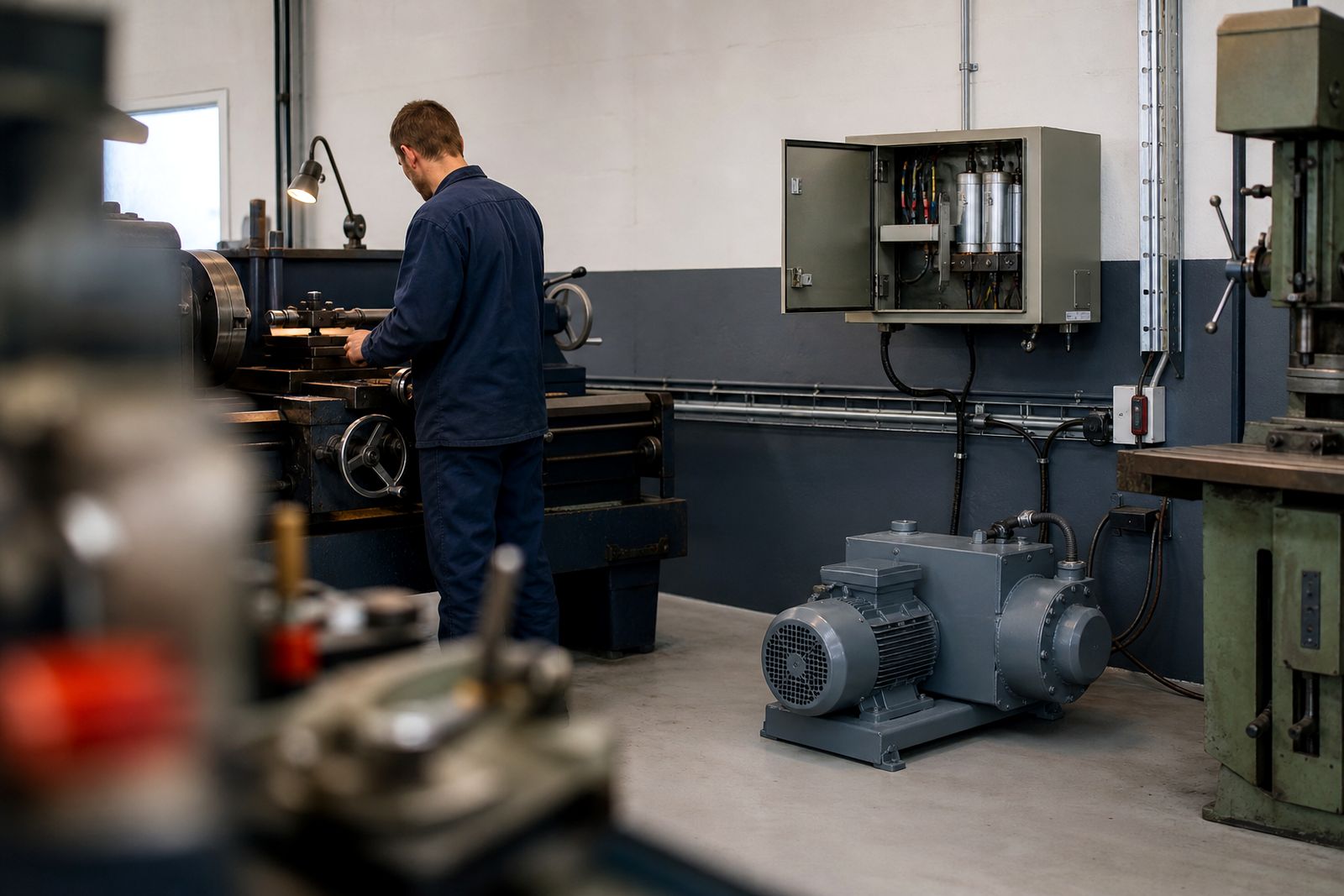
A viewing is useful because you can look at a rotary unit, a static kit and a panel mount together, then compare how each approach fits the machines you run. The showroom conversation can also include soft starts, enclosures, cable sets and terminations, so you can see how the parts sit together in a real installation.
If you are weighing up a workshop set-up, talk through how the load starts, how often the machines are used and what else is connected on the same supply. Written commissioning guidance is included, and remote checks can help once the equipment is in place.
- Rotary units with idler motors
- Static converter kits and capacitor panels
- Soft start controls for harder starting loads
- Enclosures, cable sets and spares
How the handover works
Phase Converters supplies rotary and static phase converters for South African workshops, farms and small plants that need three-phase machines running on single-phase supply. The showroom visit is for selection and planning, while your registered electrician completes the installation and final wiring.
After the visit, any chosen converter and accessory set can be confirmed in writing, together with commissioning guidance and support if you need help setting up or checking the installation remotely. If you need to discuss a shed, a pump room or a small production area, bring the facts you already have and ask for a discussion via the contact form.
What our Phase Converter customers say
Verified Google reviews
Also worth a look
Tell us about your machine
Send a note through our contact form with the machine type, the motor plate kW and voltage, your supply (single-phase breaker size), the cable run and your area, and we will come back with practical converter options.
Open the contact form