

Baywest showroom
Gqeberha: phase converter viewings by appointment only, arranged through the contact form.
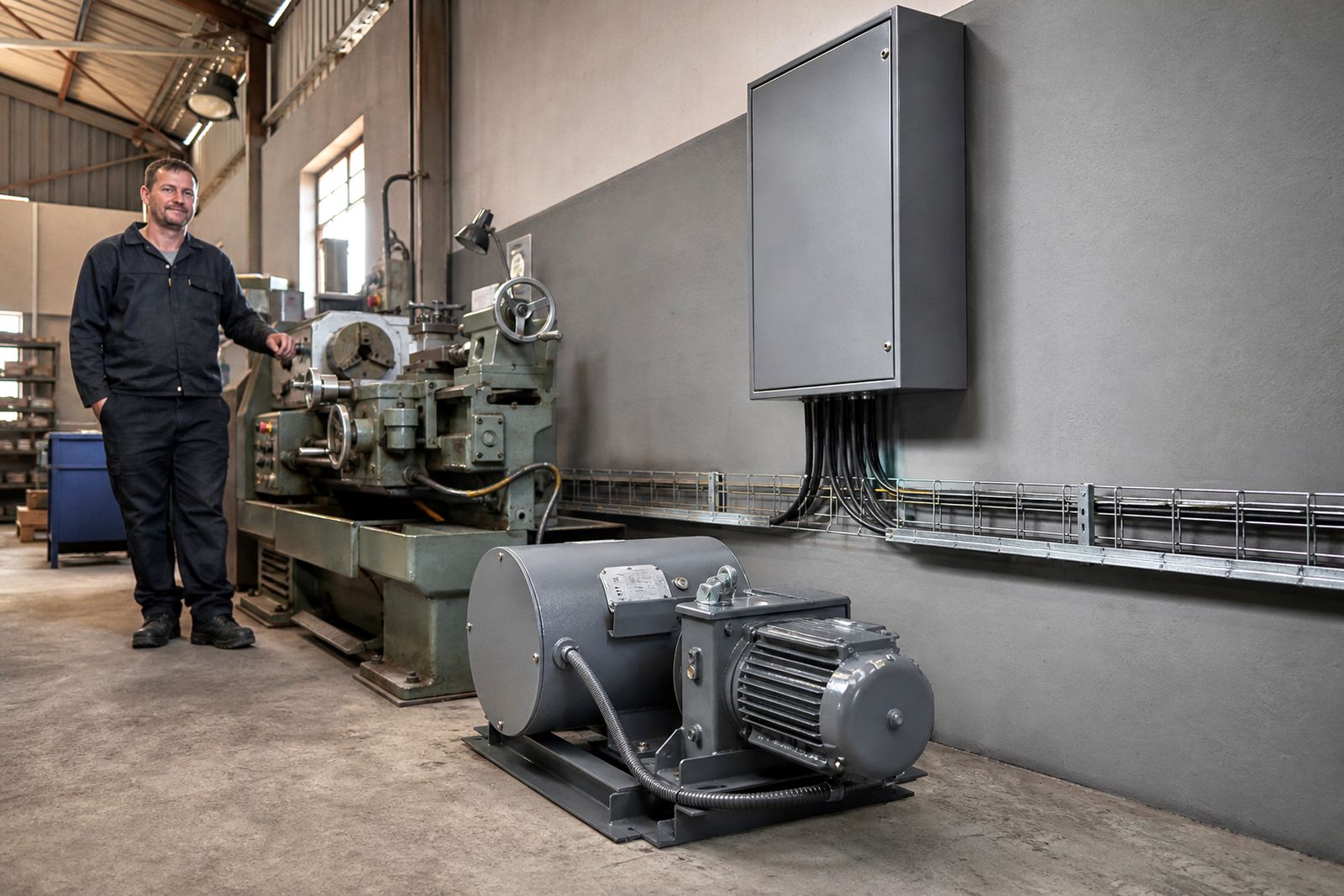
Running two machines from one converter
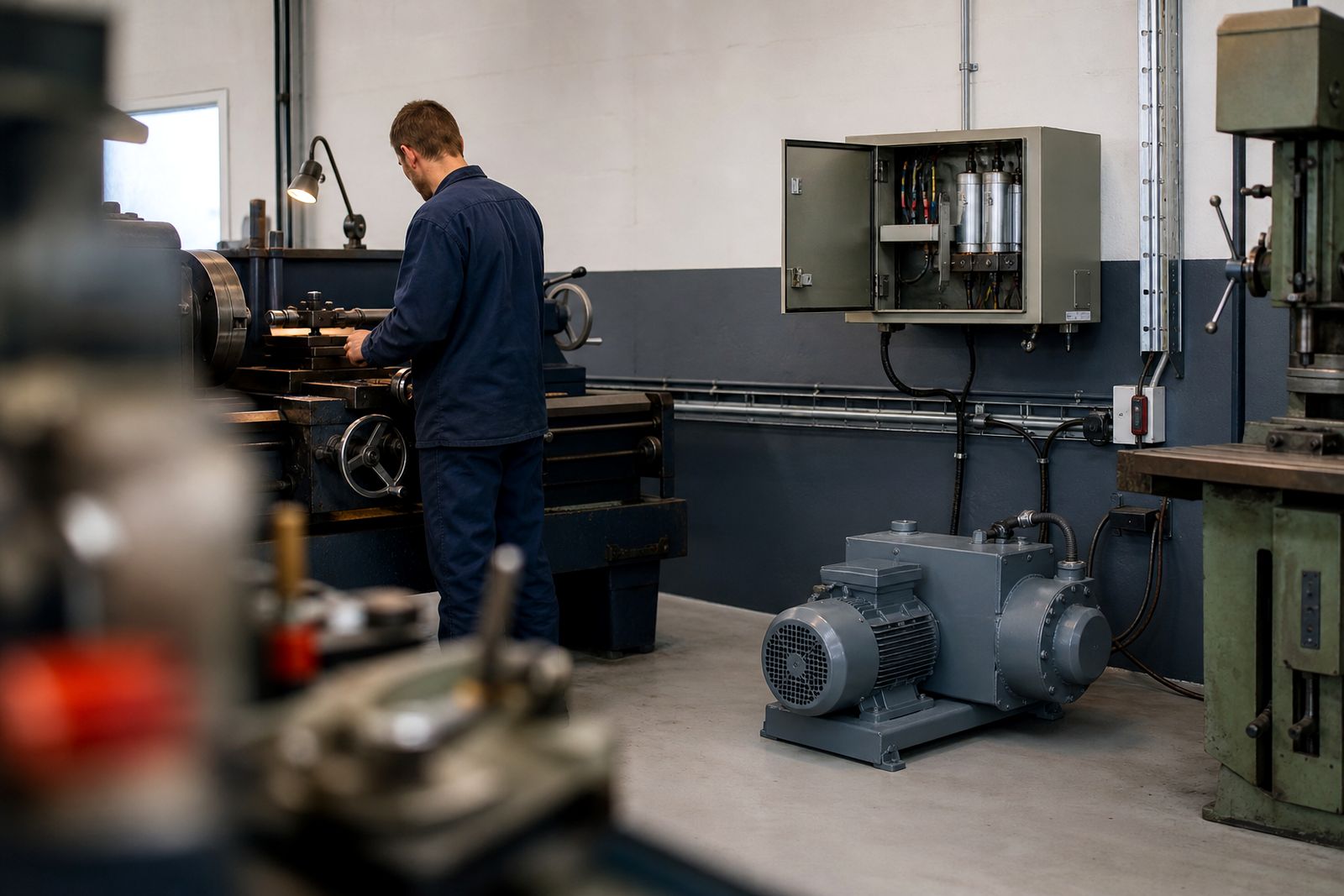
Adding machines over time, such as a lathe first, then a mill, then a compressor on the same single-phase feed, is worth mentioning at the visit. A rotary converter with an idler pack can run more than one load, but the largest motor and the sequence in which machines start decide the size, not the total kW added up on paper.
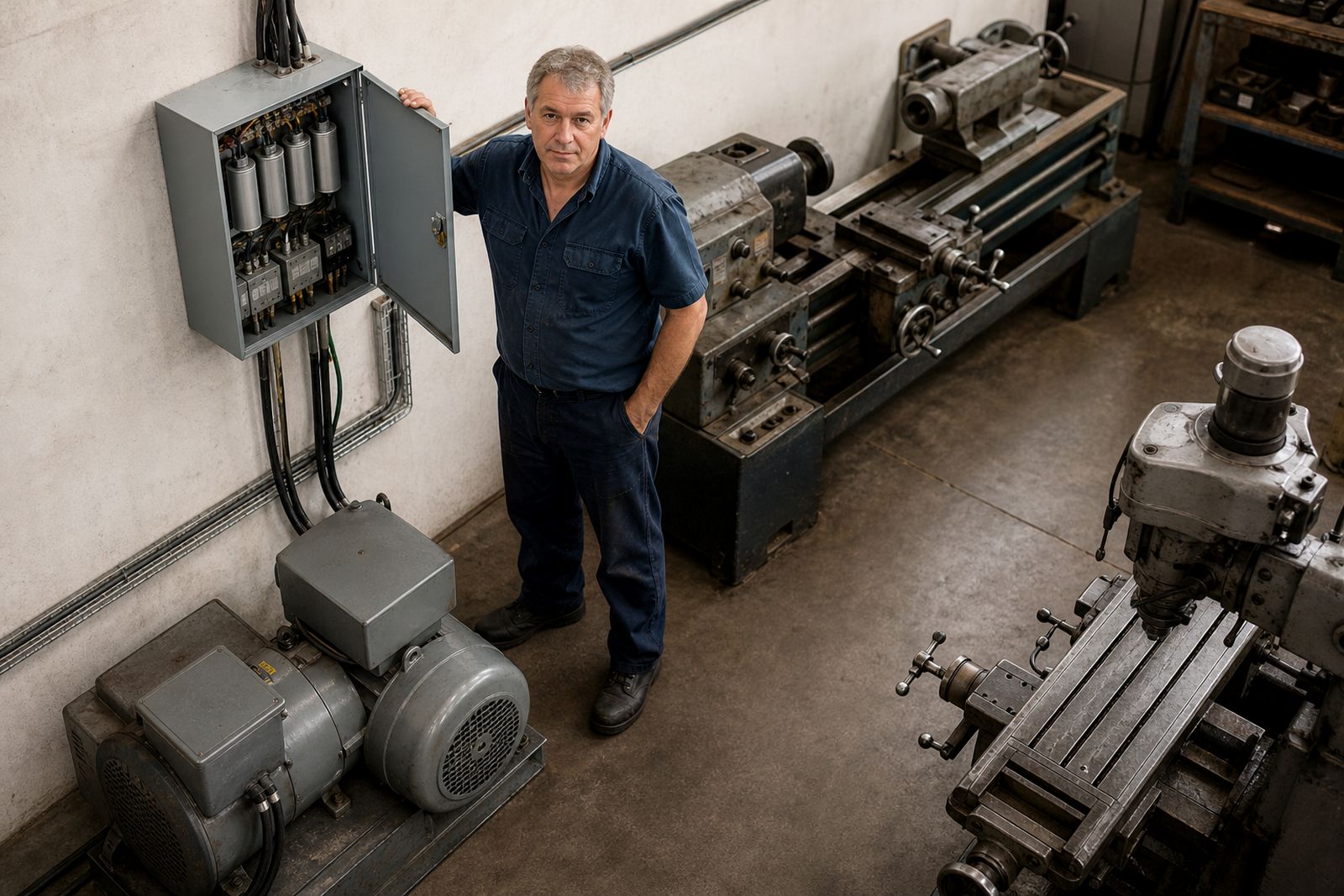
At a visit you can look at how an idler is wired to the generated leg and talk through which machine should start first. Gland plates and enclosure seals are worth asking about too if the unit will hang near an open door or an outside wall.
Details to bring for your visit
Bring along:
- Rating plate figures from every machine that will share the converter
- Your main breaker rating and the cable size feeding the workshop board
- A description of where each machine is positioned in relation to the workshop board
Starting a shared converter visit
Starting the biggest motor first, while the converter is unloaded, gives the generated leg the best chance of staying steady. Smaller machines can then come on one at a time. Your electrician can mark the start sequence at the board so nobody switches on the compressor and the lathe together.
Following up after a viewing
Take any open wiring questions back to your electrician. Head office then sizes the converter from the plates and confirms the idler arrangement in writing before your booking is finalised.
Book a viewing online
Arrange your visit to Baywest through the contact form, and bring clear motor nameplate photos plus the machine details you already have on hand. That includes the supply information feeding the workshop board, the main breaker rating, and any notes about how the machines are spread across the space.
At a viewing, the aim is to talk through a real workshop set-up rather than make guesses. You can compare how a rotary unit, a static kit and a panel mount are used in different situations, then discuss which one matches your layout, starting sequence and load pattern. If you are planning for a lathe, milling machine, CNC router, compressor, saw, drill press or pump, bring the plates for each one.
Compare the main converter options
Seeing the options side by side makes it easier to compare the parts that matter in everyday use. A rotary converter with an idler motor is often discussed where more than one machine may run from the same single-phase supply. A static converter kit is useful when the installation calls for a simpler approach, while a panel mount can suit a neater board-based arrangement.
We also look at the supporting items that go with a proper installation, such as enclosures, cable sets, terminations, soft start controls and spares. That helps you picture how the equipment fits into a workshop, farm shed or small plant, especially where dust, humidity or long cable runs may affect the installation plan.
Discuss installation with your electrician
Your own registered electrician installs the converter, and the viewing is a good time to talk through the practical details before that work begins. Written commissioning guidance, remote checks and warranty help are part of the process, so questions can be handled clearly after the visit.
- confirm the motor nameplates and supply details
- check the breaker and distribution board arrangement
- review where the machine starts and how the loads are switched on
- ask via the contact form if you need a matched converter set-up
What our Phase Converter customers say
Verified Google reviews
Also worth a look
Tell us about your machine
Send a note through our contact form with the machine type, the motor plate kW and voltage, your supply (single-phase breaker size), the cable run and your area, and we will come back with practical converter options.
Open the contact form