

Riverside showroom
Nelspruit: phase converter viewings by appointment only, arranged through the contact form.
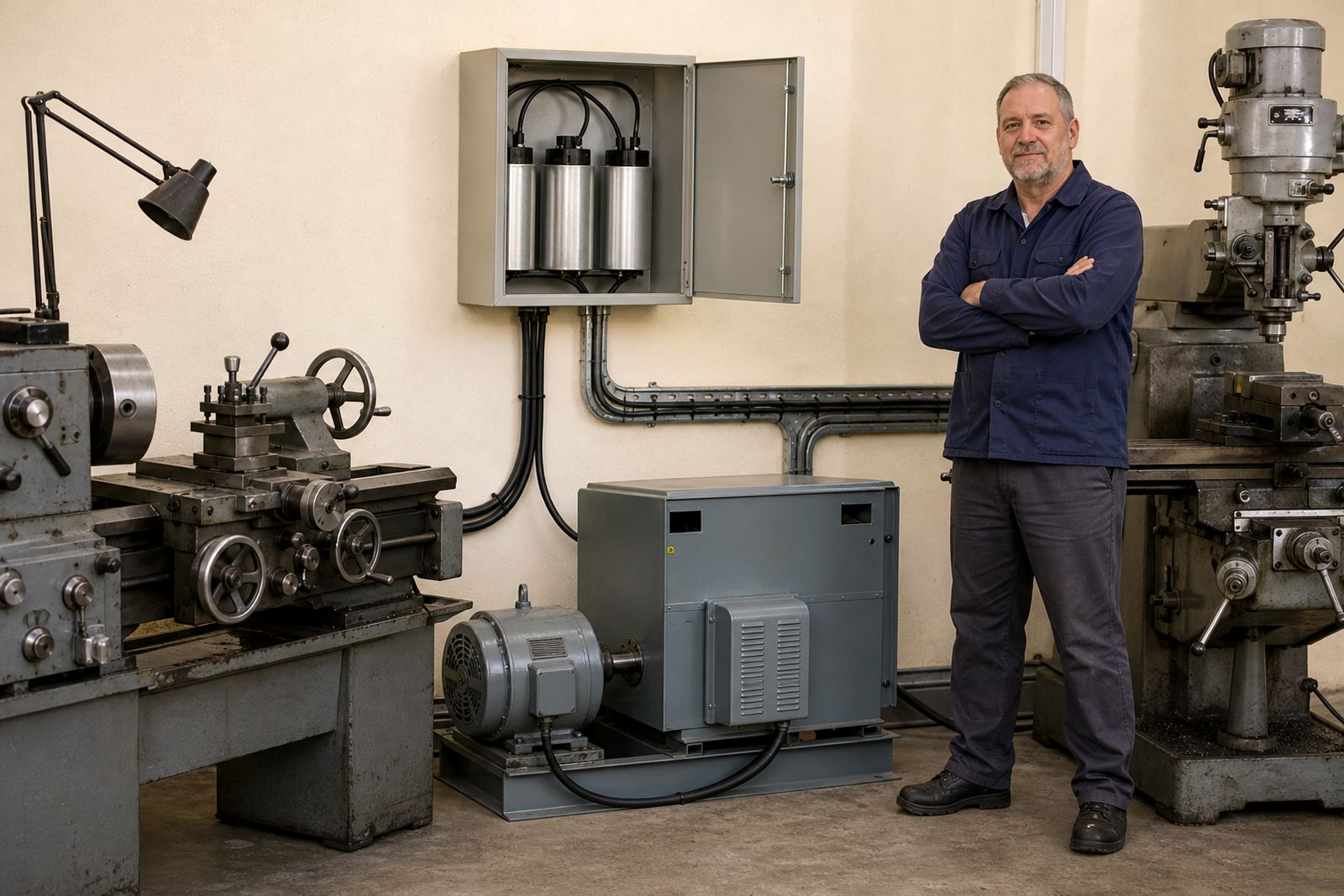
Hard-starting pumps and compressors
Irrigation pumps, borehole boosters and compressors start against pressure, which needs far more current for a few seconds than the running figure suggests. On a single-phase supply that start is where trips and stalls happen.
During the viewing it is worth asking how a rotary converter handles that start, whether a soft start would help, and how restart after a power cut should be sequenced so several motors do not start together.
Pump and compressor details
Pump owners should note:
- Pump or compressor model and its rating plate
- Whether it starts against pressure or with an unloader
- Distance from the machine to the board, and the breaker size
Several motors on one supply
A farm or packhouse may have more than one pump or compressor on the same feed. Staggering their starts by a few seconds avoids one heavy combined surge. A note of every motor on the supply, with its rating, lets head office judge whether one converter can carry them or each needs its own.
Restart planning
Agree a restart sequence with your electrician and keep it written at the board. Sizing is confirmed once the starting details are known.
Book a viewing online
Riverside is arranged for practical discussions, not a rushed meeting. Use the contact form to book a viewing, then bring clear photos of the motor nameplate, the breaker, the distribution board and any nearby motors that share the same supply. If the machine is a lathe, milling machine, CNC router, compressor, saw, drill press or pump, include the starting details as well as the running details.
That makes it easier to talk through whether the supply is feeding one machine or several, and whether the starting load is likely to be the main concern. Written commissioning guidance, remote checks and warranty help can be discussed during the visit, along with the installation steps your own registered electrician will handle.
Compare converter options side by side
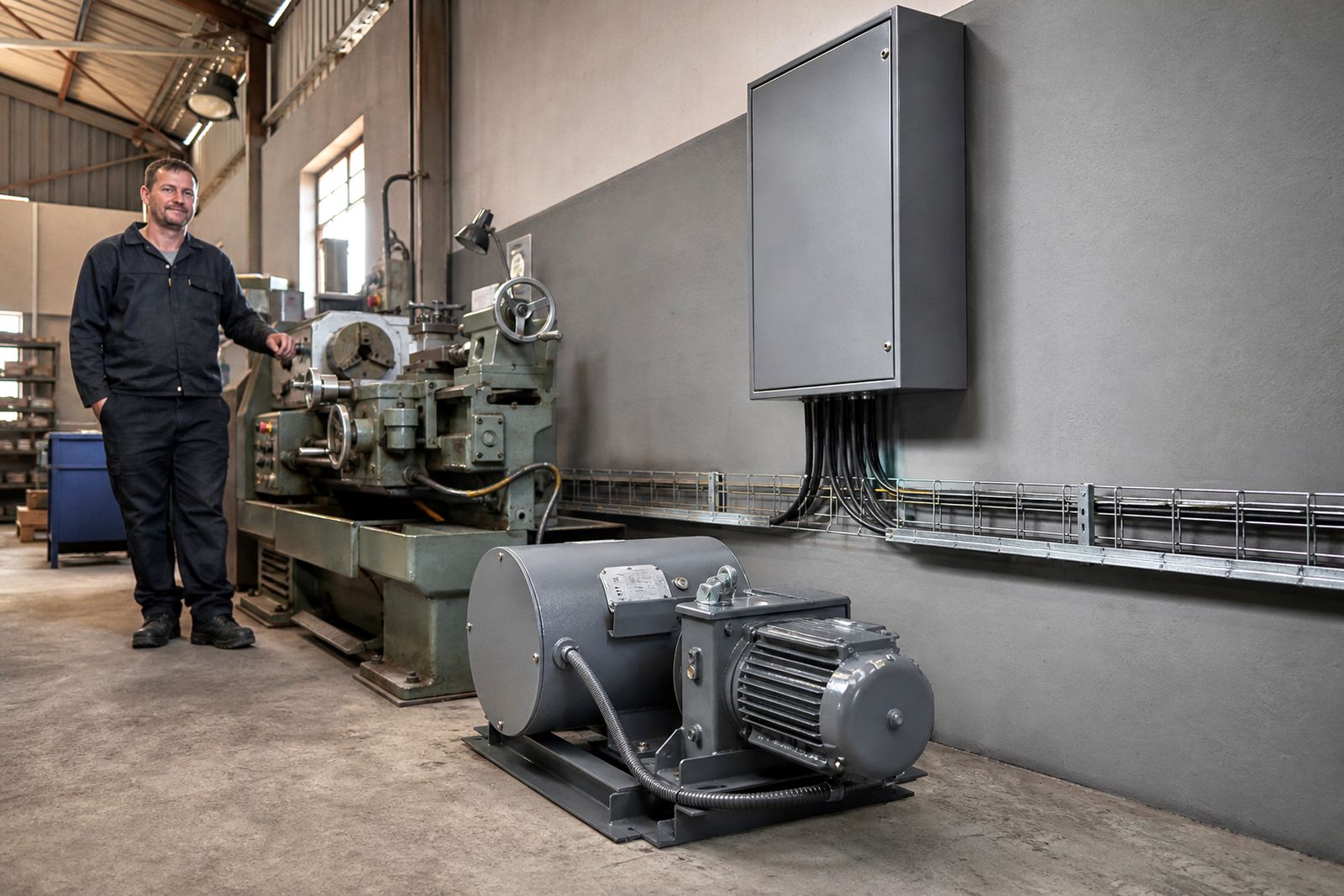
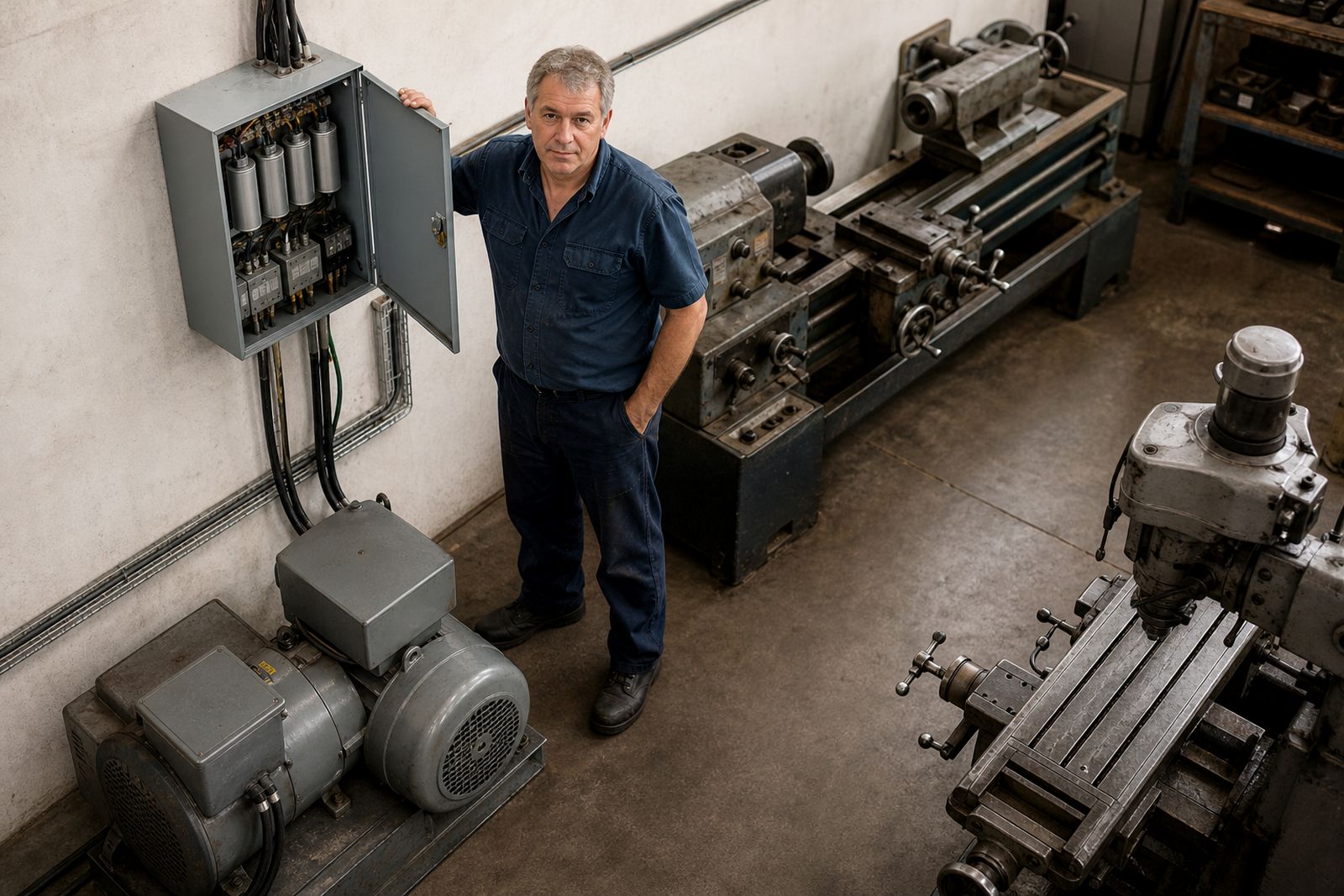
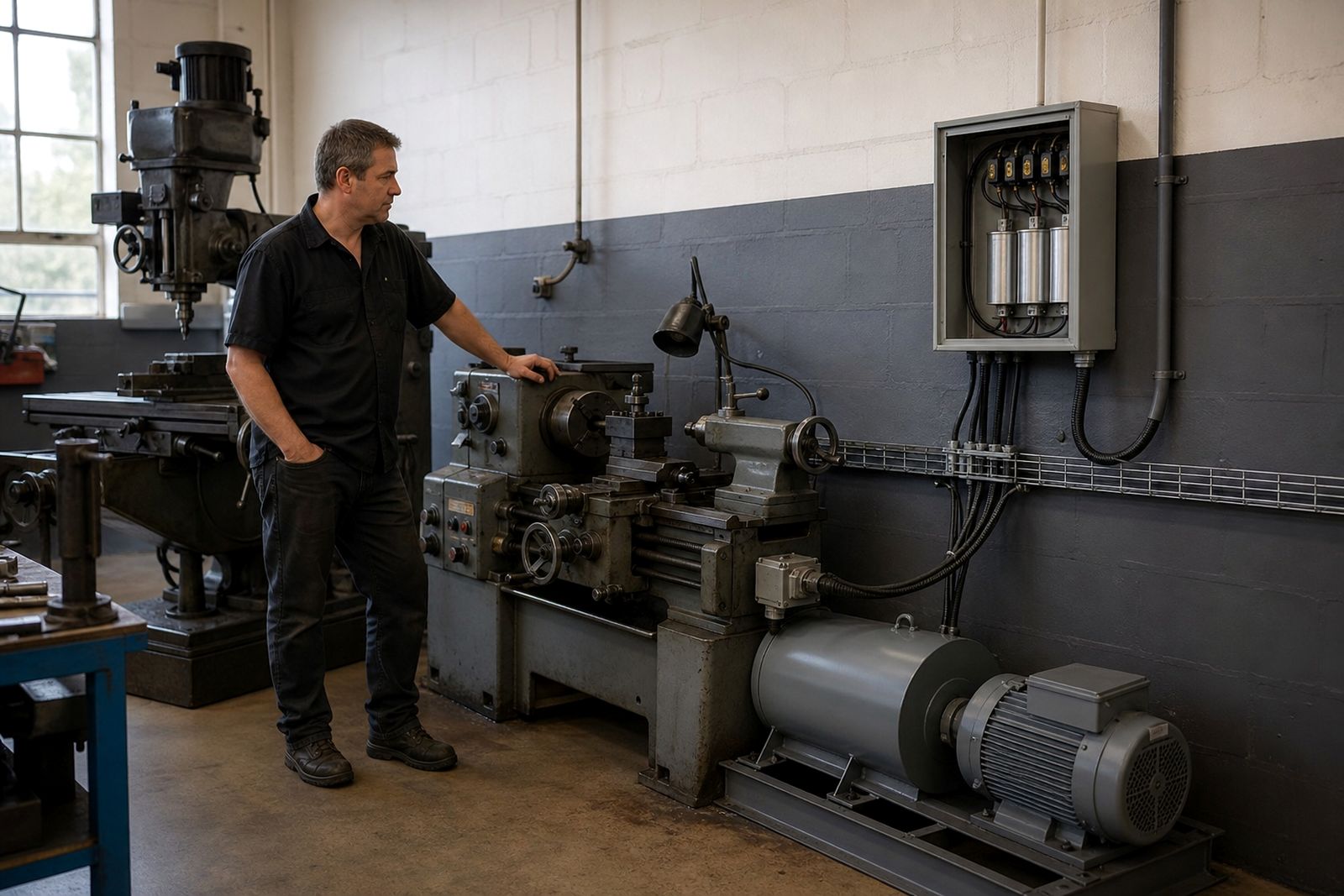
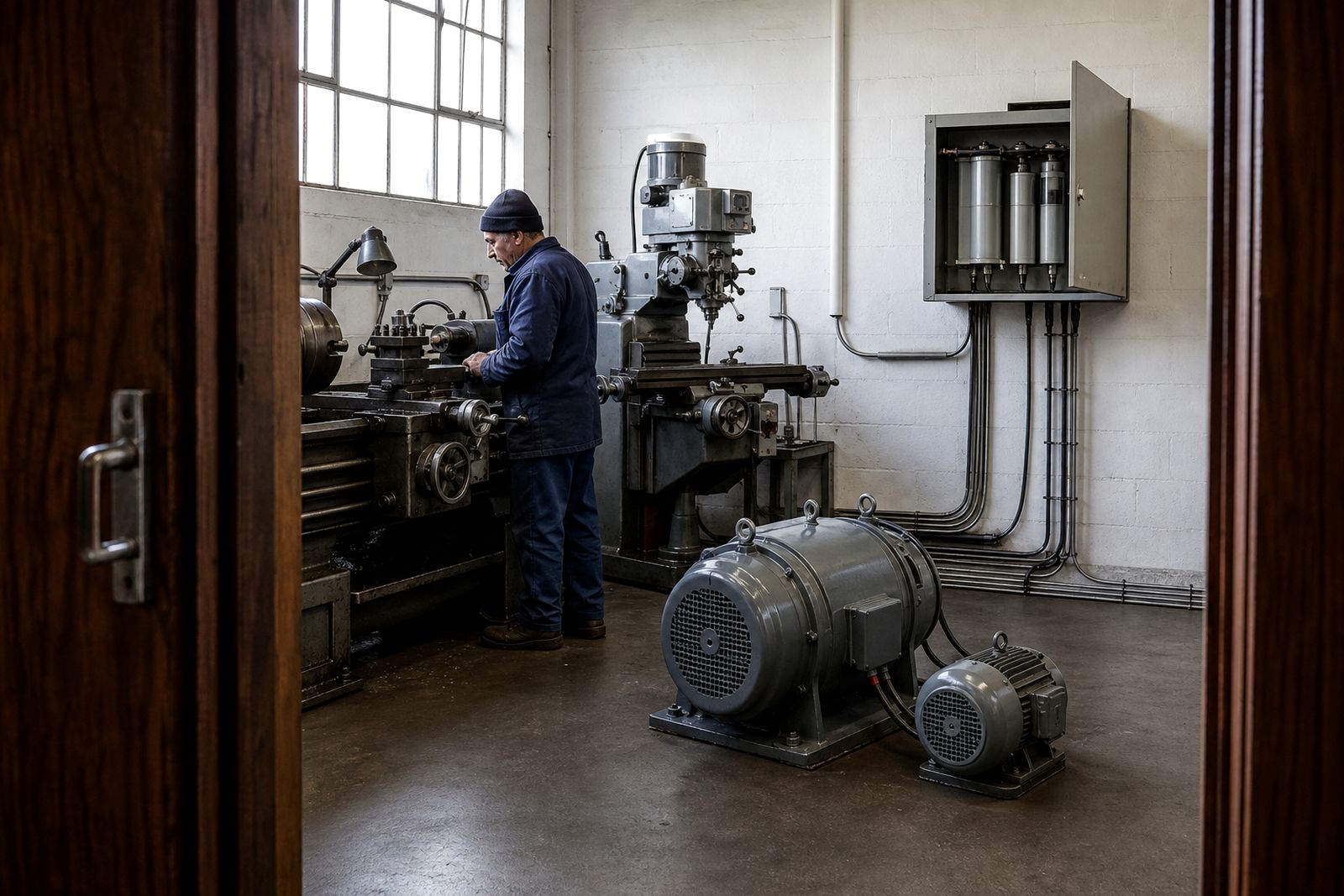
During a viewing, you can compare a rotary unit, a static kit and a panel mount side by side. That helps when you want to understand the differences between rotary phase converters with idler motors, static converter kits, capacitor panels and soft start controls before choosing a direction for a workshop, farm shed or small plant.
You can also look at enclosures, cable sets and spares, and ask how each part fits into a neat, serviceable installation. If the site has coastal humidity, dust from the Highveld, or a board that needs careful tidying, it is worth raising that early so the conversion can be planned sensibly.
Discuss the workshop installation
Bring the machine details, supply information and a simple sketch of where the equipment sits. We can then talk through the full setup, including motor nameplates, breaker sizing, the route to the distribution board, and any restart sequence needed after a power cut.
- photos of the motor plate and any attached starter gear
- the machine type and what it has to start and run
- distance from machine to board
- notes on other motors on the same feed
The aim is to leave with a clear understanding of how the converter fits the site, what your electrician will install, and what support is possible after commissioning. For other locations and general guidance, see all viewings or contact us.
What our Phase Converter customers say
Verified Google reviews
Also worth a look
Tell us about your machine
Send a note through our contact form with the machine type, the motor plate kW and voltage, your supply (single-phase breaker size), the cable run and your area, and we will come back with practical converter options.
Open the contact form